Merlin - Species Profile
Conservation • Description • Habitat • Ecology • Distribution • Taxonomy
Conservation Status
IUCN Red List
LC - Least Concern
NatureServe
N4B, N4N - Apparently Secure Breeding and Nonbreeding
SNRB, SNRN - Unranked Breeding and Nonbreeding
Minnesota
not listed
Description
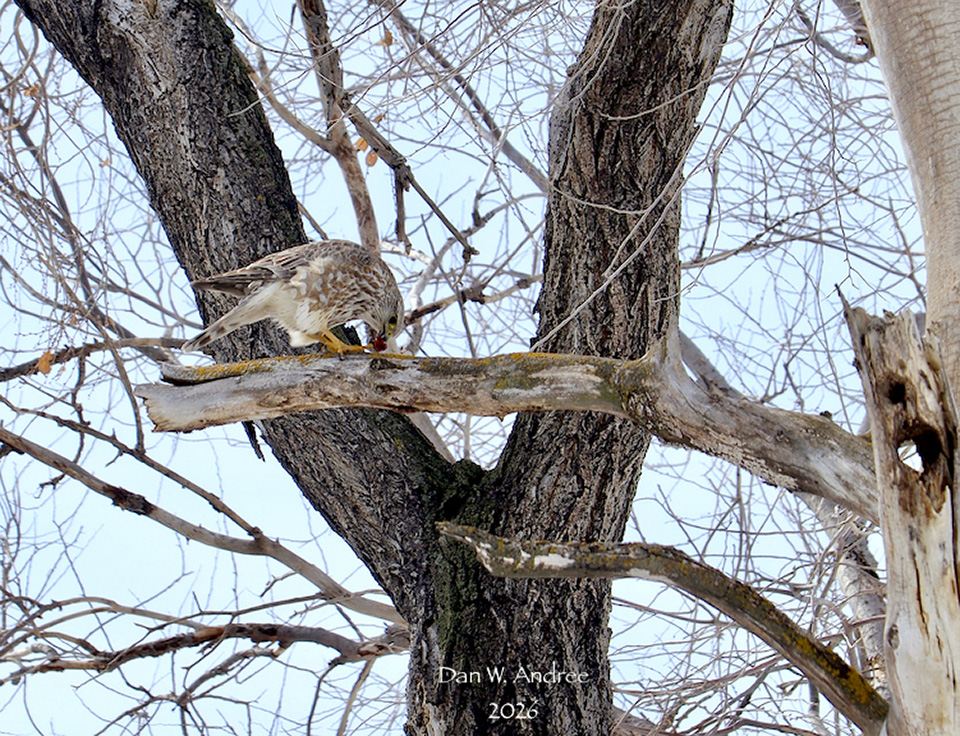
Merlin is a small typical falcon. It occurs in the summer in Europe, Asia, and North America. There are nine currently recognized subspecies worldwide. Three subspecies occur in North America. Two subspecies, Prairie Merlin (Falco columbarius richardsonii) and Taiga Merlin (Falco columbarius columbarius), occur in Minnesota.
North American Merlins breed in the summer from the northern tree limit of Alaska and Canada, south to Oregon, the northern Great Lakes Region, and Maine. In Minnesota, they breed mostly in the Northeast and Northwest Regions, but nests have been spotted in the Metro Region and as far south as Olmsted County. They are increasingly breeding in suburban areas. They usually use a nest abandoned by an American Crow, a Blue Jay, another raptor, or a squirrel.
Taiga Merlin is the eastern subspecies. While it is not common, it is much more common than Prairie Merlin, the western subspecies. It breeds in forests and in tree plantations adjacent to open hunting areas. It migrates south in the fall to the Gulf States, Central America, or South America. Prairie Merlin nests in shrubs and trees along rivers, and in small tree groves planted as windbreaks. It migrates south in the fall to southern California, southern Texas, and northern Mexico.
Adults are 9″ to 13″ (23 to 33 cm) in length and have a 3½″ to 34¾″ (60 to 68 cm) wingspan. The body is robust compared to other small falcons.
The male Taiga Merlin has a bluish gray (gray) back and crown. The underparts are creamy white with heavy, longitudinal, brown streaks. The forehead is white, and there is a white line above each eye. There are no strong facial markings, but there is one indistinct stripe on each side of the face. The throat is white. The tail is long and narrow. It is heavily banded light gray and very dark gray, and the tip of each tail feather is white. The wings are long and narrow. They are mostly colored like the back, but the primaries are black with a thin white border.
The female has a dark brown back and crown.
The male Prairie Merlin is lighter overall.
Size
Total length: 9″ to 13″ (23 to 33 cm)
Wingspan: 23½″ to 34¾″ (60 to 68 cm)
Voice
Similar Species
American Kestrel (Falco sparverius) male has a rust-colored back, a rust-colored “cap” on the crown, and two bold stripes on each side of the face.
Habitat
Forests and in tree plantations adjacent to open hunting areas; suburban areas
Ecology
Migration
Uncommon to occasional migrant from mid-March to late May and from mid-August to early November. Common breeder in the north
Nesting
Merlins nest in deciduous and coniferous trees. They usually use a nest abandoned by an American Crow, a Blue Jay, another raptor, or a squirrel
Diet
Smaller birds, rodents, lizards, snakes, and large insects, including grasshoppers and dragonflies.
Distribution
Occurrence
Not common but expanding
Maps
The Minnesota Ornithologists’ Union All Seasons Species Occurrence Map
Taxonomy
Class
Aves (Birds)
Order
Falconiformes (Falcons and Caracaras)
Family
Falconidae (Falcons and Caracaras)
Subfamily
Falconinae
Genus
Falco (Typical Falcons)
Subordinate Taxa
North American
Black Merlin (Falco columbarius suckleyi) 

Prairie Merlin (Falco columbarius richardsonii)
Taiga Merlin (Falco columbarius columbarius)
Eurasian
Central Asian Merlin (Falco columbarius lymani)
East Siberian Merlin (Falco columbarius insignis)
Eurasian Merlin (Falco columbarius aesalon)
Icelandic Merlin (Falco columbarius subaesalon)
Pacific Merlin (Falco columbarius pacificus)
Pallid
Pallid Merlin (Falco columbarius pallidus)
Synonyms
Aesalon columbarius
Falco aesalon





