Trumpeter Swan - Species Profile
Conservation • Description • Habitat • Ecology • Distribution • Taxonomy

Conservation Status
IUCN Red List
LC - Least Concern
NatureServe
N4B, N4N - Apparently Secure Breeding and Nonbreeding
S2B, SNRN, SNRM - Imperiled Breeding, Unranked Breeding and Migrant
Minnesota
Special Concern
Species in Greatest Conservation Need
In the early 1980s, there were no Trumpeter Swans in Minnesota. To reintroduce them into the state, 21 birds were released near the Tamarac National Wildlife Refuge in 1987. There were several more releases in the late 1980s and throughout the 1990s.
In 2004, there were an estimated 2,000 Trumpeter Swans in Minnesota. That number grew to 17,021 in 2015, over 30,000 in 2020. The 2022 Minnesota Breeding Trumpeter Swan Survey, conducted by the Minnesota DNR, estimated the statewide population at 51,860 swans.
Description
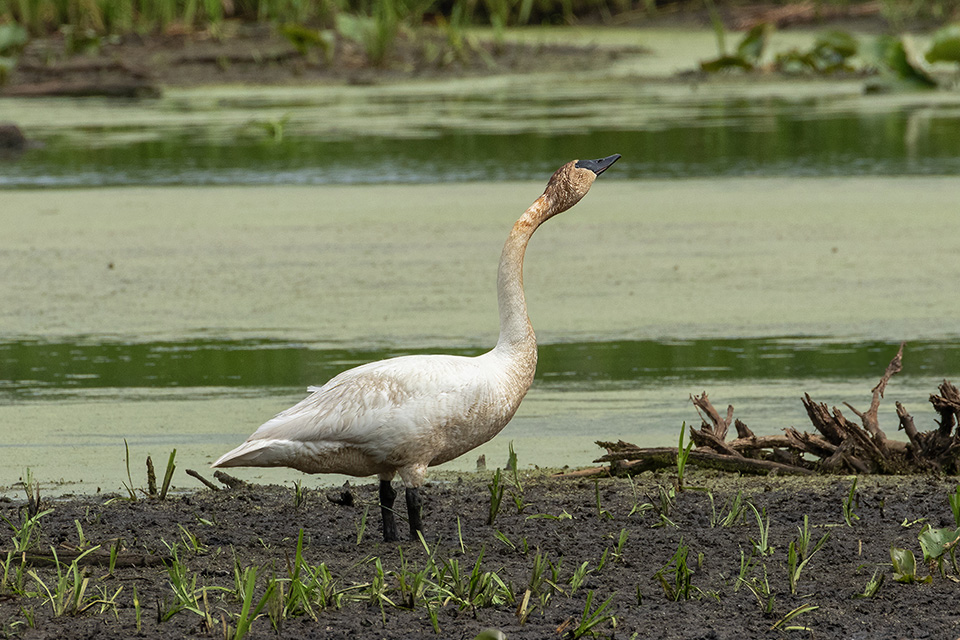
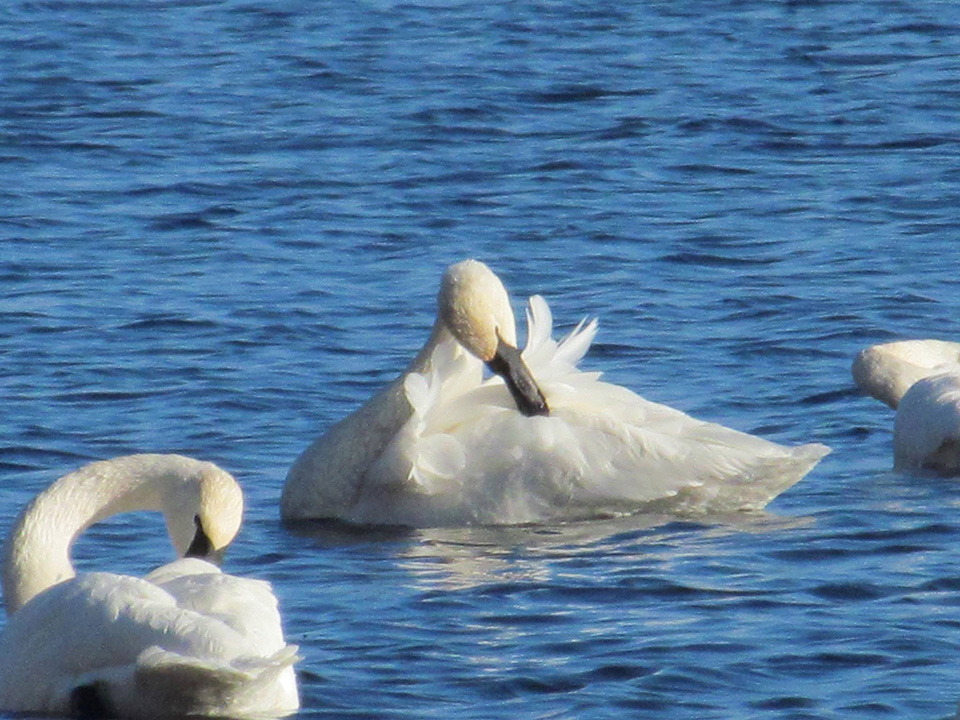
Trumpeter Swan is the largest bird in North America by measured by either wieght or length, but the California Condor has the longest wingspan.
The bill is all black with no knob at the upper base and no yellow lores.
Size
Total length: 60″ to 72″
Wingspan: 72″ to 84″
Voice
Similar Species
Mute Swan (Cygnus olor) bill is orange with a black knob at the upper base. It is a rare vagrant in eastern Minnesota.
Tundra Swan (Cygnus columbianus) is smaller and usually has yellow lores. It is much more common and widespread.
Habitat
Lakes and large wetlands
Ecology
Migration
Nesting
Diet
Distribution
Occurrence
Reintroduced. Widely scattered breeder.
Maps
The Minnesota Ornithologists’ Union All Seasons Species Occurrence Map
Taxonomy
Class
Aves (Birds)
Order
Anseriformes (Waterfowl)
Family
Anatidae (Ducks, Geese, and Swans)
Subfamily
Anserinae
Genus
Cygnus (True Swans)
Subordinate Taxa
Synonyms
Olor buccinator