


Prairie Deer Mouse - Species Profile
Conservation • Description • Habitat • Ecology • Distribution • Taxonomy
Conservation Status
IUCN Red List
LC - Least Concern
NatureServe
N5 - Secure
SNR - Unranked
Minnesota
not listed
Description
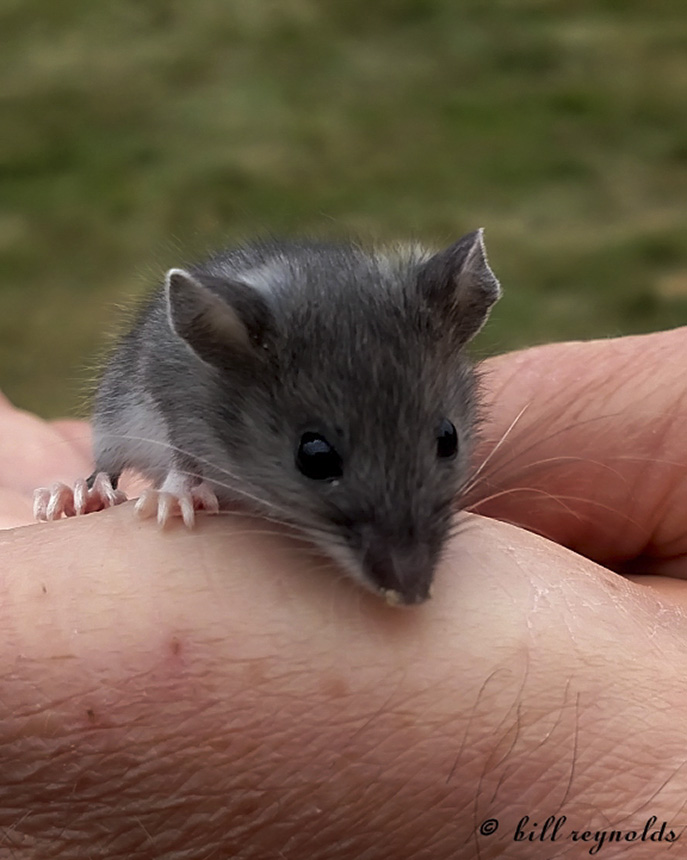
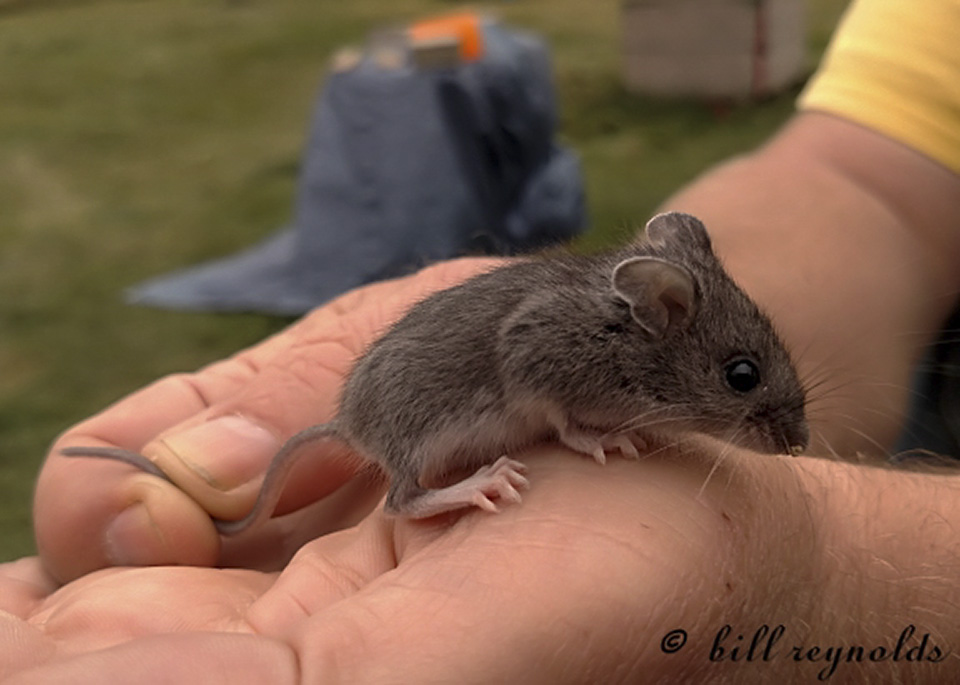
Prairie Deer Mouse is a small North American deer mouse. Adults are 5½″to 6⅝″ long, including the tail, and weigh from 0.68 to 0.87 ounces at maturity.
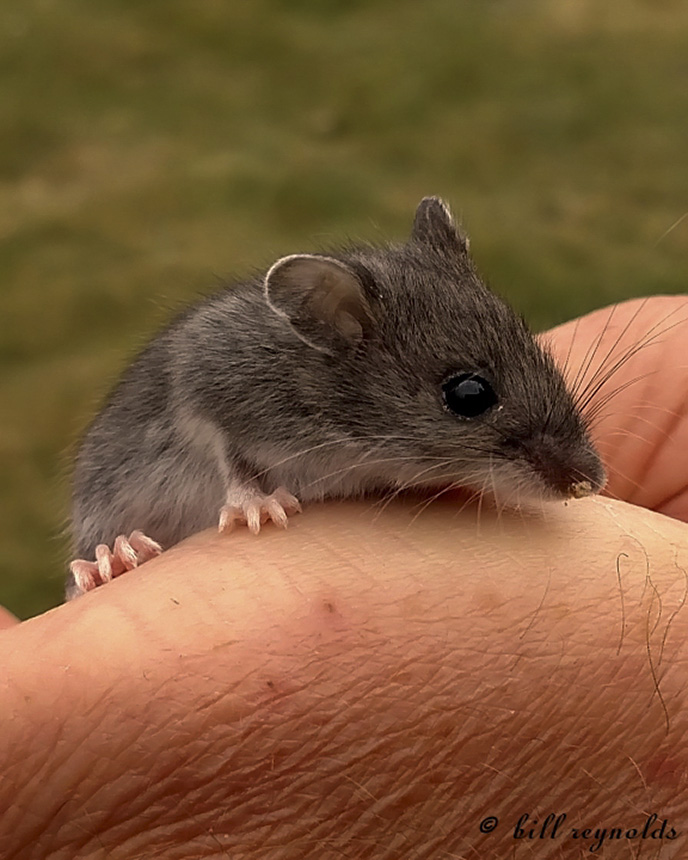
The body is round and slender. The coat (pelage) on adults is short and soft. It is grayish-brown on the back and sides and white below. On young individuals the pelage is gray.
The head is pointed. The eyes are beady and black. The ears are large. The whiskers are long and prominent.
The tail is relatively short, 23 ⁄16″ to 2¾″ long, about 40% of the total length. It is sharply bicolored, dark above and white below.
The hind feet are ⅝″ to ¾″ long.
Size
Total length: 5½″to 6⅝″
Tail: 23 ⁄16″ to 2¾″
Sign
The hind track of a deer mouse is ¼″ to ½″ long, ⅜″ to ½″ wide, and shows five toes. The fore track is similar in size but shows only four toes. The trail is 1⅜″ to 1¾″ wide, similar to that of a chipmunk only smaller.
Similar Species
White-footed Mouse (Peromyscus leucopus) is a larger mouse. The hind feet are longer. The tail is longer and is less sharply bicolored.
Woodland Deer Mouse (Peromyscus maniculatus gracilis) is larger. The tail is much longer, up to 50% of the total length. The hind feet are longer. It is found mostly in woodlands.
Habitat
Upland grasslands, agricultural fields.
Ecology
Behavior
Adults are active year round during twilight and at night. They spend most of their time on the ground.
Lifespan
About one year in the wild; up to 8 years in captivity.
Life Cycle
Females construct a round nest out of soft vegetable matter in a in a freshly dug burrow or in the discarded burrow of another animal. They begin breeding at about 49 days of age. They breed year round, though less frequently during fall and winter. They average 3 or 4 litters per year.
Gestation takes from 22½ days in a non-lactating female to 30½ days in a lactating female. Five or six young are born naked with wrinkled skin. They are weaned after 25 to 35 days.
Groups of 10 or more individuals spend the winter together in a nest to conserve heat.
Food
Seeds, fruits, nuts, acorns, green plant material, fungi, worms, snails, arthropods, and invertebrates. In autumn they collect and store food for use in winter.
Disease Vector
North American deer mouse (Peromyscus maniculatus) is probably the animal most responsible for the transfer of the deadly hantavirus to humans in the central and southwestern United States.
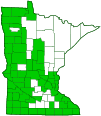
Distribution |
||
|
Sources Biodiversity occurrence data published by: Minnesota Biodiversity Atlas (accessed through the Minnesota Biodiversity Atlas Portal, bellatlas.umn.edu, 12/18/2025). Hazard, Evan B. 1982. The Mammals of Minnesota. University of Minnesota Press, Minneapolis, Minnesota. 280 pp. The counties in light green lack modern records but have historic county or township specimens or records. |
|
| c | ||
Occurrence |
||
Common and widespread |
||
Taxonomy
Class
Subclass
Theria
Infraclass
Placentalia (Placental Mammals)
Magnorder
Boreoeutheria
Superorder
Euarchontoglires (Primates, Rodents, and Allies)
Order
Rodentia (Rodents)
Suborder
Supramyomorpha
Infraorder
Myomorphi
Superfamily
Muroidea
Family
Cricetidae (Hamsters, Voles, Lemmings, and Allies)
Subfamily
Neotominae (North American Mice and Rats)
Tribe
Peromyscini
Genus
Peromyscus (North American Deer Mice)
Species
Peromyscus maniculatus (Eastern Deermouse)
Subspecies of Peromyscus maniculatus
The subspecific classification of Peromyscus maniculatus is currently in a state of transition. Major global databases, including Mammal Species of the World (MSW3), the Mammal Diversity Database (MDD), and ITIS, currently refrain from listing formal subspecies pending a comprehensive molecular revision of the species group. As noted by MSW3, the species is “morphologically highly variable,” and mitochondrial DNA evidence suggests it may be paraphyletic, meaning it likely contains several distinct, yet-to-be-defined species.
Despite this global pause on nomenclature, regional authorities and biodiversity platforms such as NatureServe, GBIF, and iNaturalist continue to recognize traditional subspecies to account for distinct ecological and morphological morphotypes. MinnesotaSeasons.com will retain the two subspecies recognized in Minnesota—P. m. bairdii (Prairie Deer Mouse) and P. m. gracilis (Woodland Deer Mouse)—following the conventional arrangement by Hall (1981). This allows for the preservation of critical regional data until further phylogeographic research provides a definitive delineation of the P. maniculatus complex.
Subordinate Taxa
Synonyms
Common Names
Baird’s Deer Mouse
Baird’s White-footed Mouse
Prairie Deer Mouse
Glossary
Pelage
The coat of a mammal, consisting of fur, wool, or hair, and including a soft undercoat and stiff guard hairs.