


Sources
Biodiversity occurrence data published by: Minnesota Biodiversity Atlas (accessed through the Minnesota Biodiversity Atlas Portal, bellatlas.umn.edu. Accessed 12/26/2025).
(Phlebia tremellosa)
Conservation • Description • Habitat • Ecology • Distribution • Taxonomy
not listed
not listed
not listed
Jelly Rot, also called Trembling Crust, is a wood-rotting fungus. It is found in Europe, Asia, and North and Central America. In the united States it is common from the East Coast to the Midwest and on the West Coast. It is less common in Minnesota, where it is at the western edge of its range. It obtains its nutrients from dead wood (saprobic). It grows flat (resupinate), alone or in groups, mostly on stumps and fallen branches of deciduous trees, especially oak and beech, occasionally also on wood of coniferous trees. It sometimes appears in overlapping clusters.
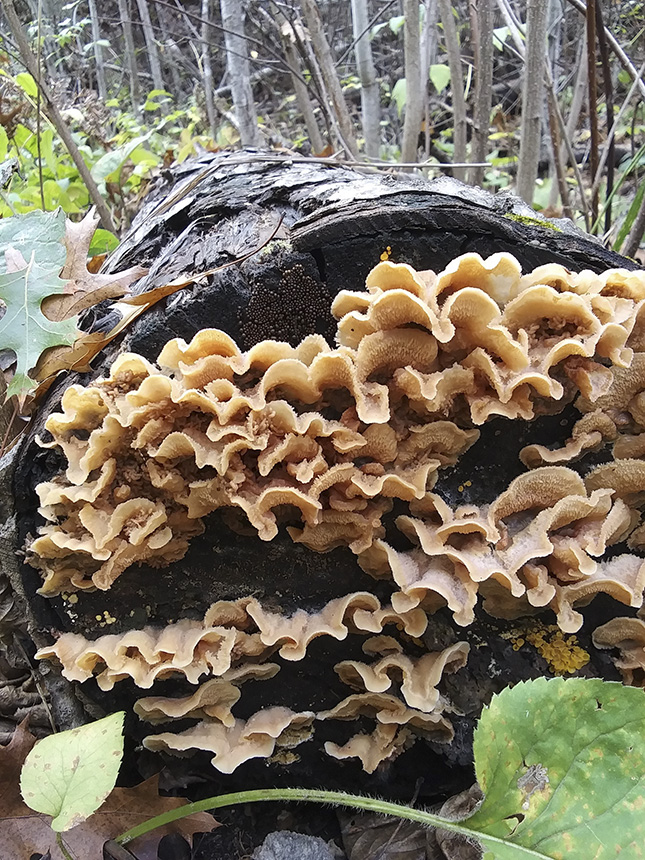
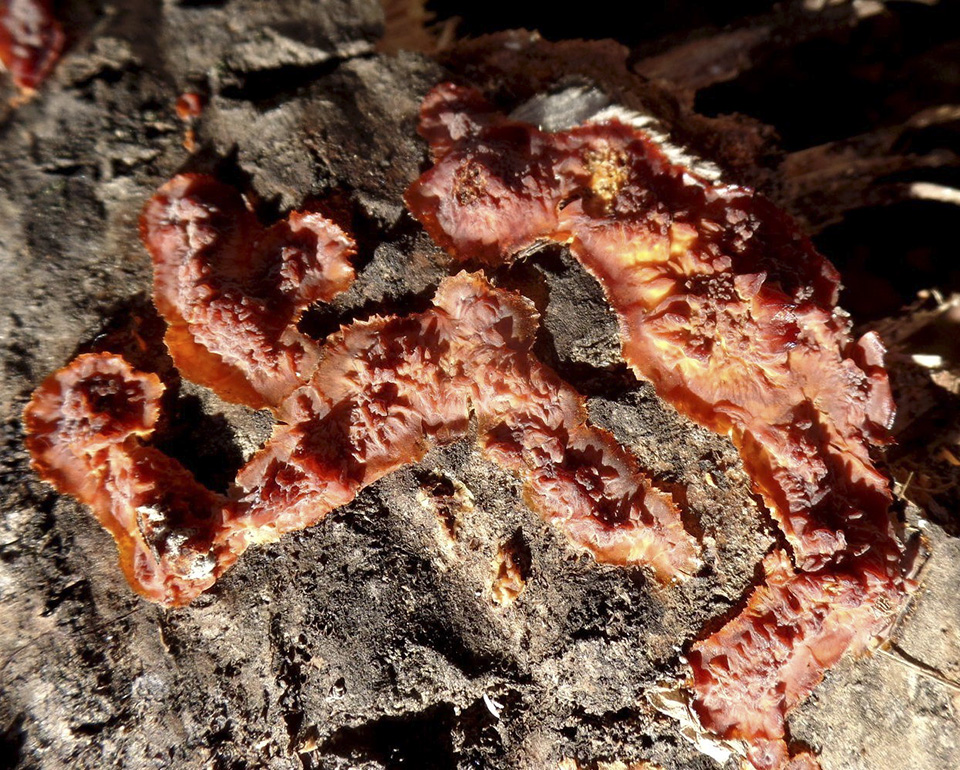
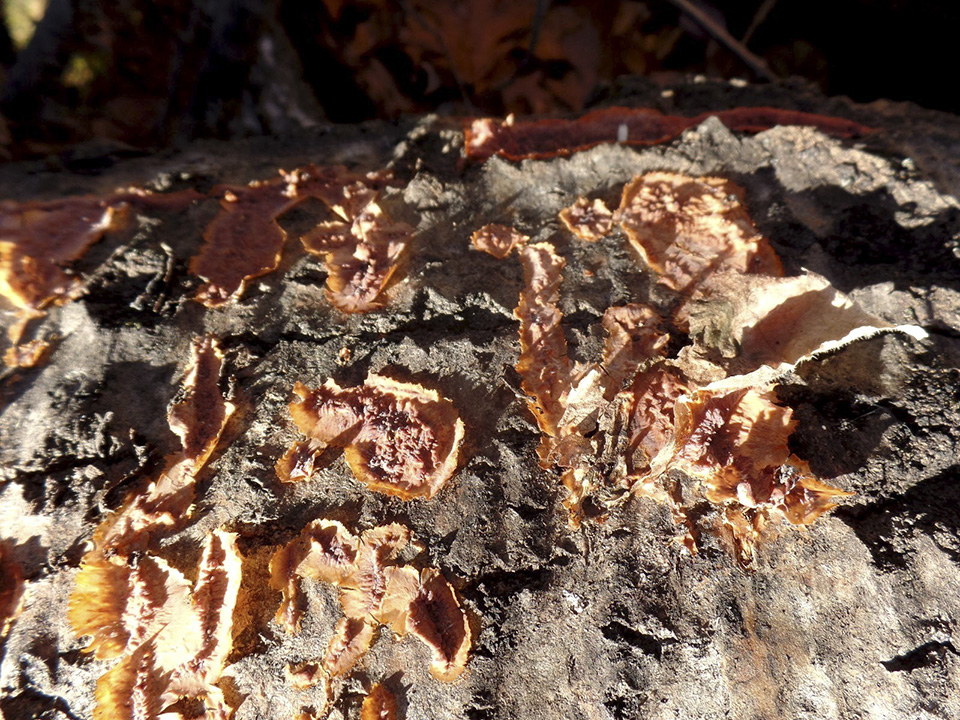
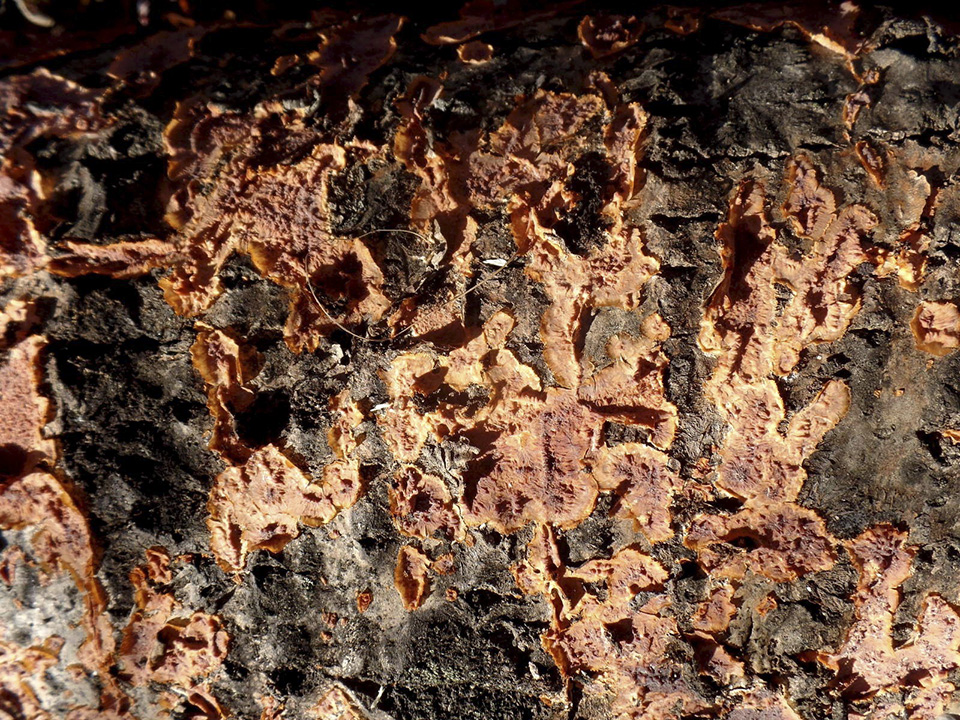
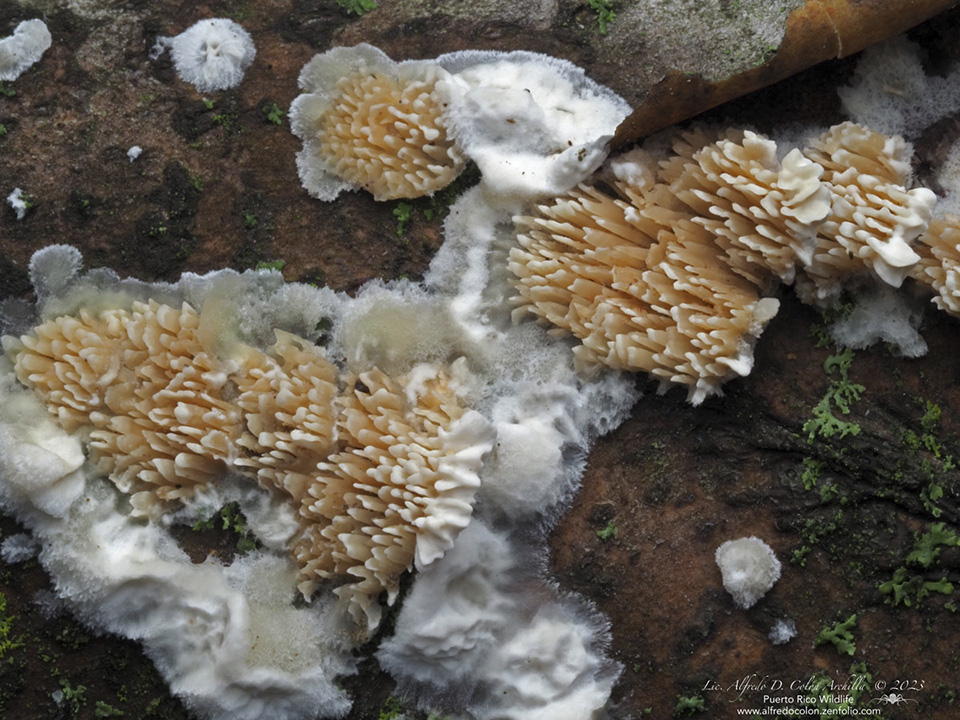
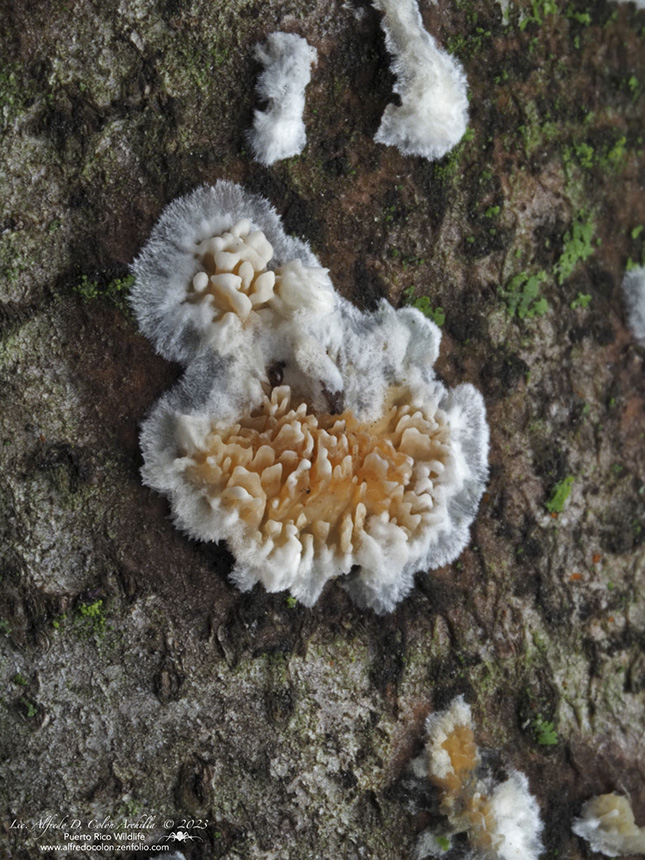
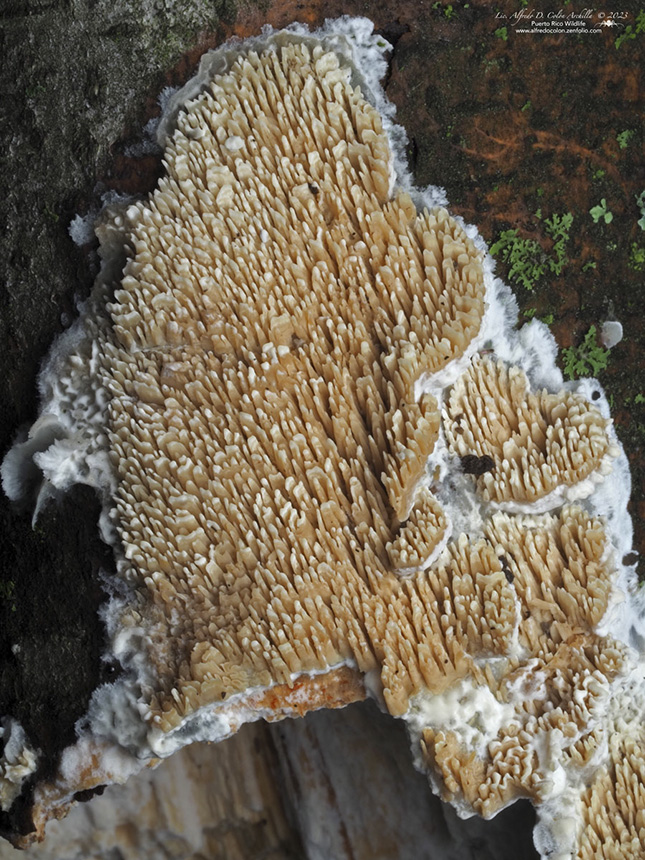
The fruiting body is a 2″ to 4″ long, ¾″ to 1½″ wide, irregularly shaped patch of pore surface spread out flat (effused) on a branch or log (substrate). It is pale and lies completely flat (resupinate) when young. As it matures it darkens and the upper edge folds back more than 90° creating a bracket-like cap. Adjacent patches often fuse together covering extensive areas.
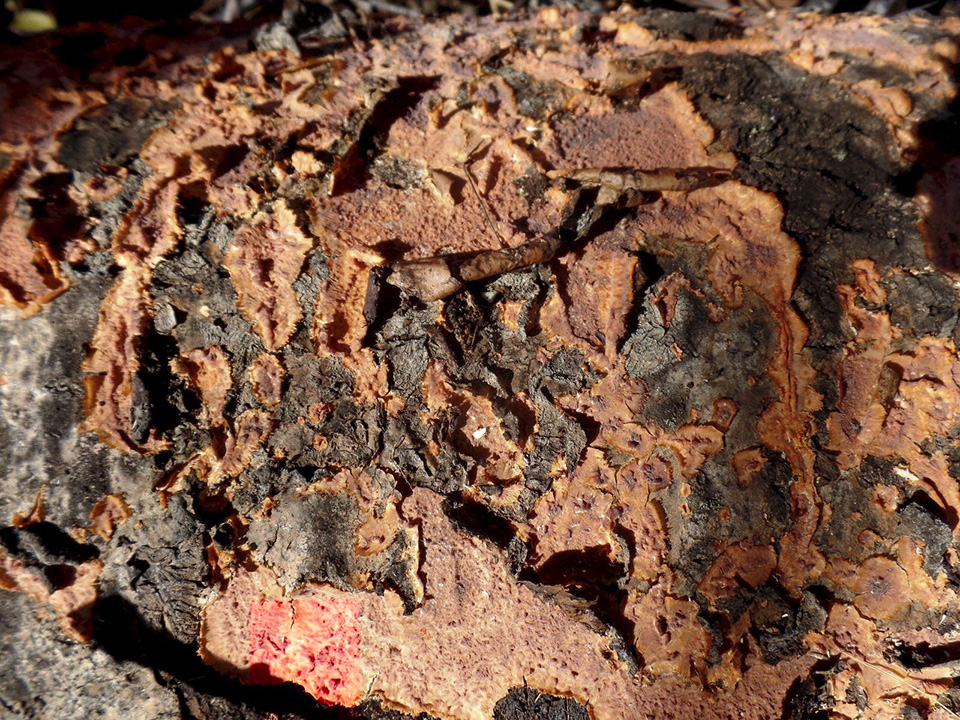
The lower surface is the only visible part when no caps are present. It is yellowish to brownish-orange to pinkish-orange when young, becoming orange to red when mature. The flesh is translucent, flexible, rubbery, and somewhat jelly-like. It has a shallow, elaborate network of narrow ridges, 1 ⁄32″ to 1 ⁄16″ wide furrows, and crossveins. It looks something like a tube surfacebut unlike a true tube surface, spore-producing structures (basidia) cover the entire networked layer.
The caps, when present, are narrow, up to ¾″ long, white to pale yellow, and densely covered with woolly hairs. There is no stem.
The flesh is very thin, whitish, and waxy or gelatinous. It is not edible.
The spore print is white.
Wrinkled Crust (Phlebia radiata) does not produce caps.
Mostly hardwoods, especially oak and beech
Late spring through fall
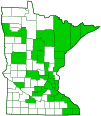
Widespread and common
Kingdom
Fungi (Fungi)
Subkingdom
Dikarya
Phylum
Basidiomycota (Basidiomycete Fungi)
Subphylum
Agaricomycotina (Higher Basidiomycetes)
Class
Agaricomycetes (Mushrooms, Bracket Fungi, Puffballs, and Allies)
Subclass
incertae sedis (uncertain placement)
Order
Polyporales (Shelf Fungi)
Family
Meruliaceae
Genus
Phlebia
Merulius imbricatus
Merulius spongiosus
Merulius tremellosus
Merulius tremellosus ssp. incarnatus
Merulius tremellosus ssp. spongiosus
Merulius tremellosus var. pallidus
Merulius tremellosus var. spongiosus
Sesia tremellosa
Xylomyzon tremellosum
Genus
This species was formerly classified as Merulius tremellosus. In 1984 it was transferred to the genus Phlebia. A recent DNA study (Monclavo et al., 2002) showed the the genus Phlebia is probably polyphyletic, containing unrelated species. However, Phlebia tremellosa is part of a group that clearly belongs to the genus Phlebia. The transfer has been accepted my some taxonomic sources (e.g., Index Fungorum and GBIF), but not all (e.g., MycoBank, MycoPortal, and iNaturalist).
Jelly Rot
Jelly Rot Fungus
Trembling Crust
Trembling Merulius
Glossary
Basidium
A microscopic, club-shaped structure on the underside of the cap of club fungi that produces spores. Plural: basidia.
Resupinate
In fungi: referring to the fruiting body lying flat on the surface of the substrate, without a stalk or a cap.
Saprobic
A term often used for saprotrophic fungi. Referring to fungi that obtain their nutrients from decayed organic matter.
This button not working for you?
Simply email us at info@MinnesotaSeasons.com.
Attach one or more photos and, if you like, a caption.
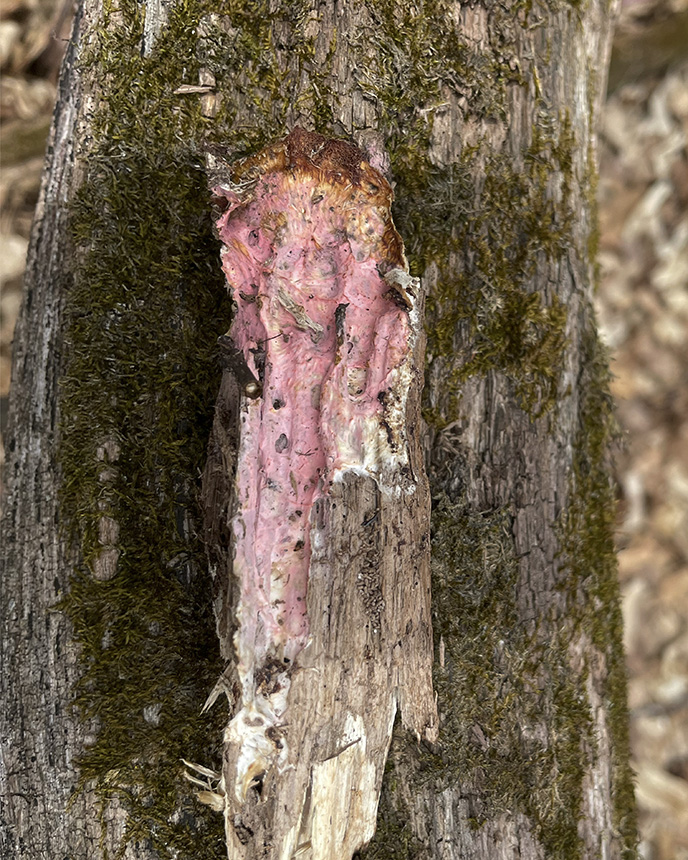
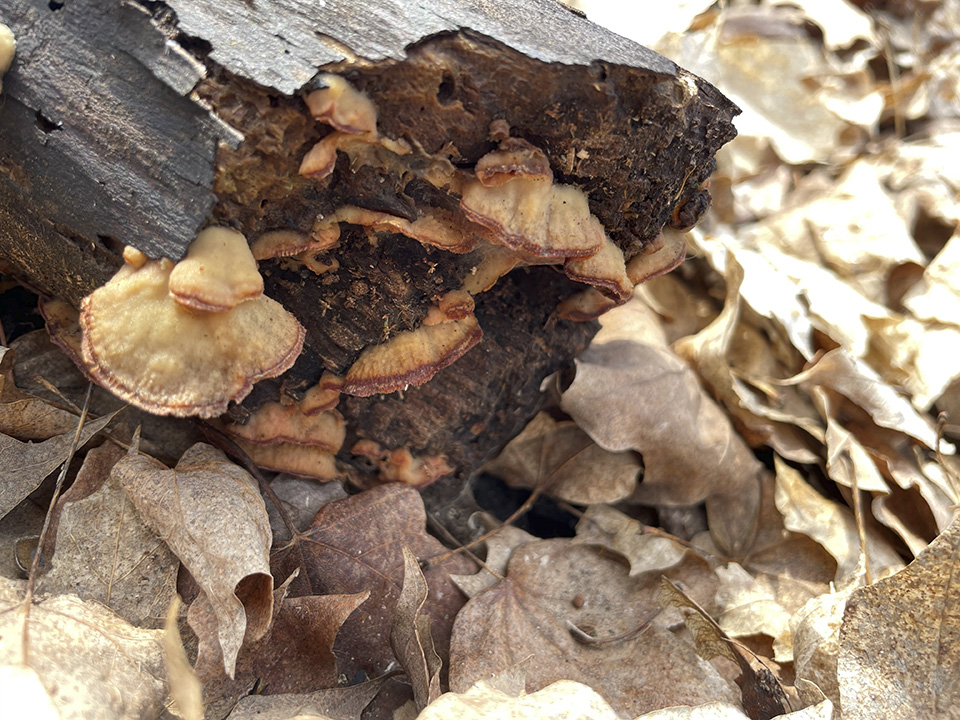
fungi on downed log
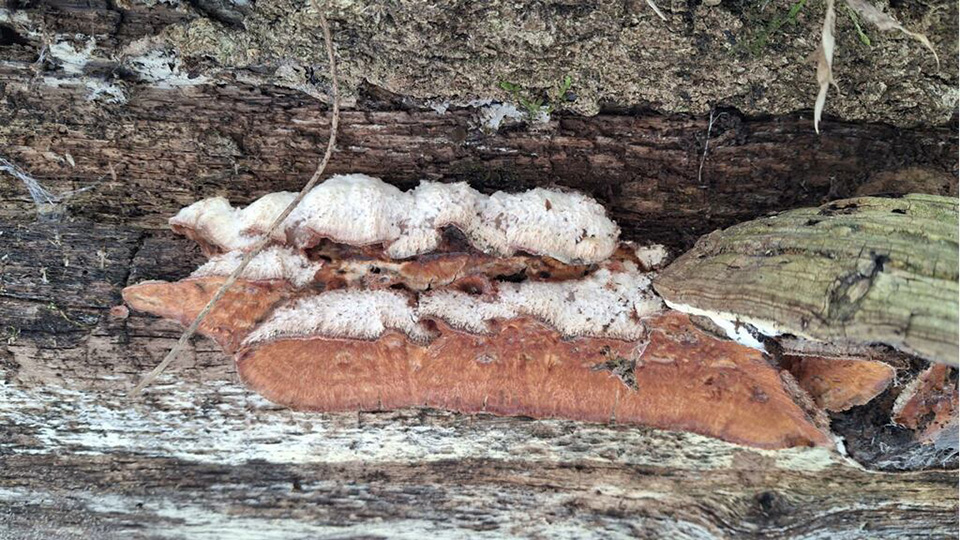
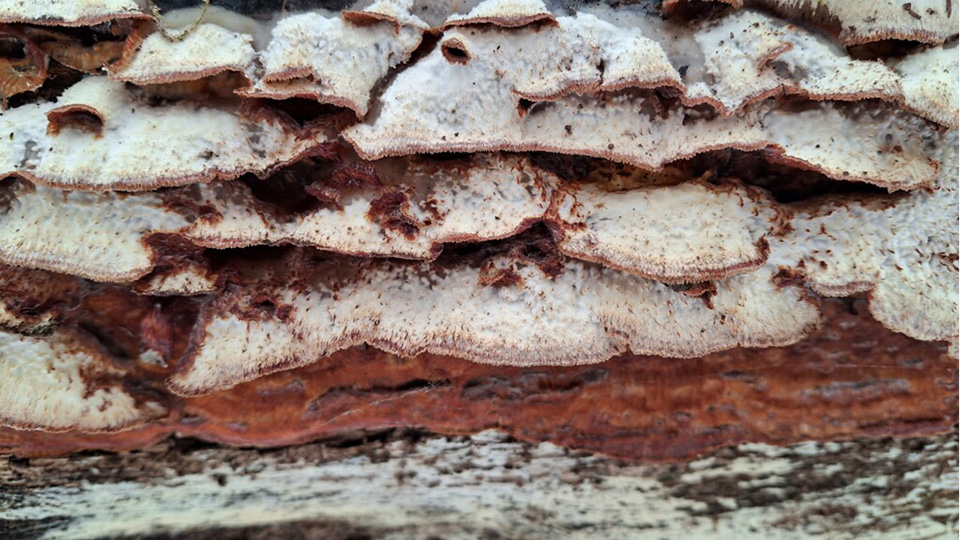
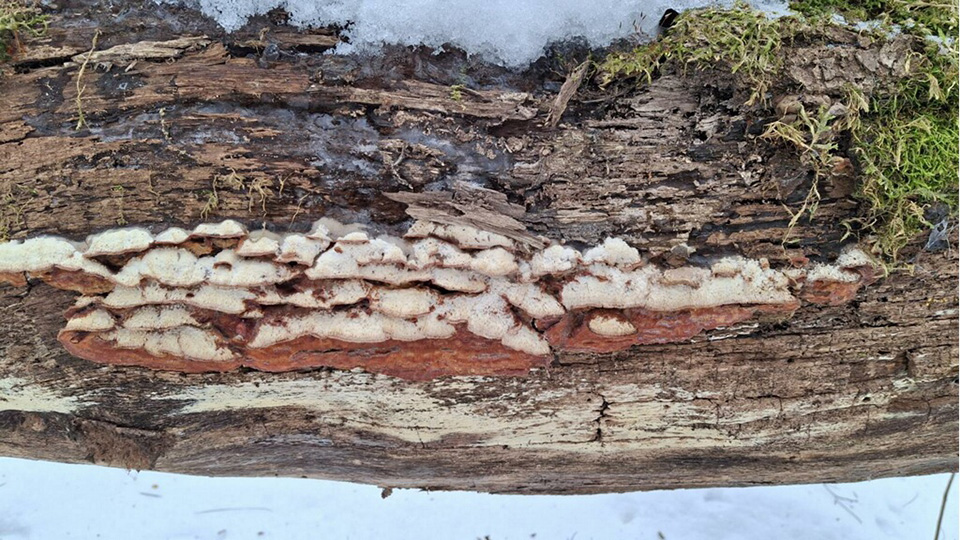
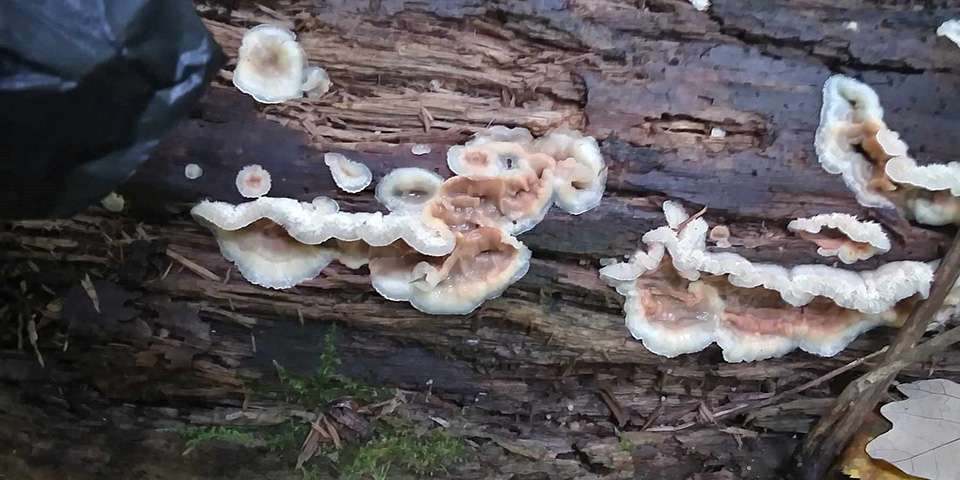
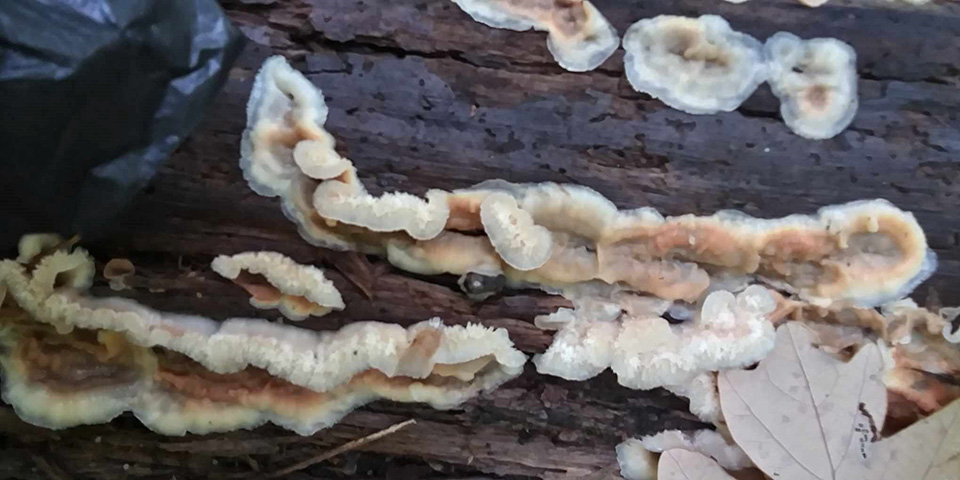
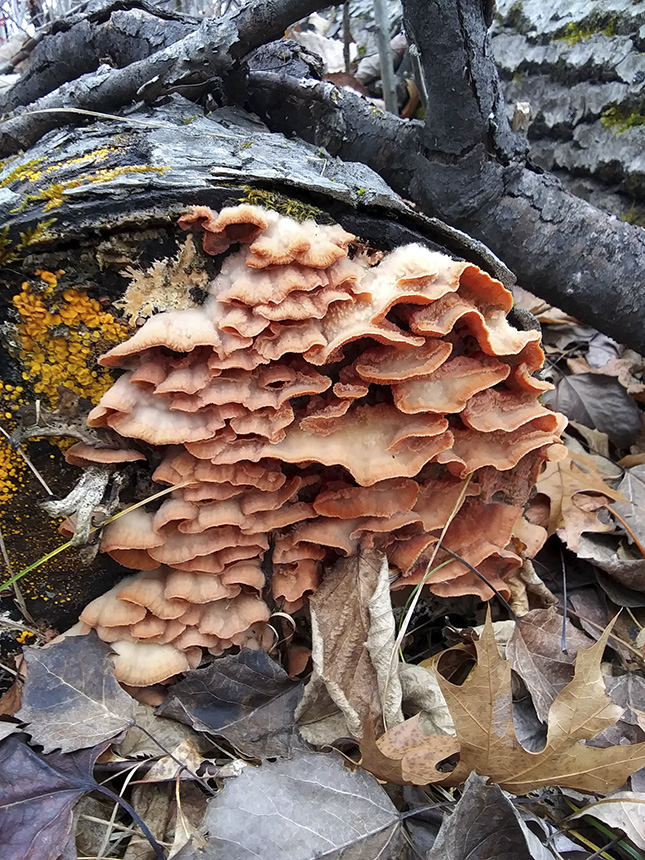
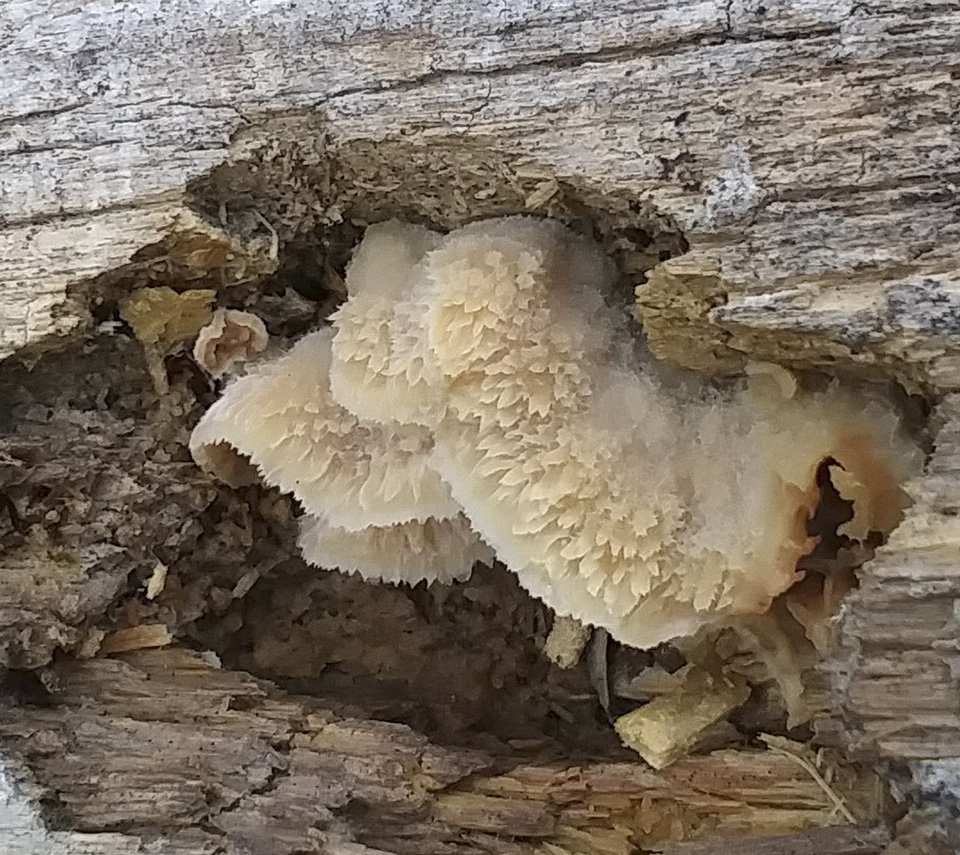
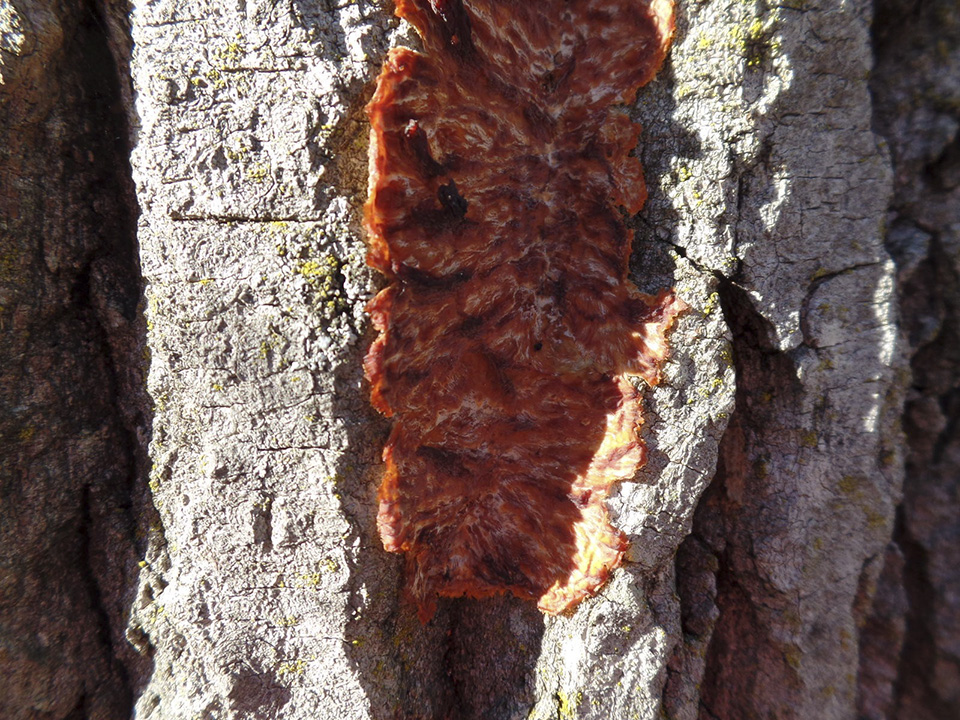
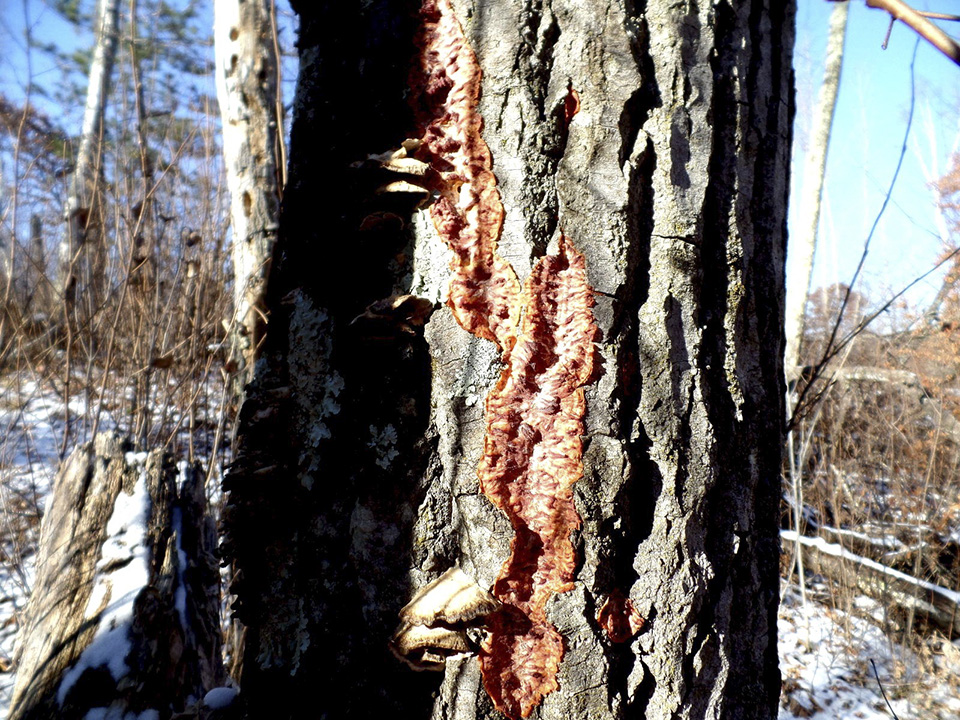
I believe these were all on a large downed poplar.


This button not working for you?
Simply email us at info@MinnesotaSeasons.com.
Attach a video, a YouTube link, or a cloud storage link.
Paul and Mushrooms
Hellen Linda Drake

This button not working for you?
Simply email us at info@MinnesotaSeasons.com.
Be sure to include a location.
12/24/2025

Location: Fairview Twp.
9/24/2023
Location: Fairview Twp., Cass County
March 2023
Location: Lake Shore, MN
Fungi in decaying log
8/26/2022
Location: Albany, NY
4/10/2022
Location: Hennepin County
11/14/2021
Location: Fairview Twp, Cass County
Fall 2021
Location: Martin County, Fairmont, MN
10/14/2021
Location: Fairview Twp, Cass County
Found a lot of this fungus on several downed trees.
12/9/2019
Location: Fairview Twp., Cass County
10/23/2018
Location: Cass County