


Canada Lynx - Species Profile
Conservation • Description • Habitat • Ecology • Distribution • Taxonomy
Conservation Status |
|
||||
| IUCN Red List | LC - Least Concern |
||||
| NatureServe | N4? - Apparently Secure S3 - Vulnerable |
||||
| Federal | Threatened |
||||
| Minnesota | Special Concern Species in Greatest Conservation Need |
||||
Description
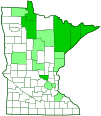
Canada Lynx is one of three wild cats found in Minnesota. It occurs throughout Canada and Alaska, where it is considered common. In the United States it is resident in Maine, Minnesota, Montana, and Washington, and it was successfully reintroduced into Colorado. In Minnesota it is a rare resident in the Arrowhead region, a rare visitor in the north-central region, and absent in the remainder of the state (IUCN). It may venture much farther south when populations of Snowshoe Hares drop in the north.
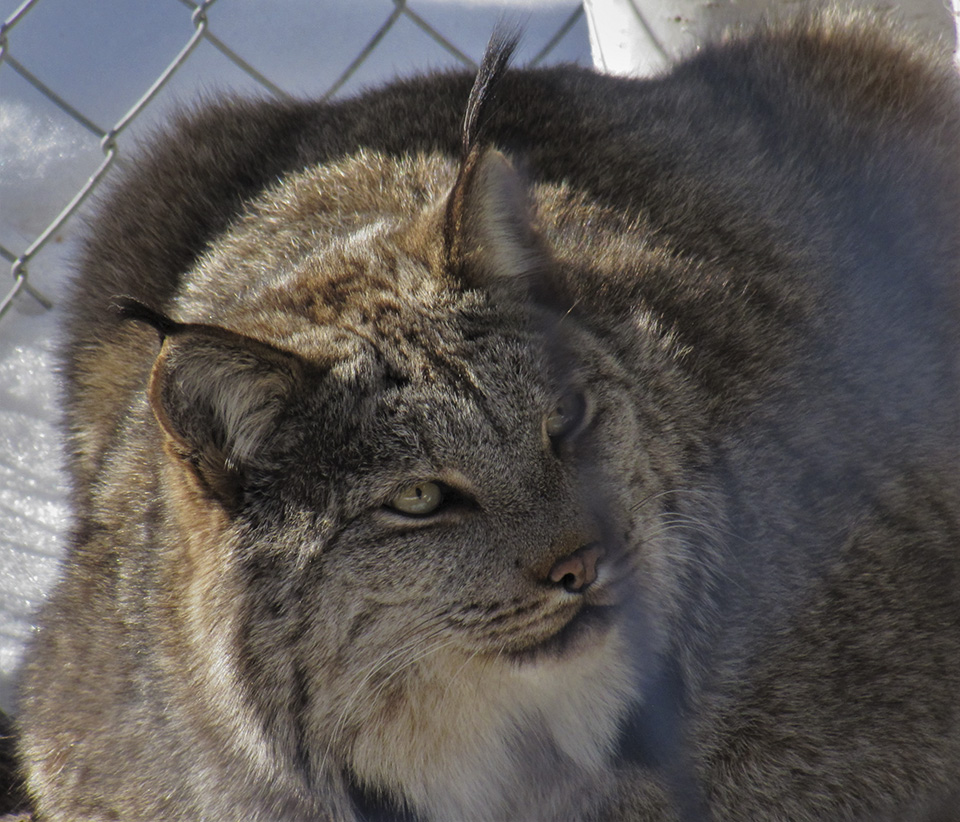
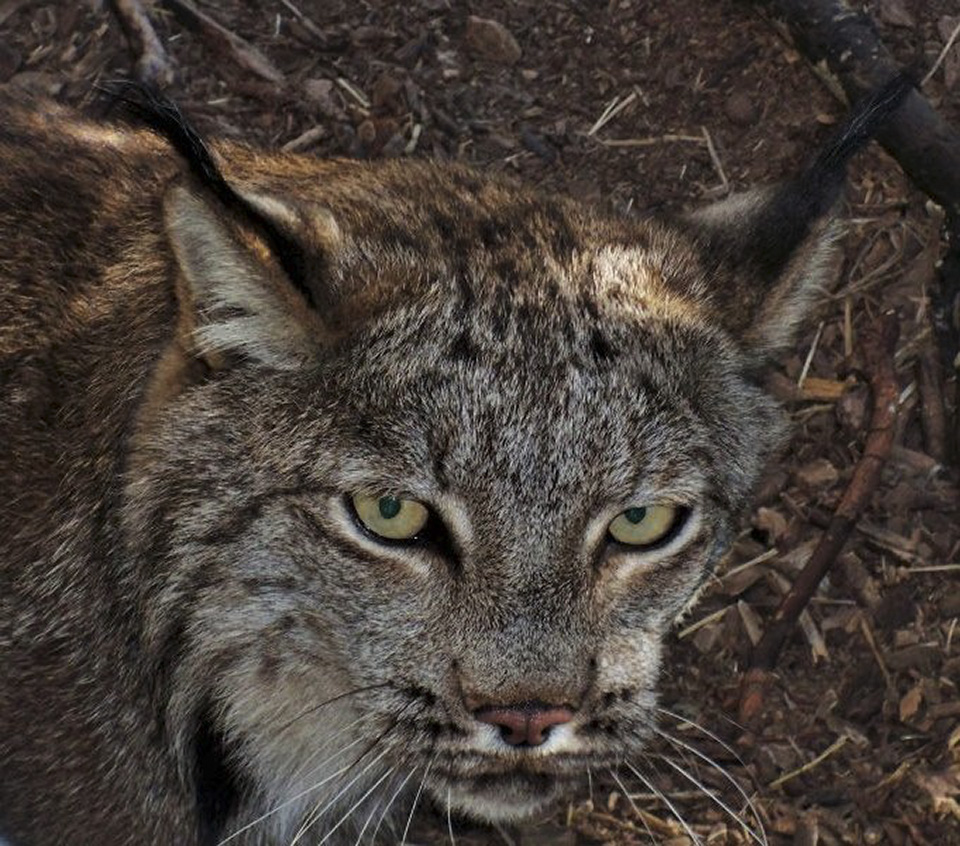
Canada Lynx is a medium-sized wild cat. Adults are 29″ to 42″ long not including the tail. It is about two times as large as a house cat and looks similar to the closely-related bobcat. The fur (pelage) is highly variable in color. It is usually yellowish-brown above but may be grayish-brown, grayish-buff, or silvery-gray with an icy sheen (“blue”). In each case the color is uniform above with little to no dark markings. The underparts are white and may have a few dark spots. The tail is stubby, 2″ to 5″ long, and has a completely black tip. The ears each have a tuft of erect black hairs about 1⅝″ long. In the winter the hair on each side of the face lengthens, giving a ruffled look. The feet are very large, optimized for walking on soft snow.
Size
Total length: 29″ to 42″
Tail: 2″ to 5″
Sign
Similar Species
Habitat
Forests, swamps
Ecology
Behavior
Lifespan
10 to 14.5 years in the wild
Life Cycle
Food
Mostly Snowshoe Hares, but also rodents and birds.
Distribution |
||
|
Sources Biodiversity occurrence data published by: Minnesota Biodiversity Atlas (accessed through the Minnesota Biodiversity Atlas Portal, bellatlas.umn.edu, 12/11/2025). Timm, R. M. 1975. Distribution, natural history, and parasites of mammals of Cook County, Minnesota. Occasional Papers, Bell Museum of Natural History, University of Minnesota 14:1–56. Hazard, Evan B. 1982. The Mammals of Minnesota. University of Minnesota Press, Minneapolis, Minnesota. 280 pp. The counties in light green lack modern records but have historic county or township specimens or records. |
|
| 12/11/2025 | ||
Occurrence |
||
Common in Canada. Uncommon in northern United States. Rare in Minnesota. |
||
Taxonomy
Class
Subclass
Theria
Infraclass
Placentalia (Placental Mammals)
Magnorder
Boreoeutheria
Superorder
Laurasiatheria (Ungulates, Carnivorans, and Allies)
Order
Carnivora (Carnivorans)
Suborder
Feliformia
Infraorder
Aeluroidea
Superfamily
Feloidea
Family
Felidae (Felids)
Subfamily
Felinae (Small Cats)
Genus
Lynx (Lynxes)
Genus
This species was formerly named Felis lynx, placed in the genus with the domestic cat. A comprehensive review of the Family Felidae (Wozencraft, 1993) concluded that it should be moved to the genus Lynx due to physical similarities and behavioral traits.
Subordinate Taxa
Unitl recently, three subspecies of Lynx canadensis were recognized. In 2017, following a revision of the family Felidae, the subspecies were rejected due to the similarity of morphological characteristics.
Synonyms
Felis lynx
Lynx lynx
Common Names
Canada Lynx
Canadian Lynx
Lynx
Glossary
Pelage
The coat of a mammal, consisting of fur, wool, or hair, and including a soft undercoat and stiff guard hairs.