


Bobcat - Species Profile
Conservation • Description • Habitat • Ecology • Distribution • Taxonomy
Conservation Status |
|
||||
| IUCN Red List | LC - Least Concern |
||||
| NatureServe | N5 - Secure SNR - Unranked |
||||
| Minnesota | not listed |
||||
Description
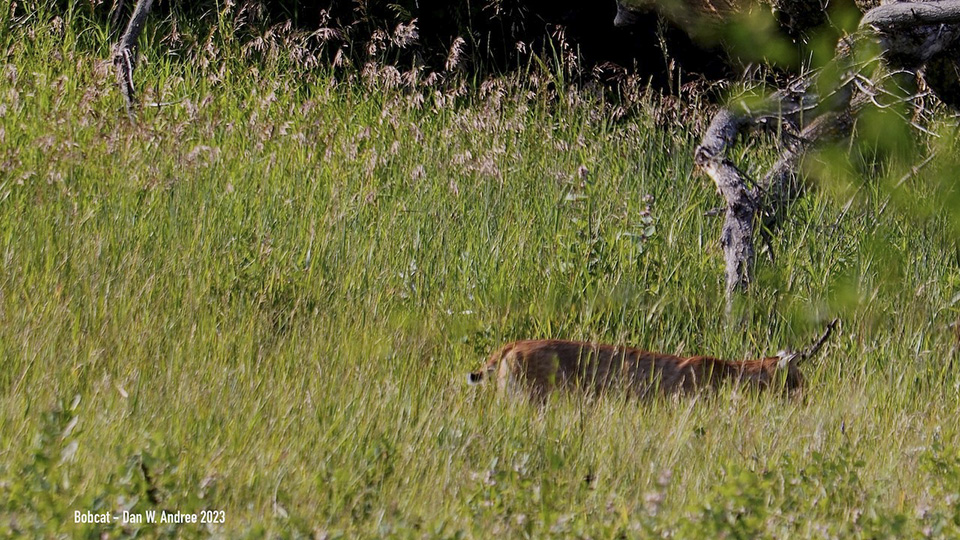
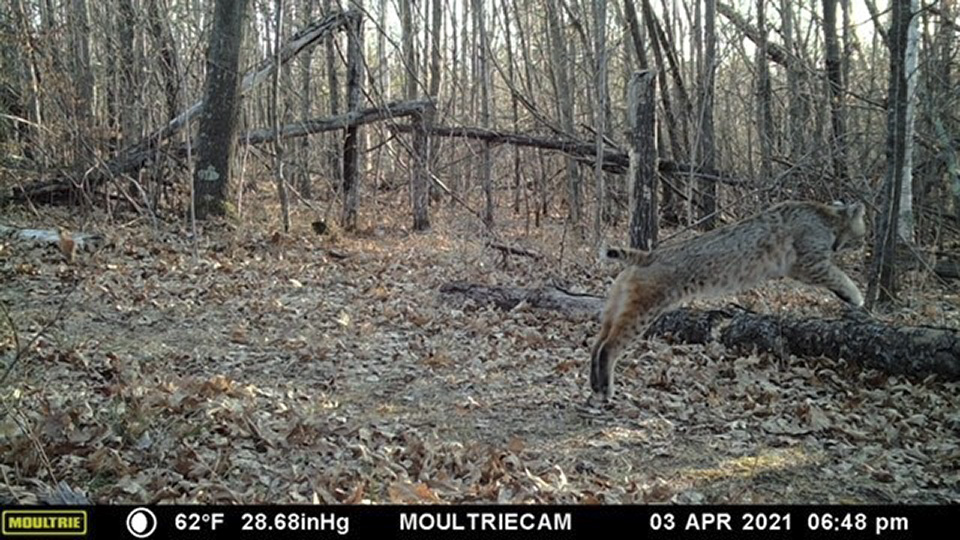
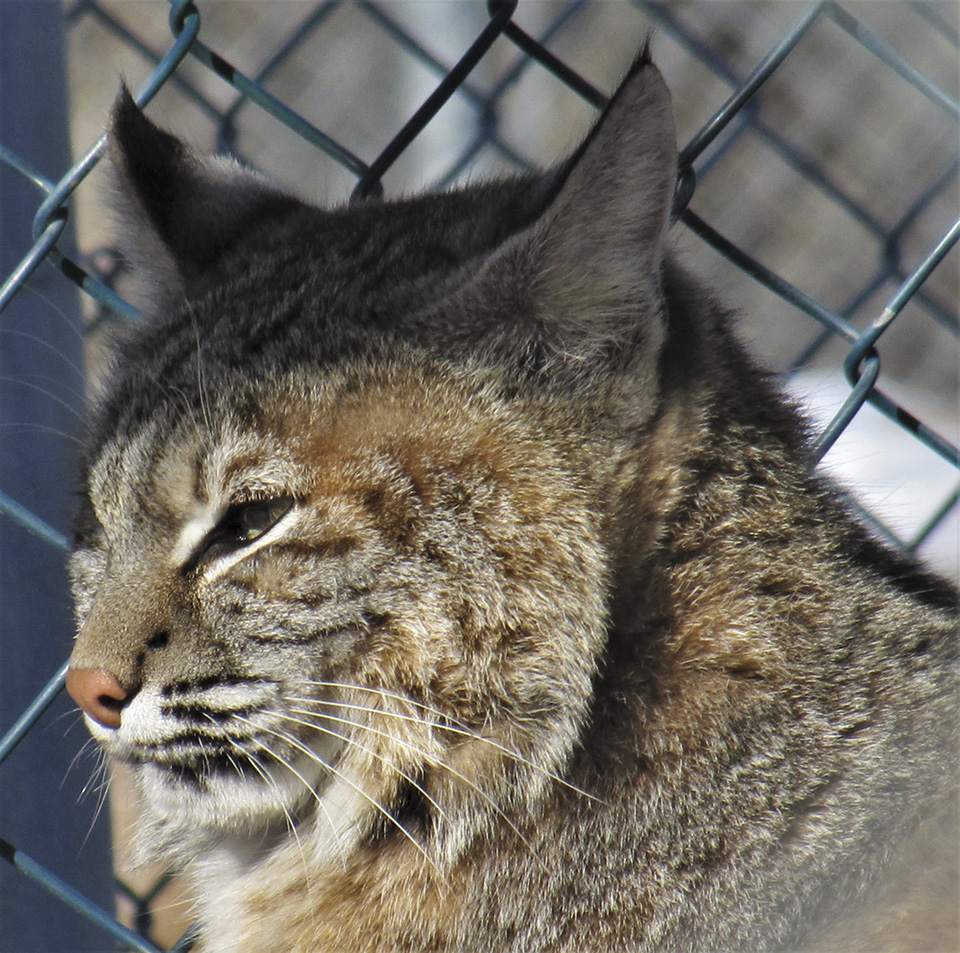
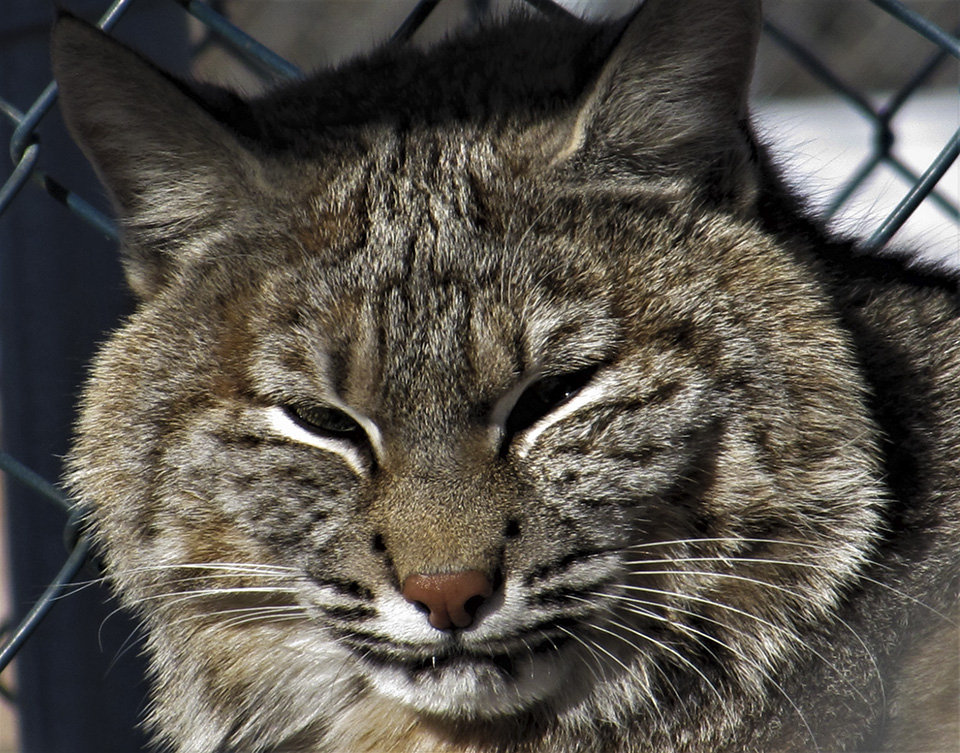
The fur (pellage) is reddish-brown above, whitish on the belly, with spots and stripes throughout. The tail is short and black at the tip but only on the top. Ruffs on each side of the face give the appearance of sideburns. The ear tufts are short and inconspicuous.
Size
Head and body: 25″ to 40″
Tail: 3″ to 7″
Sign
Similar Species
Canada Lynx (Lynx canadensis) is larger. The pelage is pale gray mixed with mixed with pale brown above. The belly is not spotted or striped. The tip of the tail is black, both above and below. The ruffs (sideburns) are more pronounced. The feet are large. The ear tufts are long and conspicuous. It is much less common.
Habitat
A wide variety of habitats including boreal coniferous and mixed forests, aspen forests, forested river bottomlands, brushlands, and cedar swamps
Ecology
Behavior
Lifespan
10 to 12 years
Life Cycle
Food
Distribution |
||
|
Sources Biodiversity occurrence data published by: Minnesota Biodiversity Atlas (accessed through the Minnesota Biodiversity Atlas Portal, bellatlas.umn.edu, 12/1/2025). Timm, R. M. 1975. Distribution, natural history, and parasites of mammals of Cook County, Minnesota. Occasional Papers, Bell Museum of Natural History, University of Minnesota 14:1–56. Hazard, Evan B. 1982. The Mammals of Minnesota. University of Minnesota Press, Minneapolis, Minnesota. 280 pp. |
|
| 12/1/2025 | ||
Occurrence |
||
|
||
Taxonomy
Class
Subclass
Theria
Infraclass
Placentalia (Placental Mammals)
Magnorder
Boreoeutheria
Superorder
Laurasiatheria (Ungulates, Carnivorans, and Allies)
Order
Carnivora (Carnivorans)
Suborder
Feliformia
Infraorder
Aeluroidea
Superfamily
Feloidea
Family
Felidae (Felids)
Subfamily
Felinae (Small Cats)
Genus
Lynx (Lynxes)
Genus
This species was formerly named Felis rufus, placed in the genus with the domestic cat. A comprehensive review of the Family Felidae (Wozencraft, 1993) concluded that it should be moved to the genus Lynx due to physical similarities and behavioral traits.
Subordinate Taxa
A review of the bobcats in North America (Young, S. P. 1958) recognized 12 subspecies of what was then Felis rufus based on pelage coloration. A later study of the evolution of lynxes (Werdelin, L. 1981) recognized a thirteenth subspecies in Florida based on skull morphology.
Bailey Bobcat (Lynx rufus baileyi) 
Californian Bobcat (Lynx rufus californicus)
Eastern Bobcat (Lynx rufus rufus) 
Florida Bobcat (Lynx rufus floridanus)
Giant Bobcat (Lynx rufus gigas)
Lake Superior Bobcat (Lynx rufus superiorensis)
Mexican Bobcat (Lynx rufus escuinapae)
Mojave Bobcat (Lynx rufus mohavensis) ?
Northern Bobcat (Lynx rufus pallescens)
Northwestern Bobcat (Lynx rufus fasciatus)
Oaxaca Bobcat (Lynx rufus oaxacensis)
Peninsula Bobcat (Lynx rufus peninsularis)
Texan Bobcat (Lynx rufus texensis)
Two recent studies (Croteau E. K. 2009, Reding D. M. 2011), based on phylogeography, population history, and mitochondrial DNA, found support for just two subspecies in North America north of Mexico whose status is certain and two possible subspecies in Mexico whose status needs to be clarified. A later study (Loveless A. M. 2016), based on ecological niche and morphology, confirmed the east-west division of northern bobcats. Lynx rufus rufus occurs east of the Great Plains and Lynx rufus fasciatus occurs west of the Great Plains.
eastern Bobcat (Lynx rufus rufus)
Mexican Bobcat (Lynx rufus escuinapae)
northwestern Bobcat (Lynx rufus fasciatus)
Oaxaca Bobcat (Lynx rufus oaxacensis)
Synonyms
Felis calcaratus
Felis rufus
Lynx compressus
Common Names
Bay Lynx
Bobcat
Red Lynx
Glossary
Pelage
The coat of a mammal, consisting of fur, wool, or hair, and including a soft undercoat and stiff guard hairs.