Gray Reindeer Lichen
(Cladonia rangiferina)
Information
Conservation • Description • Ecology • Distribution • Taxonomy
Conservation Status
IUCN Red List
not listed
NatureServe
NNR - Unranked
SNR - Unranked
Minnesota
not listed
Description
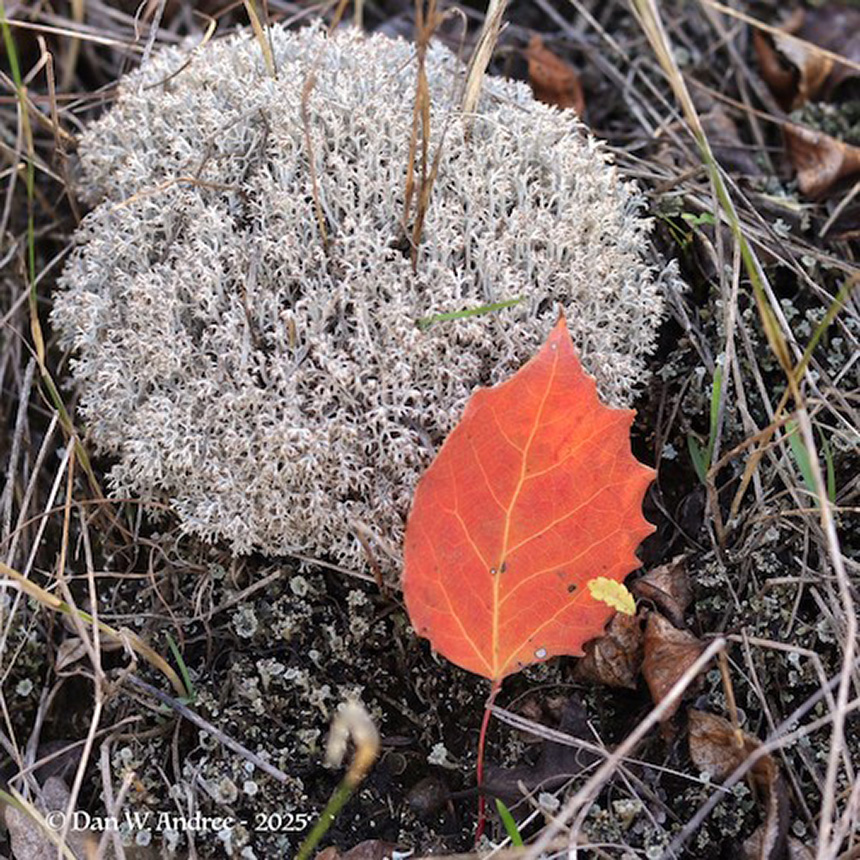
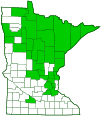
Gray Reindeer Lichen is a common and widespread, slow growing, long-lived, shrubby lichen. It occurs around the globe in the Northern Hemisphere (circumpolar). In the United States, it occurs east of the Great Plains and in the Pacific Northwest. It is common in northeastern Minnesota.
Gray Reindeer Lichen is found in a variety of habitats, including sunny, exposed, relatively dry areas; open, relatively humid, coniferous forests; shrublands; and tundra. It is one of the most abundant lichens in tundra. It grows over rocks, on thin soil on the ground, and in moss in forested areas.
Gray Reindeer Lichen grows very slowly, on average just ⅛″ to ⅜″ (3 to 11 mm) per year. A 4″ (10 cm) mat may represent over half a century of steady growth. Growth is fastest – if that word can be used – in shadowy forests. In open exposed areas the growth rate is significantly slower. During dry spells growth essentially stops because it lacks roots and relies on the air for moisture. While individual stalks might decay at the base after 100 to 150 years, the colony itself can be much older, essentially "walking" across the landscape as the tips grow forward and the bases turn to humus.
The vegetative body (thallus) is a shrubby tuft of many branching stems. The primary thallus is inconspicuous and composed of scaly, flaky, rounded, prostrate pieces (squamulose). It is ephemeral and it is usually not visible. The secondary thallus is conspicuous, upright, three dimensional, and shrubby (fruticose). It is composed of numerous hollow stalks (podetia). The podetia are 2″ to 4¾″ (5 to 12 cm) tall, up to 1⁄32″ to 1⁄16″ (1.5 to 2 mm) thick, and three or four times branched. The surface is smooth or slightly cottony or cobweb-like (arachnoid), and it may be continuous or perforated. It is usually ash gray, rarely yellowish white. If snapped off, the interior wall of the hollow podetia is gray, black only at the absolute microscopic tip of the “foot” where it meets the dirt. The main axis of the podetia is paler toward the base, but with age it decays and blackens where it touches the moist soil, at most ⅜″ to ¾″ (1 to 2 cm) from the base.
Each branch ends in three or four short branchlets. The tips of the terminal branchlets are strongly bent in the same direction (unilaterally deflexed).
Disc- or cup-shaped reproductive structures (apothecia) are rarely produced. When present, they are at the tips of the branches, brown, and usually very small.
Similar Species
Black-footed Reindeer Lichen (Cladonia stygia) podetia appear “dirty gray” halfway up the base because the outer surface breaks up into irregular patches (areoles) exposing the inner coal black tissue. The surface is rough due to the areoles.
Green Reindeer Lichen (Cladonia mitis) usually has a yellowish or pale green tint because it contains usnic acid, which the Gray Reindeer Lichen lacks. The terminal branchlets spread in all directions.
Ecology
Substrate
Thin soil, rocks, moss
Growth Form
Fruticose
Habitat
Sunny, exposed, relatively dry areas; open, relatively humid, coniferous forests; shrublands; and tundra.
Hosts
Distribution
Sources
Biodiversity occurrence data published by: Minnesota Biodiversity Atlas (accessed through the Minnesota Biodiversity Atlas Portal, bellatlas.umn.edu. Accessed 1/26/2026).
Cladonia rangiferina (L.) Weber in GBIF Secretariat (2023). GBIF Backbone Taxonomy. Checklist dataset https://doi.org/10.15468/39omei accessed via GBIF.org on 2026-01-26.
Mycology Collections Portal (MyCoPortal) https://www.mycoportal.org/portal/collections/index.php). Accessed 1/26/2026.
The Consortium of North American Lichen Herbaria (CNALH) https://lichenportal.org/cnalh/index.php. Accessed 1/26/2026.
Occurrence
Common
Taxonomy
Kingdom
Fungi (Fungi)
Subkingdom
Dikarya
Phylum
Ascomycota (Sac Fungi)
Subphylum
Pezizomycotina
Class
Lecanoromycetes (Common Lichens)
Subclass
Lecanoromycetidae (Shield Lichens, Sunburst Lichens, Rosette Lichens, and Allies)
Order
Lecanorales (Shield Lichens, Rim Lichens, and Allies)
Family
Cladoniaceae (Spindles and Structured Lichens)
Genus
Cladonia (Pixie Cup and Reindeer Lichens)
Mycobiont
Cladonia rangiferina
Photobiont
green algae other than Trentepohlia
Genus
This lichen was originally described in 1753 as Lichen rangiferinus. In 1780, it was transferred to the genus Cladonia.
In the early 20th century, some taxonomists moved this and some other Cladonia species to the new genus Cladina based on morphological and chemical differences. More recent chemical and molecular analyses suggested that those differences do not warrant separate genus status. By 2008, many taxonomists had re-integrated Cladina back into Cladonia as a subgenus. Currently, the majority of taxonomists and databases recognize Cladonia rangiferina as the accepted name.
Subordinate Taxa
Four subspecies, ten varieties, and seventeen forms of Cladonia rangiferina are currently recognized. No records or observations in Minnesota have been identified beyond the level of species.
Synonyms
Cladina rangiferina
Cladina rangiferina f. crispata
Cladina rangiferina f. humilis
Cladina rangiferina f. patula
Cladina rangiferina f. prolifera
Cladina rangiferina f. rangiferina
Cladina rangiferina ssp. rangiferina
Cladina rangiferina ssp. abbayesii
Cladina rangiferina ssp. grisea
Cladina rangiferina ssp. rangiferina
Cladina rangiferina var. crispatula
Cladina rangiferina var. rangiferina
Lichen rangiferinus
Lichen rangiferinus var. alpestris
Lichen rangiferinus var. rangiferinus
Common Names
Gray Reindeer Lichen
Photos
Visitor Photos
Share your photo of this lichen.
This button not working for you?
Simply email us at info@MinnesotaSeasons.com.
Attach one or more photos and, if you like, a caption.
Dan W. Andree
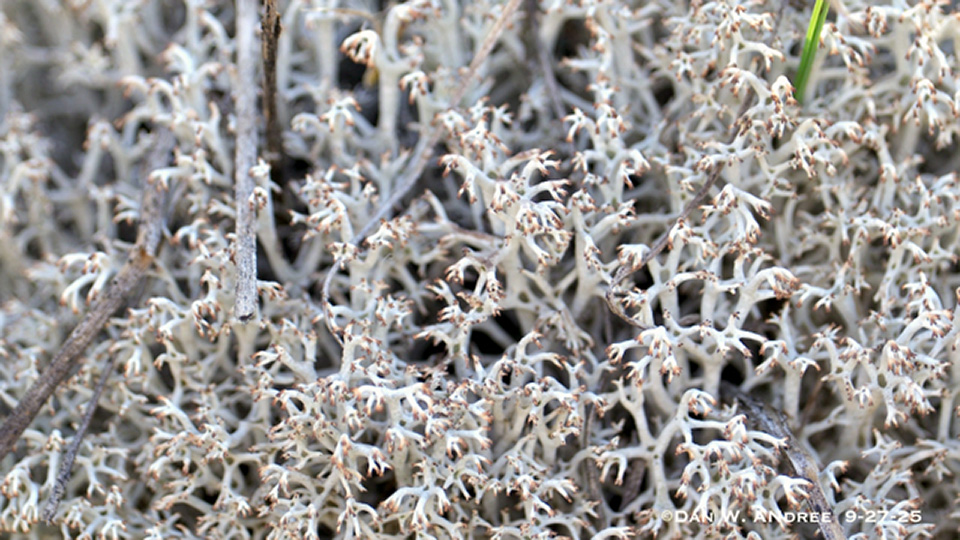
I believe this is Gray Reindeer Lichen...
Up close it is different looking from the Green Reindeer Lichen. It also has interesting brownish tips not visible unless viewed very close up. The green reindeer lichen which was in close proximity also had a slight greenish tint whereas the gray looked more grayish white. The gray reindeer lichen seemed more compact l compared to all 3 other green reindeer lichens I viewed. I found some interesting lichens growing on a tree trunk I’m going through too.
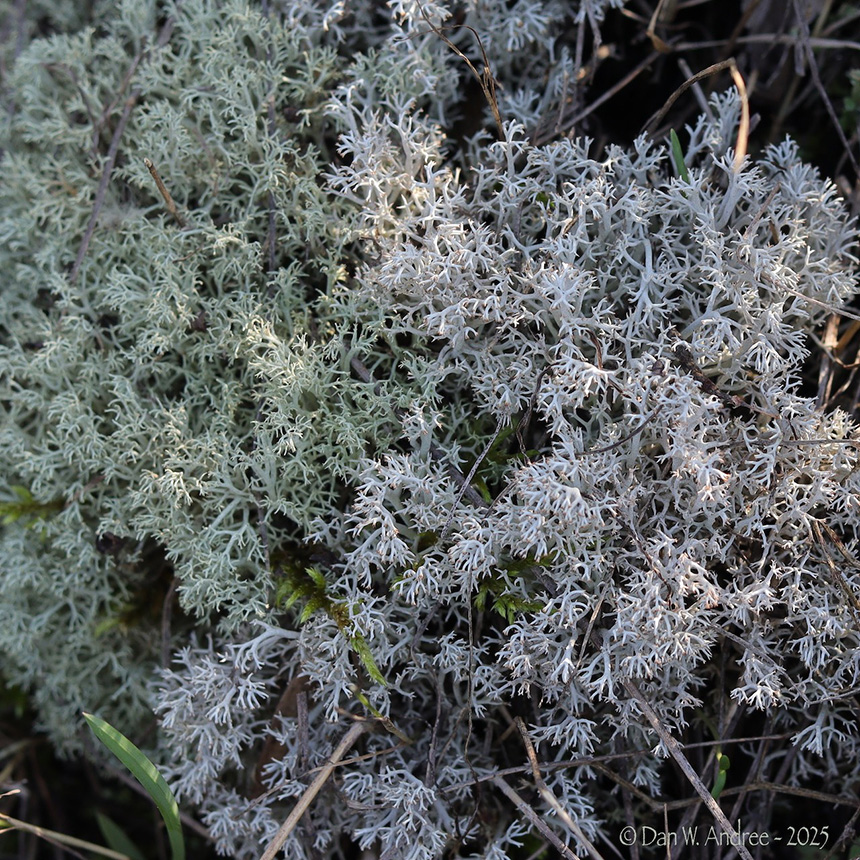
Green Colored & White Colored Reindeer Lichens...
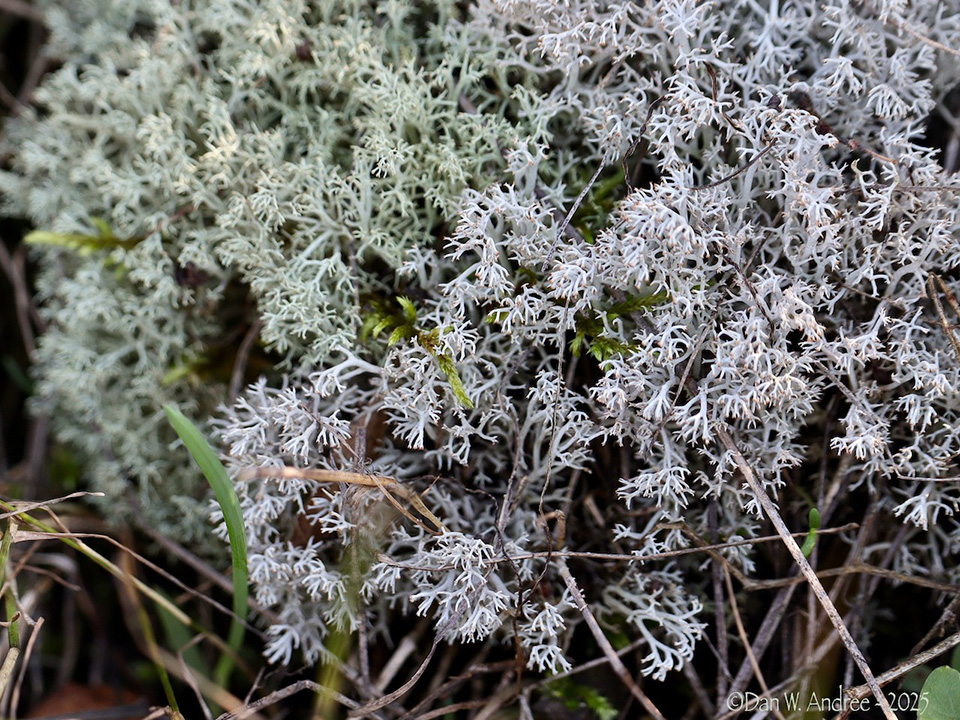
This reindeer lichen looked part green and part white. I first assumed it was a green reindeer lichen and the part greener was because some type of moss growing underneath that section. There are some sprouts of some type moss poking through the reindeer lichen in areas. Then I thought maybe the whiter section was a gray reindeer lichen just growing right next to a green reindeer lichen. Anyway I’m kind a confused on this one. What do you think? Do you think the green moss underneath part of it is just making it look greener and it is just an all green reindeer lichen or do you think the whiter section is a gray reindeer lichen just growing next to a green?
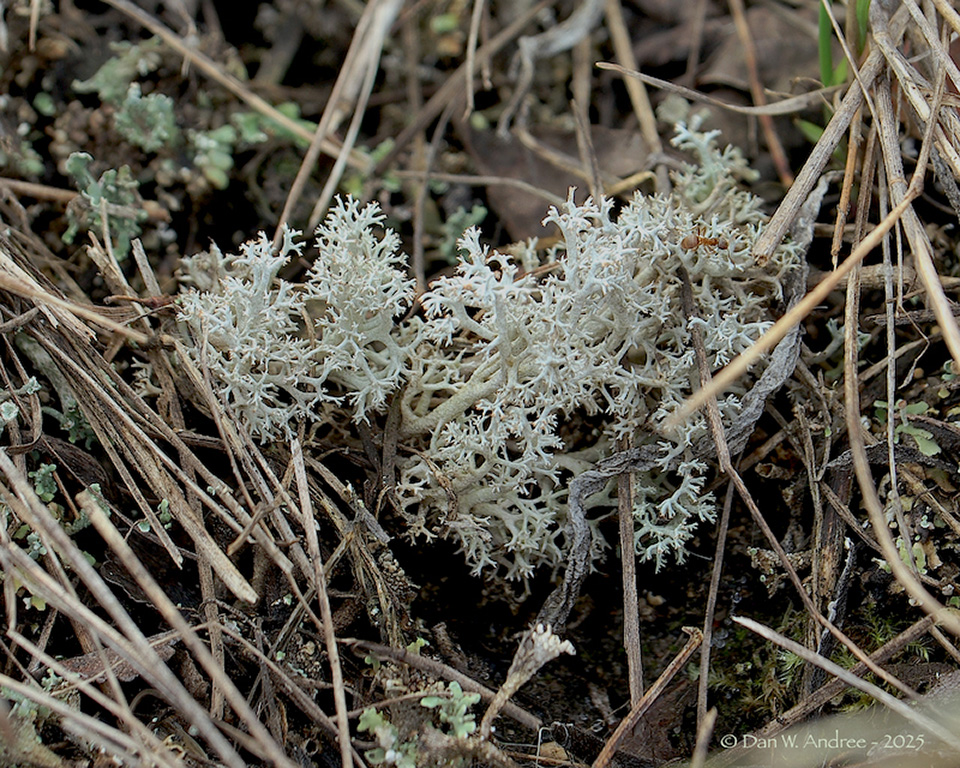
Ant on Reindeer Lichen...
This ant crawled in and through areas of this small reindeer lichen then eventually just exited off.
It was probably like a small obstacle course for the ant going though those lichen branch like things.
Minnesota Seasons Photos
Slideshows
Slideshows
Reindeer Lichen (Cladonia rangiferina)
Andrée Reno Sanborn
Cladonia rangiferina - fungi kingdom
Fungi Kingdom
Videos
Visitor Videos
Share your video of this lichen.
This button not working for you?
Simply email us at info@MinnesotaSeasons.com.
Attach a video, a YouTube link, or a cloud storage link.
Other Videos
Cladonia rangiferina
Barmouth Wildlife Camera
Wild Edible Reindeer Moss
Edzherenow
Sightings
Visitor Sightings
Report a sighting of this lichen.
This button not working for you?
Simply email us at info@MinnesotaSeasons.com.
Be sure to include a location.
Dan W. Andree
1/5/2026

Location: Norman Co. Mn.
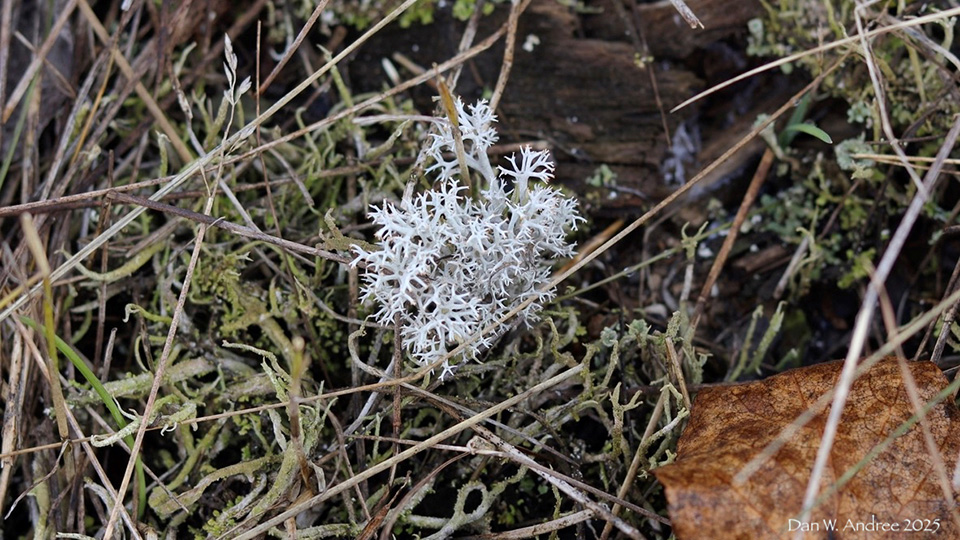
This little reindeer lichen reminded me of a big snowflake. Sometimes taking a closer look at some things one can find it to be some thing quite interesting compared to just a distant glance. Looks like a little work of Art.
Dan W. Andree
11/13/2025

Location: Norman Co. Mn.
This ant crawled in and through areas of this small reindeer lichen then eventually just exited off.
It was probably like a small obstacle course for the ant going though those lichen branch like things.
Dan W. Andree
10/24/2025

Location: Norman Co. Mn.
Dan W. Andree
10/23/2025

Location: Norman Co. Mn.
This reindeer lichen looked part green and part white. I first assumed it was a green reindeer lichen and the part greener was because some type of moss growing underneath that section. There are some sprouts of some type moss poking through the reindeer lichen in areas. Then I thought maybe the whiter section was a gray reindeer lichen just growing right next to a green reindeer lichen. Anyway I’m kind a confused on this one. What do you think? Do you think the green moss underneath part of it is just making it look greener and it is just an all green reindeer lichen or do you think the whiter section is a gray reindeer lichen just growing next to a green?
Dan W. Andree
9/27/2025

Location: Norman Co. Mn.
I believe this is Gray Reindeer Lichen...
Up close it is different looking from the Green Reindeer Lichen. It also has interesting brownish tips not visible unless viewed very close up. The green reindeer lichen which was in close proximity also had a slight greenish tint whereas the gray looked more grayish white. The gray reindeer lichen seemed more compact l compared to all 3 other green reindeer lichens I viewed. I found some interesting lichens growing on a tree trunk I’m going through too.
Minnesota Seasons Sightings