Orange Pinwheel
(Marasmius siccus)
Information
Conservation • Description • Habitat • Ecology • Distribution • Taxonomy
Conservation Status
IUCN Red List
not listed
NatureServe
NNR - Unranked
Minnesota
not listed
Description
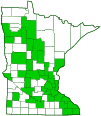
Orange Pinwheel is a diminutive, common and widespread, gilled mushroom. It occurs worldwide on every continent except Antarctica. It occurs in the United States and southern Canada east of the Great Plains. It is common in Minnesota.
Orange Pinwheel is found in summer and fall, usually in groups but not clustered (gregarious), in hardwood forests. It grows on the ground under trees and shrubs on leaf litter and on woody debris. It sometimes grows on the needle duff of white pine. It gains its nutrients from decaying wood (saprobic).
In dry weather, the Orange Pinwheel mushrooms shrivel into a dried, almost invisible state. However, with the first drop of rain, they spring back to life, regaining their full size and shape. This “resurrection” ability often misleads people into thinking that new mushrooms have suddenly appeared, when in fact, they've been there all along, patiently waiting for the moisture they need to rehydrate.
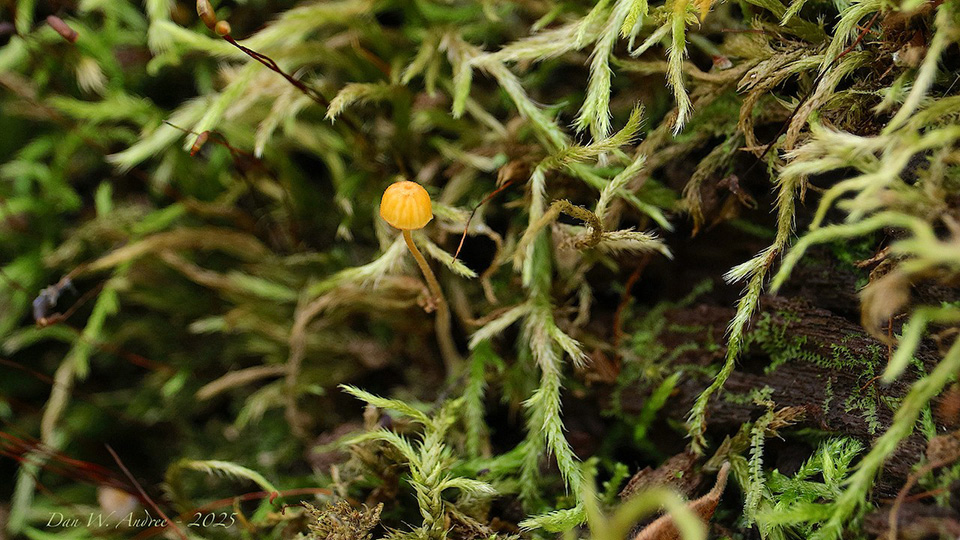
The cap is 3⁄16″ to 1 3⁄16″ (5 to 30 mm) in diameter and obtusely cone-shaped, with a broadly rounded top and straight descending sides, to bell-shaped, with the margins flared outwards. It is distinctly pleated and there is usually a knob or a depression in the middle. It is orange when fresh, fading to pale orange as it ages. The surface is dry and without hairs or scales (bald).
The gills are white or pale yellowish, narrow, and very widely spaced. They are usually broadly attached to the stem (adnate) but sometimes not attached to the stem (free). Between the main gills there are sometimes short gills that do not reach the stem.
The stalk is 1″ to 2⅝″ (25 to 65 mm) long, and about 1⁄32″ (1 mm) thick, equal in size from top to bottom. It is wiry, dry, bald, and polished. It is pale or whitish at first, but it soon turns mostly dark brown to orangish black, remaining pale or whitish just at the top.
The flesh is thin. Though not poisonous, it is considered inedible because it is insubstantial and it sometimes leaves a bitter aftertaste.
The spore print is white.
Similar Species
Habitat and Hosts
Hardwood forests
Ecology
Season
Summer and fall
Distribution
Occurrence
Common
Taxonomy
Kingdom
Fungi (Fungi)
Subkingdom
Dikarya
Phylum
Basidiomycota (Basidiomycete Fungi)
Subphylum
Agaricomycotina (Higher Basidiomycetes)
Class
Agaricomycetes (Mushrooms, Bracket Fungi, Puffballs, and Allies)
Subclass
Agaricomycetidae
Order
Agaricales (Common Gilled Mushrooms and Allies)
Suborder
Marasmiineae
Family
Genus
Marasmius (Pinwheels and Parachute Mushrooms)
Subgenus
Globulares
Section
Sicci
Subordinate Taxa
Synonyms
Agaricus siccus
Marasmius clementsianus
Common Names
Orange Pinwheel
Photos
Visitor Photos
Share your photo of this fungus.
This button not working for you?
Simply email us at info@MinnesotaSeasons.com.
Attach one or more photos and, if you like, a caption.
Dan W. Andree
A few more Orange Pinwheel...
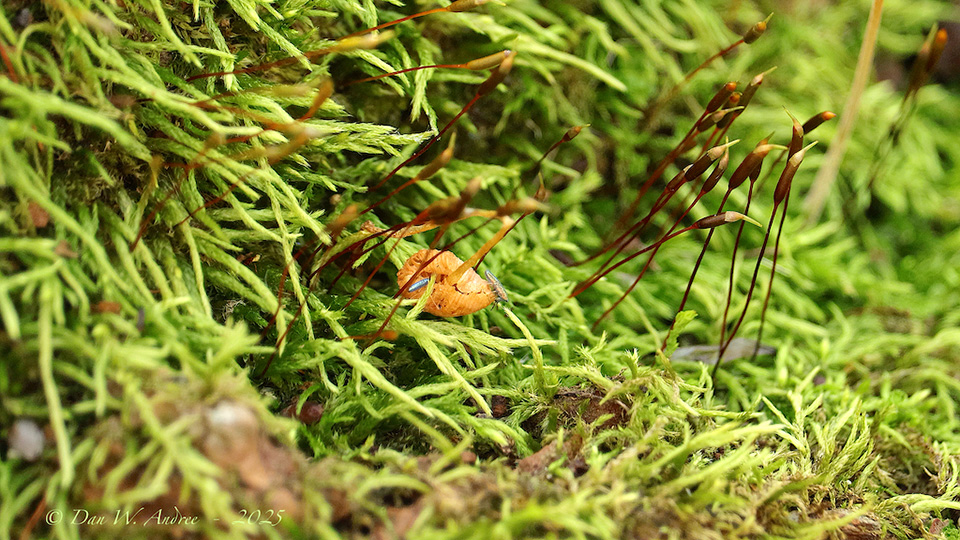
… some drying or dying out. Though Norman county has a lot of agriculture land there are a few areas of dense mature woodlands in some parts of the county. The first photo the little mushroom reminds me of a peeled orange or tangerine. I was amazed how tiny these were. Easy to miss.
Tiny Insects Feeding on Tiny Mushroom...
Seen these tiny strange looking insects feeding on a tiny mushroom which I believe is a wilted or dying Orange Pinwheel. This mushroom was the only one bent over like that and two of those hunch back like insects seemed to be enjoying it for lunch. Those tiny insects are somewhat metallic colored. So small you can easy not notice them with the naked eye unless close up.… There are several different kinds of mushrooms scattered here or there in dense woods.
Super Tiny Orange Mushroom...
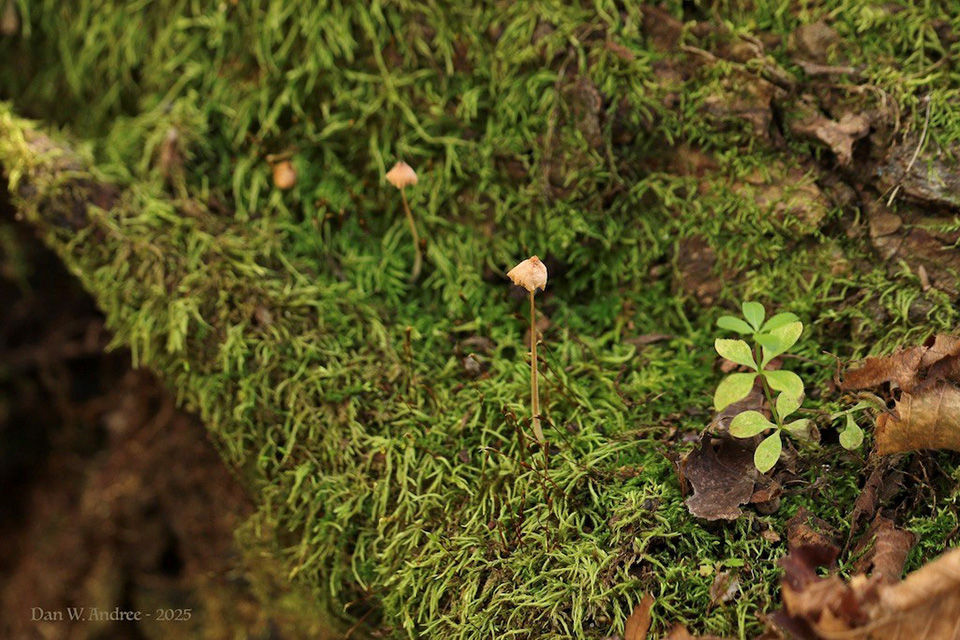
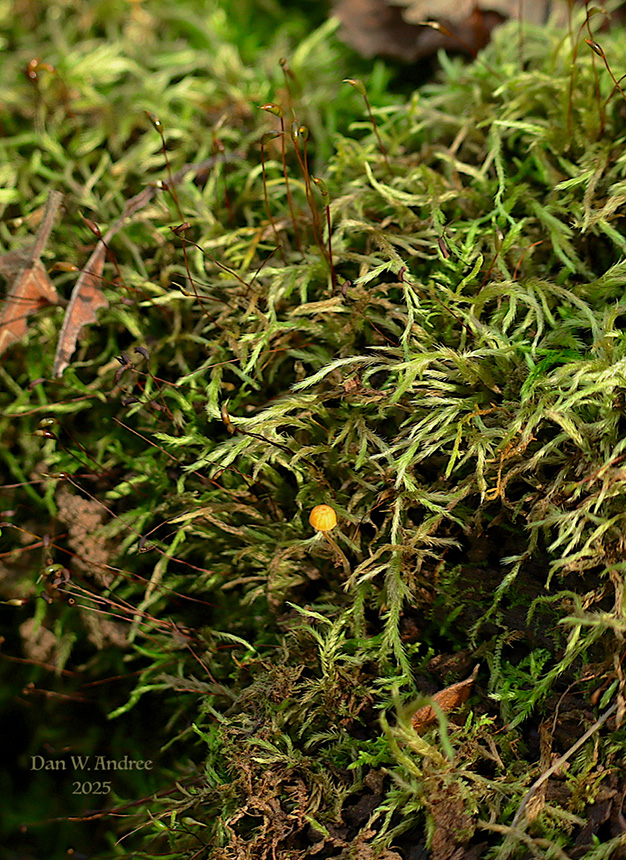
I came across this super tiny orangish mushroom growing on a dead log full off moss etc. The cap was only maybe 1/16 -1/8th of an inch or so. There were two of them though spaced apart so I couldn’t get both in the same image. Seen it today. I have no idea what it is and barely noticed it.
This is the other ultra tiny Mushroom...
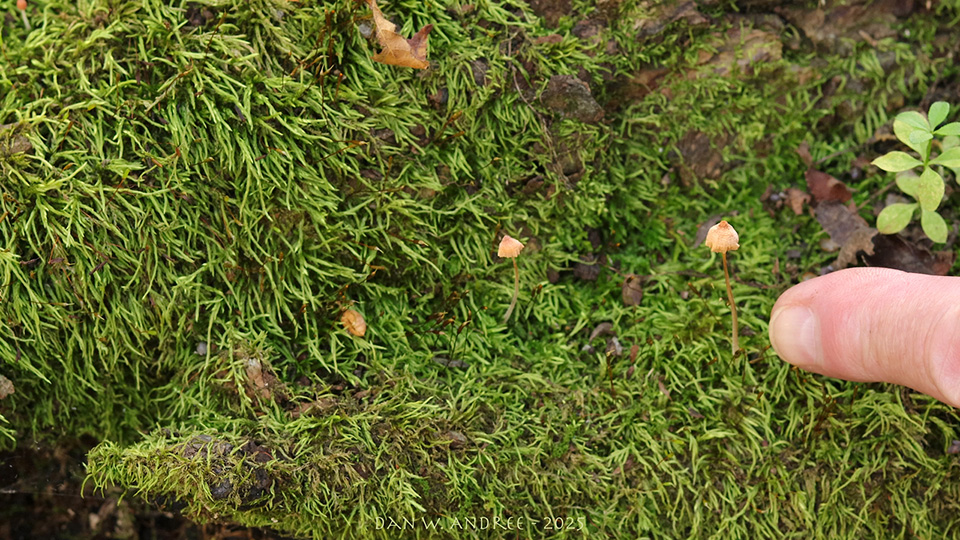
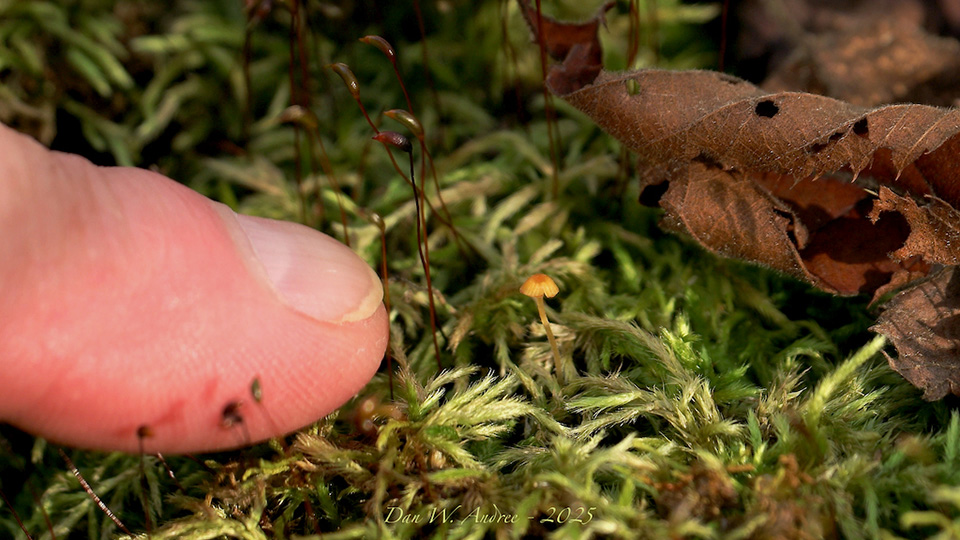
That isn’t my thumb its my index finger. This one was slightly smaller than the other one …
Minnesota Seasons Photos
Slideshows
Slideshows
Marasmius siccus
Mushrooms Fungi
Marasmius siccus - fungi kingdom
Nineli Lishina
Videos
Visitor Videos
Share your video of this fungus.
This button not working for you?
Simply email us at info@MinnesotaSeasons.com.
Attach a video, a YouTube link, or a cloud storage link.
Other Videos
Dominant Litter decompser Marasmius siccus fruits from June to November when conditions are right
Dr. Nandkumar Kamat
Marasmius siccus of Canacona display water repellent hydrophobic pileal surface
Dr. Nandkumar Kamat
Sightings
Visitor Sightings
Report a sighting of this fungus.
This button not working for you?
Simply email us at info@MinnesotaSeasons.com.
Be sure to include a location.
Dan W. Andree
9/27/2025

Location: Norman Co. Mn.
Dan W. Andree
9/26/2025

Location: Norman Co. Mn.
Dan W. Andree
9/25/2025

Location: Norman Co. Mn.
Minnesota Seasons Sightings