


American Black Bear - Species Profile
Conservation • Description • Habitat • Ecology • Distribution • Taxonomy
Conservation Status |
|
|||
| IUCN Red List | LC - Least Concern |
|||
| NatureServe | N5 - Secure SNR - Unranked |
|||
| Minnesota | not listed |
|||
Description
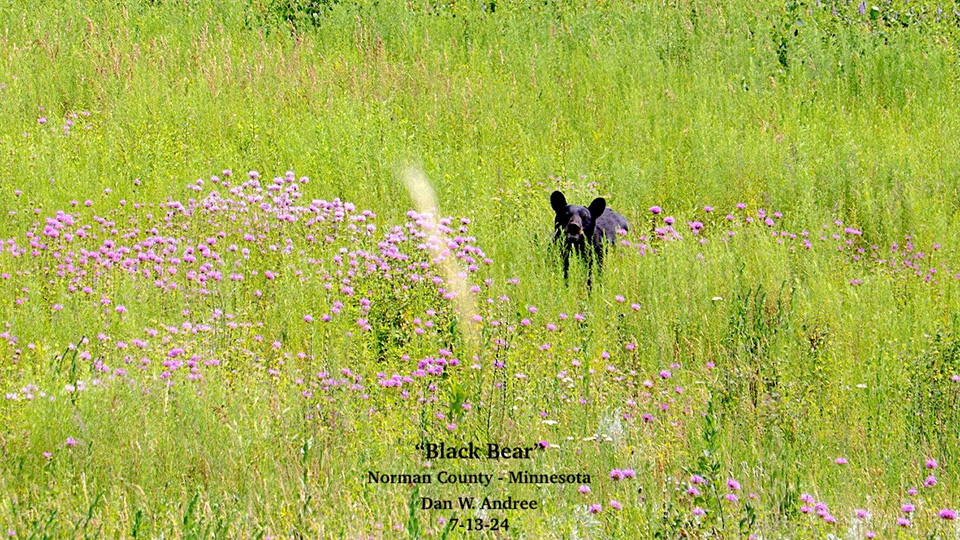
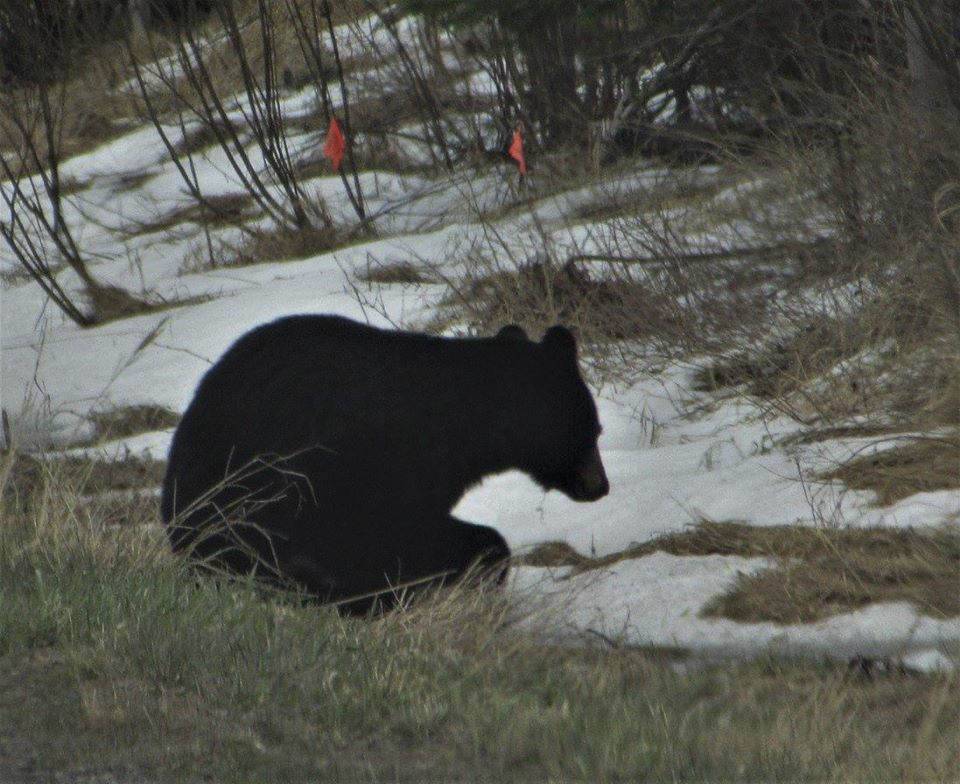
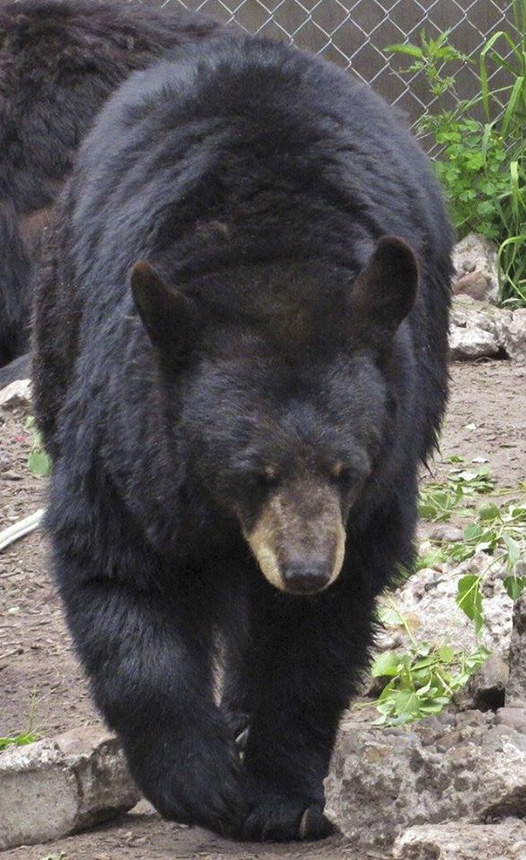
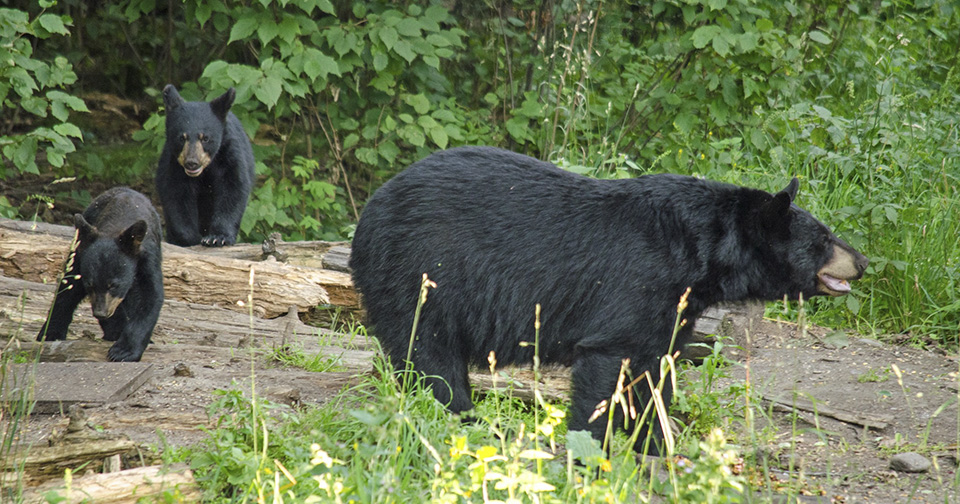
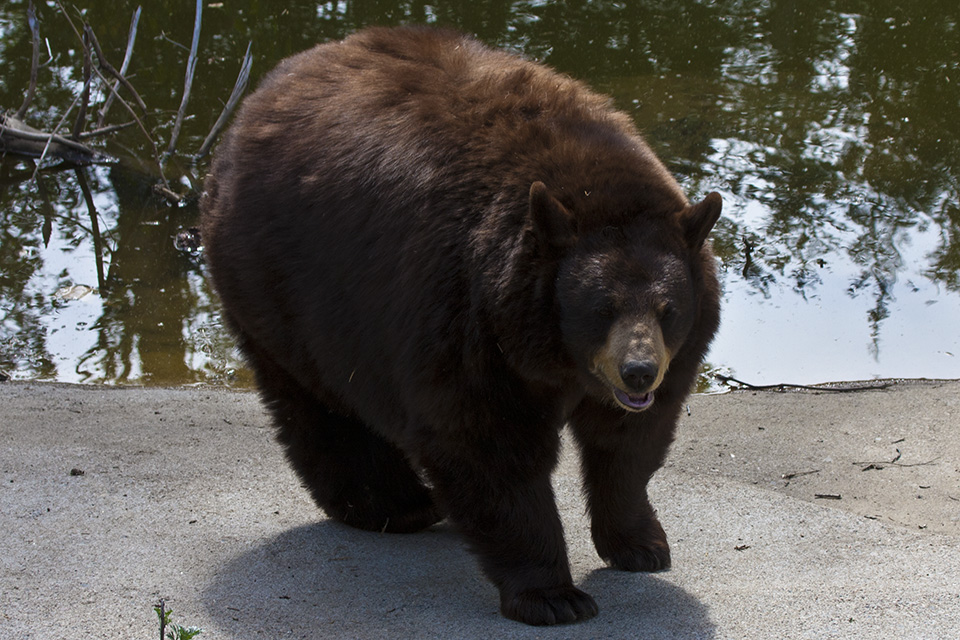
American Black Bear is a large, common though rarely seen, solitary, omnivorous mammal. It is usually 5″ to 6″ in length, 2″ to 3″ in height at the shoulders, and weighs 200 to 475 or more pounds. The male is much larger than the female.
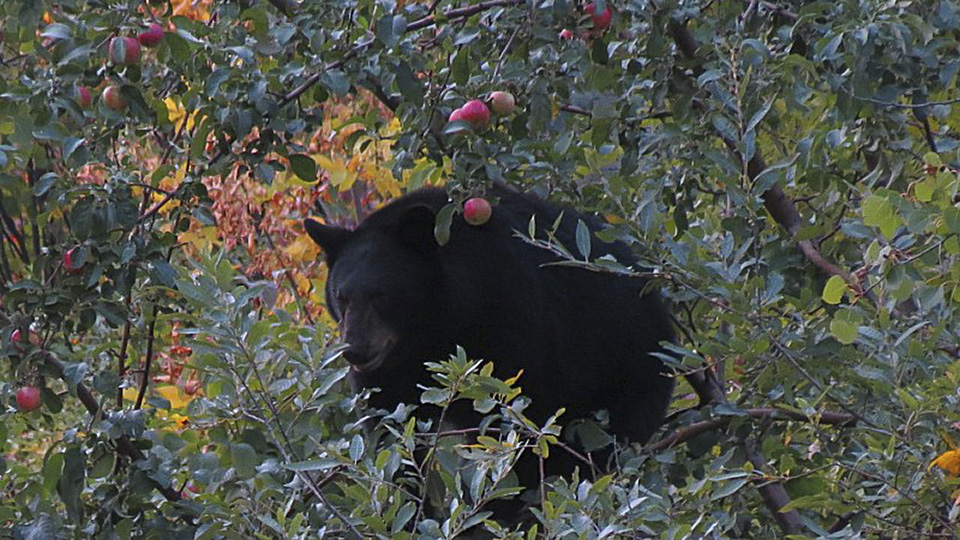
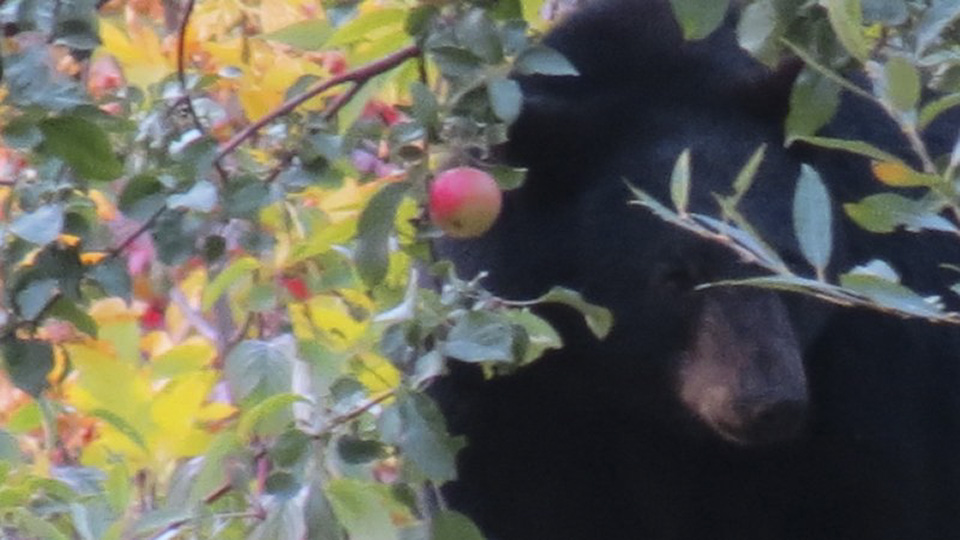
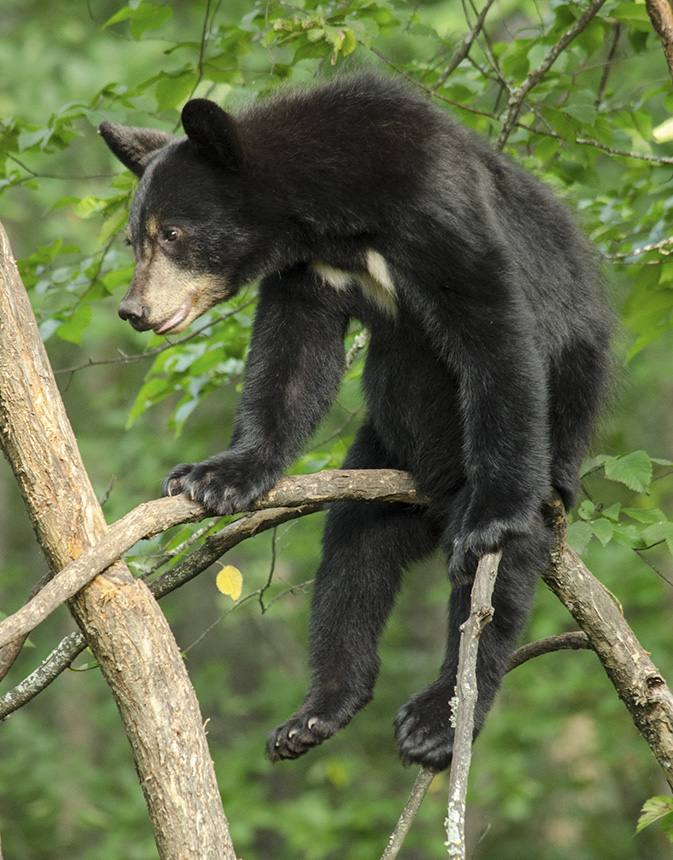
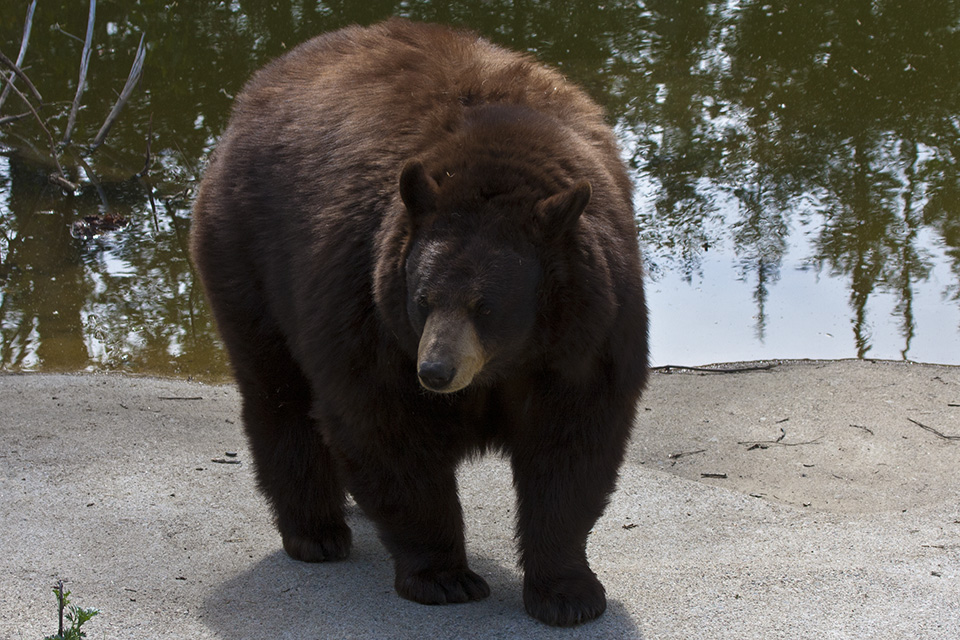
In Minnesota the black bear is usually black with a pale brown muzzle and usually a small white chest spot. About six percent of the bears in Minnesota are “non-black” color morphs (Rounds, 1987). These can be brown, cinnamon, or yellowish brown, and can occur within populations and even within litters.
Size
Head and body: 5′ to 6′
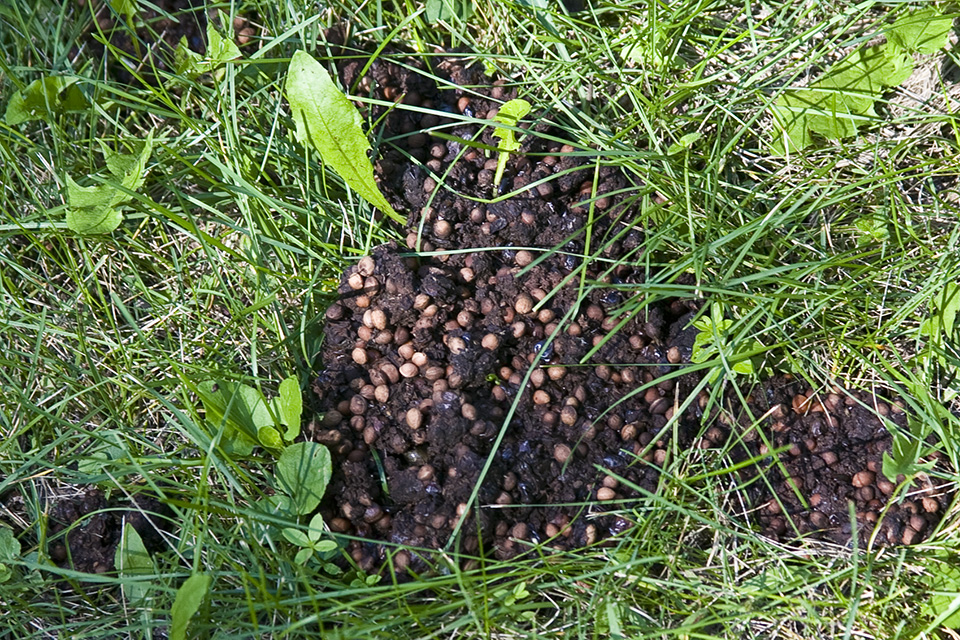
Sign
Similar Species
No similar species
Habitat
Forests, swamps, wooded areas.
Ecology
Behavior
Lifespan
18 to 23 years or more
Life Cycle
Male territories overlap those of several females. Breeding takes place in June and July. Females give birth usually every 2 years, sometimes waiting 3 or 4 years. The gestation period is about 220 days.
A litter of 1 to 5, usually 2 or 3, cubs ar born in January or February when the female is in hibernation. The cubs remain with their mother about 17 months, sharing her den in their second winter.
Lifespan in the wild can be up to 30 years, but average lifespan is 10 years due to interaction with humans, including hunting.
Food
Inner tree bark, grasses, and forbs in the spring; nuts, roots, berries, grasses, buds, colonial insects, beetles, small mammals, carrion, fish, and garbage in summer and fall; nothing in the winter.
Distribution |
||
|
Sources Biodiversity occurrence data published by: Minnesota Biodiversity Atlas (accessed through the Minnesota Biodiversity Atlas Portal, bellatlas.umn.edu, 12/7/2025). Timm, R. M. 1975. Distribution, natural history, and parasites of mammals of Cook County, Minnesota. Occasional Papers, Bell Museum of Natural History, University of Minnesota 14:1–56. Hazard, Evan B. 1982. The Mammals of Minnesota. University of Minnesota Press, Minneapolis, Minnesota. 280 pp. |
|
| 12/7/2025 | ||
Occurrence |
||
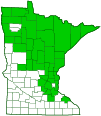
Locally common There are about 20,000 American Black Bears in the state. |
||
Taxonomy
Class
Subclass
Theria
Infraclass
Placentalia (Placental Mammals)
Magnorder
Boreoeutheria
Superorder
Laurasiatheria (Ungulates, Carnivorans, and Allies)
Order
Carnivora (Carnivorans)
Suborder
Caniformia (Dog-like Carnivores)
Infraorder
Arctoidea
Parvorder
Ursida
Family
Ursidae (Bears)
Subfamily
Ursinae (Typical Bears)
Genus
Ursus (Holarctic Bears)
Subgenus
Euarctos
Subordinate Taxa
California Black Bear (Ursus americanus californiensis)
Cinnamon Bear (Ursus americanus cinnamomum)
Dall Black Bear (Ursus americanus pugnax)
East Mexican Black Bear (Ursus americanus eremicus)
Eastern Black Bear (Ursus americanus americanus) 
Florida Black Bear (Ursus americanus floridanus) *
Glacier Bear (Ursus americanus emmonsii)
Haida Gwaii Black Bear (Ursus americanus carlottae)
Kenai Black Bear (Ursus americanus perniger)
Kermode Bear (Ursus americanus kermodei)
Louisiana Black Bear (Ursus americanus luteolus) *
New Foundland Bear (Ursus americanus hamiltoni)
New Mexico Black Bear (Ursus americanus amblyceps)
Olympic Black Bear (Ursus americanus altifrontalis)
Vancouver Black Bear (Ursus americanus vancouveri)
West Mexico Black Bear (Ursus americanus machetes)
* Subspecies validity
A recent phylogeographic analyses of American Black Bears (Puckett et al., 2015) does not support the designation of the subspecies U. a. floridanus and U. a. luteolus, and suggests that they should be grouped with U. a. americanus.
Synonyms
Euarctos americanus
Euarctos vitabilis
Ursus amplidens
Ursus optimus
Common Names
American Black Bear
Eastern Black Bear