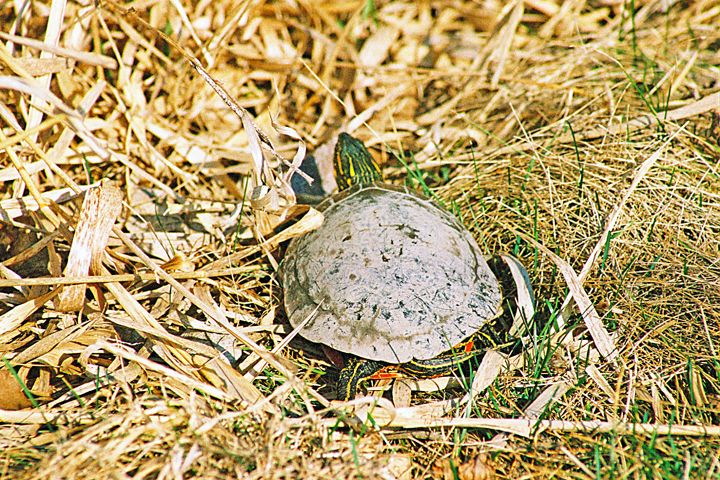
western painted turtle
(Chrysemys picta bellii)
| Conservation Status | IUCN Red List |
LC - Least Concern |
 |
||||
NatureServe |
N5 - Secure S5 - Secure |
||||||
| Occurrence | Common |
||||||
| Habitat | Muddy bottomed ponds and marshes, the margins of small lakes, sluggish streams and river back-waters. |
||||||
| Lifespan | 5 to 7 years |
||||||
| Size |
|
||||||
| Identification |
|
||||||
| Similar Species |
|
||||||
| Food |
|
||||||
| Life Cycle |
|
||||||
| Behavior |
|
||||||
| Distribution | 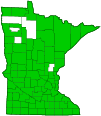 |
Sources: 7, 11, 13, 14. | |||||
| Comments | This is the most common turtle in Minnesota. Subspecies |
||||||
| Taxonomy | Order: |
Testudines (turtles) |
|||||
Suborder: |
Cryptodira (hidden-necked turtles) |
||||||
Superfamily: |
Testudinoidea |
||||||
Family: |
Emydidae (terrapins) |
||||||
| Synonyms | Emys bellii |
||||||
| Common Names |
western painted turtle |
||||||
Visitor Photos |
|||
Share your photo of this species. |
|||
MinnesotaSeasons.com Photos |
|||
|
|||

Slideshows |
||

Visitor Videos |
||
Share your video of this species. |
||
Other Videos |
||
| Western Painted Turtle - Chrysemys picta bellii - YouTube JCVdude |
||
About
Published on May 4, 2012 We found these turtles sunning themselves on a small pond. The Western Painted Turtle is named after the bright yellow stripes on its head, neck, tail and legs, and the glowing red on its plastron (shell covering the belly) and under-edge of its carapace (shell covering the back). Most adult Painted Turtles spend the winter hibernating in the mud at the bottom of ponds and lakes. Once temperatures warm up and the ice leaves the water, Painted Turtle courtship begins. In B.C., Painted Turtles are found in pockets throughout the southern interior, as far north as Golden. This includes the Okanagan Valley, Kamloops Lake, Shuswap Lake, and the Creston and Nelson Area. At present, the Western Painted Turtle is on the provincial blue list. This means they are considered vulnerable to habitat loss, and susceptible to human and natural disturbances. Habitat is being lost because of pollution and waterway interference due to damming, agriculture, and urbanization of waterfronts. |
||
| Western Painted Turtle (Chrysemys picta belli) Carl Barrentine |
||
About
Published on Jun 12, 2013 A thoroughly multi-perspective, educational look at an exceedingly patient Western Painted Turtle (Chrysemys picta belli). Photographed at the Rydell NWR, Minnesota (11 June 2013). |
||
| Western Painted Turtles in the Wild Wandering Sole TV |
||
About
Published on Jan 3, 2014 Western Painted Turtles (Chrysemys picta bellii) swimming and sunning themselves. Any camera shake comes from the fact that all this footage was taken from a distance while in a boat. The western painted turtle is the largest subspecies of painted turtle and perhaps the most colorful with an ornamented bottom shell with red hues in it. Music: "Old Man Blanchard" by Josh Woodward ~ http://www.joshwoodward.com/ |
||
| Baby Painted Turtle Northwest Herper |
||
About
Published on Nov 16, 2012 This video is of the western painted turtle (Chrysemys picta bellii) This a juvenile was found in south-central BC. Relatively common speices throughout it's range: in canada it's found through southern british columbia, alberta, saskatchewan, manitoba, and ontario. Watch in HD! |
||

Visitor Sightings |
||||
Share your sighting of this species. |
||||
| Patty Austvold May 2, 2014 |
Location: What used to be called Meadow Lake on Hassan Pkwy in Rogers, MN Have seen 3-4 live ones since snow melted and we had a couple nice days (specific sightings on Easter Sunday). They were crawling in cattail rushes and swimming along shoreline. They were docile and let you pick them up right out of the water or rushes. Today I am finding dead ones floating along the shoreline--2 recently dead full grown size..and one smaller decomposing. Is something killing them but not eating them? We have lots of muskrats and Herons and Garter Snakes on the lake. Or is there a disease...or did they come out too soon from hibernation and it is too cold for them? I would hate to see them disappear. Do you have any idea why they might be dying? |
|||
MinnesotaSeasons.com Sightings |
||||
Cannon River Turtle Preserve SNA Clifton E. French Regional Park |
||||

Last Updated: