Tinder Polypore
(Fomes excavatus)
Information
Conservation • Description • Habitat • Ecology • Use • Distribution • Taxonomy
Conservation Status
IUCN Red List
not listed
NatureServe
not listed
Minnesota
not listed
Description
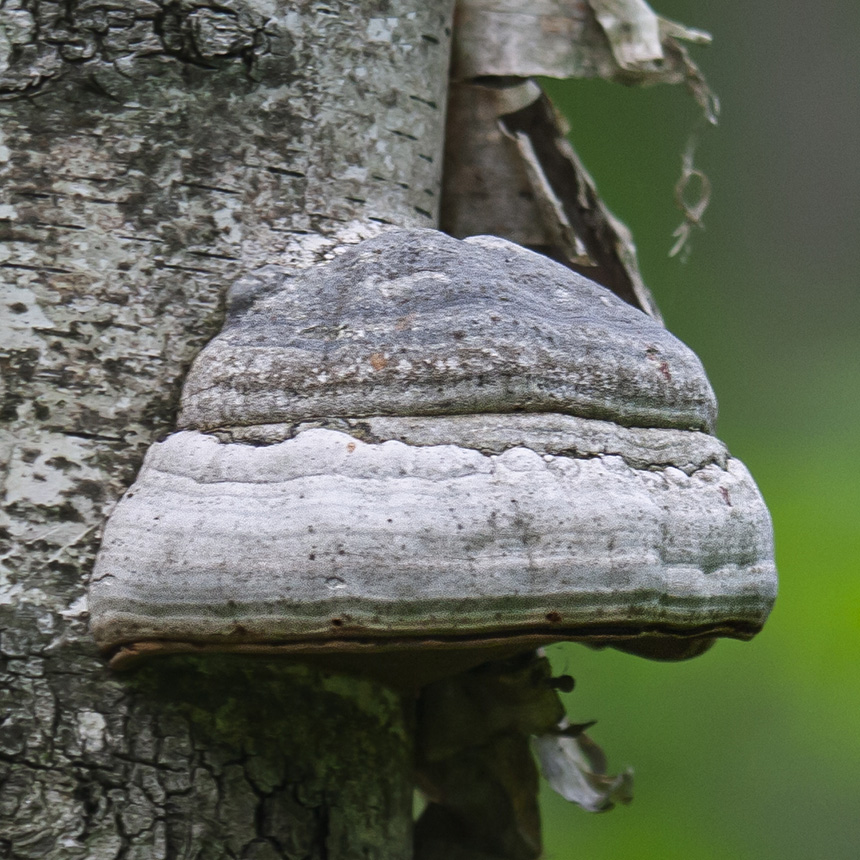
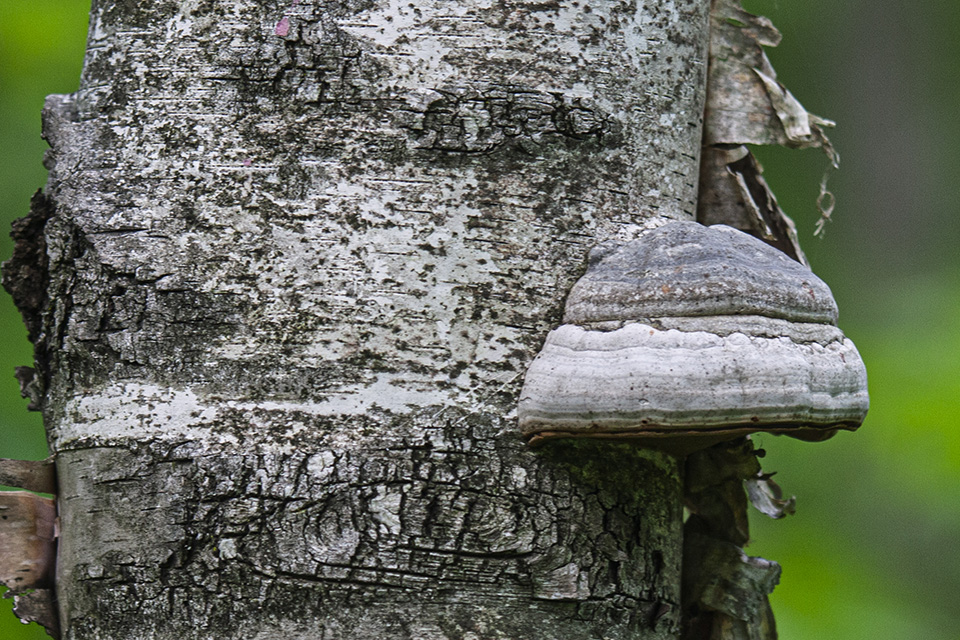
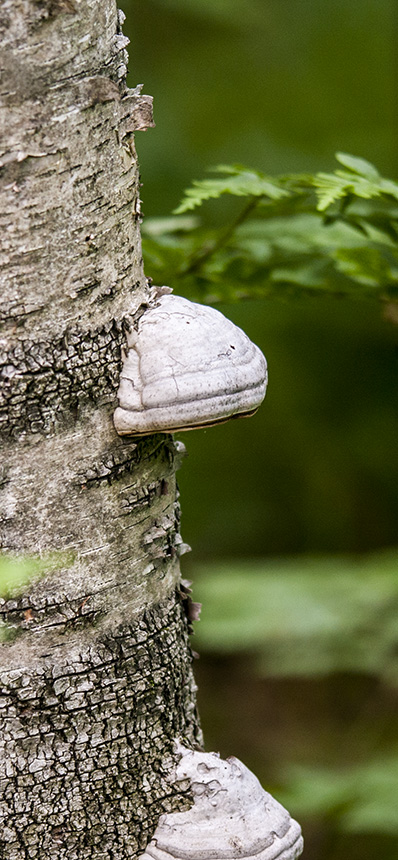
Tinder Polypore fruiting body (conk) is a 2″ to 8″ wide, ¾″ to 4¾″ thick polypore.
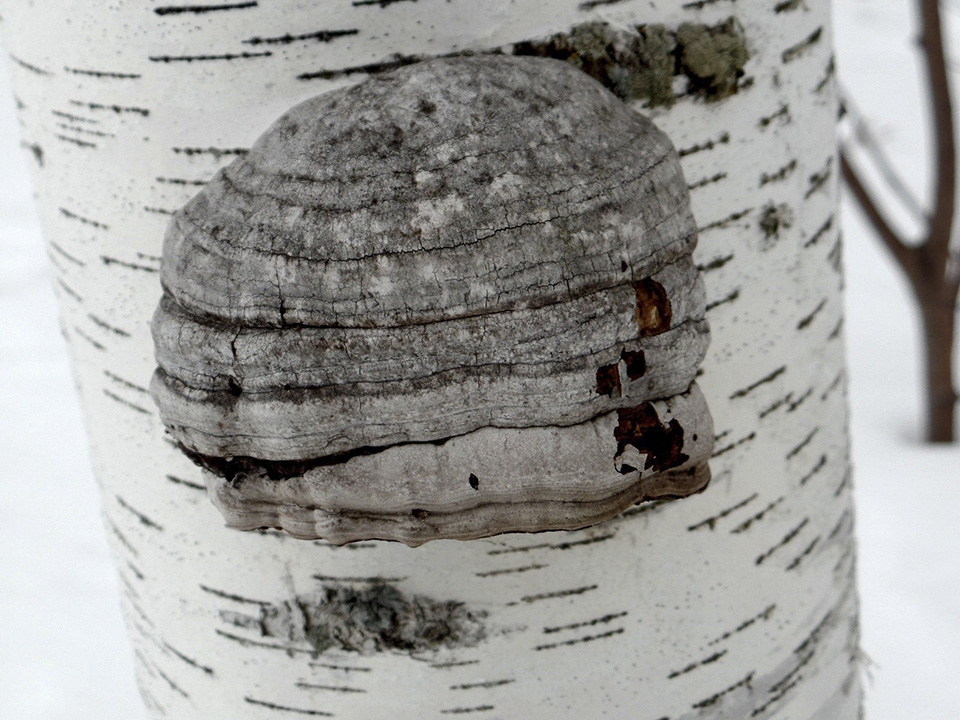
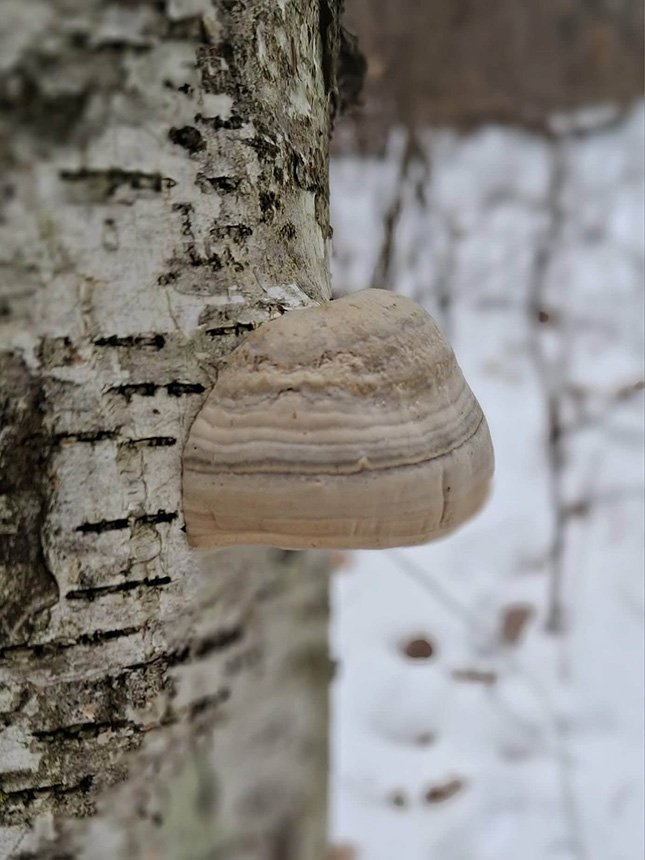
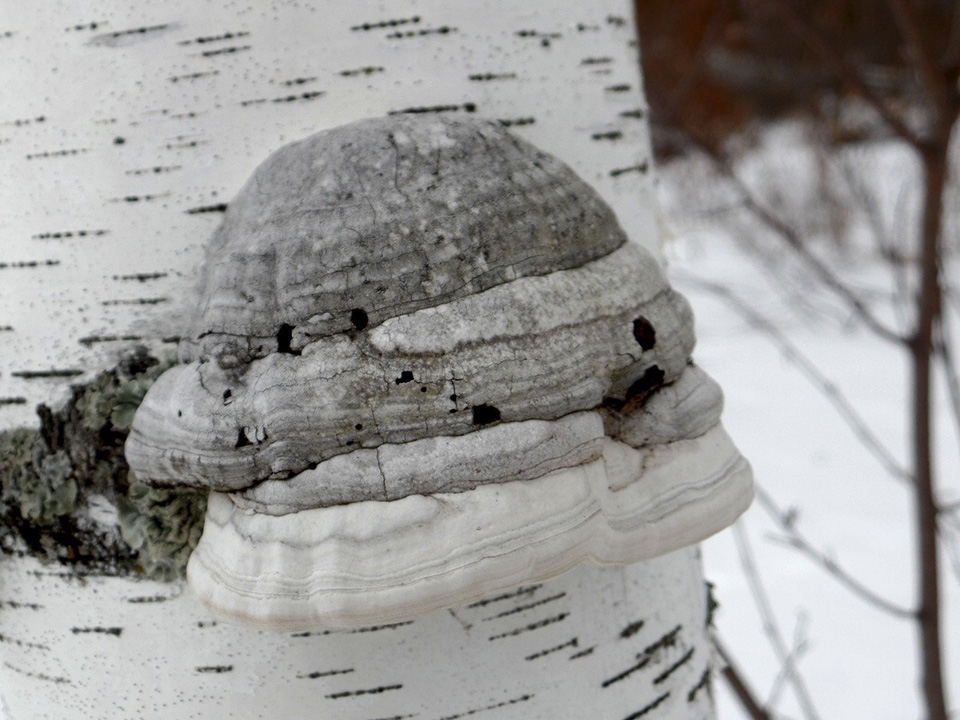
The fruiting body is hoof-shaped, rounded and curved downward on top, flat or slightly angled upward below. There is no stalk.
The upper surface is concentrically zoned and hairy when young. The zones are grooved and vary in color in shades of gray and brownish-gray. It soon becomes gray and hairless. The margin is whitish and velvety on actively growing conks.
The underside is whitish. The pore tubes are not layered (stratified).
The flesh is hard and cinnamon brown. When cut in cross section there are no white lines (mycelial threads) visible.
An individual conk can survive for years, even decades, forming a new ridge or furrow each year. It is found on standing or fallen dead trees or on the trunk of a living tree.
Similar Species
Willow Bracket (Phellinus igniarius) old conks are black and are often cracked above. The margin and undersurface are light brown and velvety on actively growing conks. The pores are stratified. The flesh in cross section shows white mycelial threads.
Habitat and Hosts
Usually birch, but also other hardwoods
Tinder Polypore causes white trunk rot on hardwood trees. It turns the wood into a soft, white, spongy mass.
Ecology
Season
Year-round, but it grows mostly in early summer and autumn
Use
Tinder Polypore is named for its most common usage, as tinder for starting fires. Otzi the Iceman, the 5,000-year-old mummy found in the Alps in 1991, was carrying four pieces of it.
Distribution

Occurrence
Very common and widespread
Taxonomy
Kingdom
Fungi (Fungi)
Subkingdom
Dikarya
Phylum
Basidiomycota (Basidiomycete Fungi)
Subphylum
Agaricomycotina (Higher Basidiomycetes)
Class
Agaricomycetes (Mushrooms, Bracket Fungi, Puffballs, and Allies)
Subclass
incertae sedis (uncertain placement)
Order
Polyporales (Shelf Fungi)
Family
Polyporaceae (Bracket Fungi)
Genus
Fomes
Species split
This species was formerly known as Hoof Fungus (Fomes fomentarius), a species with worldwide distribution. A recent comprehensive global study (Tomšovský, Michael et al., 2023), using DNA sequencing of several different genes on hundreds of specimens from around the world, discovered that the Hoof Fungus is not one species, but at least four distinct lineages. The authors resurrected the name Fomes excavatus the North American population.
Subordinate Taxa
Synonyms
Agaricus fomentarius
Boletus fomentarius
Boletus ungulatus
Elfvingia fomentaria
Elfvingiella fomentaria
Fomes fomentarius var. leuciticus
Fomes introstuppeus
Fomes inzengae
Fomes mirus
Ochroporus fomentarius
Placodes fomentarius
Polyporus fomentarius
Polyporus introstuppeus
Polyporus inzengae
Polyporus mirus
Polyporus populinus
Pyrenium fomentarium
Pyropolyporus fomentarius
Scindalma fomentarium
Scindalma introstuppeum
Scindalma mirum
Ungularia albescens
Ungularia populina
Ungulina fomentaria
Common Names
Hoof Fungus
Tinder Conk
Tinder Fungus
Tinder Polypore
True Tinder Polypore
Photos
Visitor Photos
Share your photo of this fungus.
This button not working for you?
Simply email us at info@MinnesotaSeasons.com.
Attach one or more photos and, if you like, a caption.
Dan W. Andree
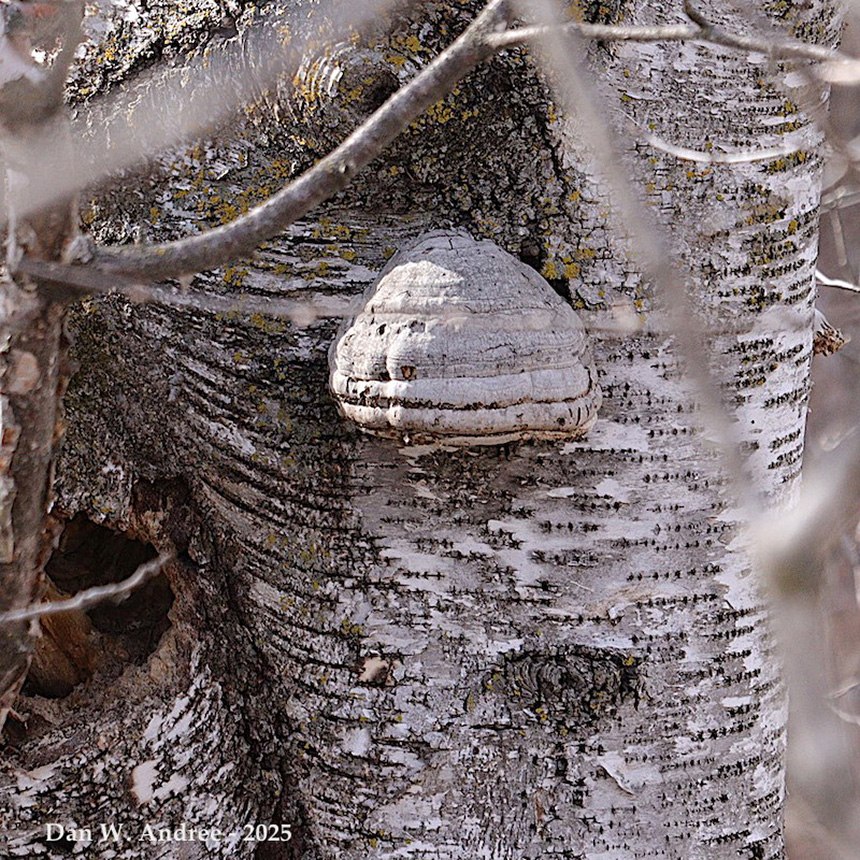
Fungi on a dead birch tree...
This was on a dead birch tree along a small creek in rural Norman Co. Mn. 3-18-25. It was on a steep embankment and I couldn’t get the best shot of it but found it interesting how it blend in with the tree etc.
Minnesota Seasons Photos
Slideshows
Slideshows
Hoof Tinder Bracket Fungus
Andree Reno Sanborn
Fomes fomentarius - fungi kingdom
Fungi Kingdom
Videos
Visitor Videos
Share your video of this fungus.
This button not working for you?
Simply email us at info@MinnesotaSeasons.com.
Attach a video, a YouTube link, or a cloud storage link.
Other Videos
Tinder Fungi (Fomes fomentarius) on Birch Tree
Carl Barrentine
Fomes fomentarius Tonderzwam
Michael Inden
Fomes fomentarius (Ίσκα)
Kostas Tzouratzoglou
Sightings
Visitor Sightings
Report a sighting of this fungus.
This button not working for you?
Simply email us at info@MinnesotaSeasons.com.
Be sure to include a location.
Luciearl
Winter 2025

Location: Cass County
Dan W. Andree
3/18/2025

Location: rural Norman Co. Mn.
This was on a dead birch tree along a small creek in rural Norman Co. Mn. 3-18-25. It was on a steep embankment and I couldn’t get the best shot of it but found it interesting how it blend in with the tree etc.
Luciearl
1/15/2020
Location: Cass County
Found on birch snag
Robert Briggs
10/20/2016
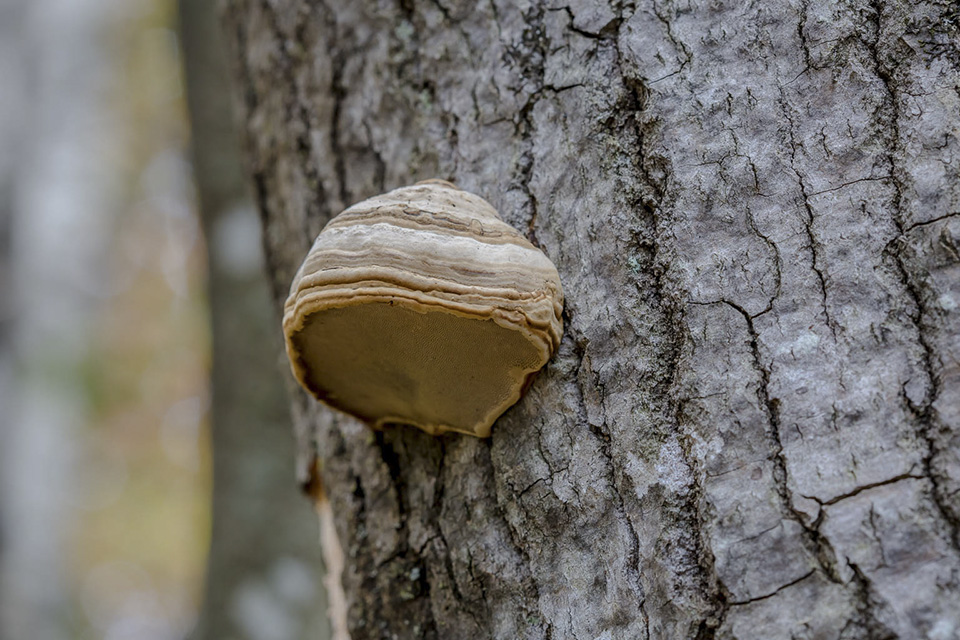
Location: Afton State Park, Southern River Trail