



broad-leaved cattail
(Typha latifolia)
Conservation • Wetland • Description • Habitat • Ecology • Use • Distribution • Taxonomy
Conservation Status |
|
|||||||
| IUCN Red List | LC - Least Concern |
|||||||
| NatureServe | N5 - Secure SNR - Unranked |
|||||||
| Minnesota | not listed |
|||||||
Wetland Indicator Status |
||||||||
| Great Plains | OBL - Obligate wetland |
|||||||
| Midwest | OBL - Obligate wetland |
|||||||
| Northcentral & Northeast | OBL - Obligate wetland |
|||||||
Description |
||
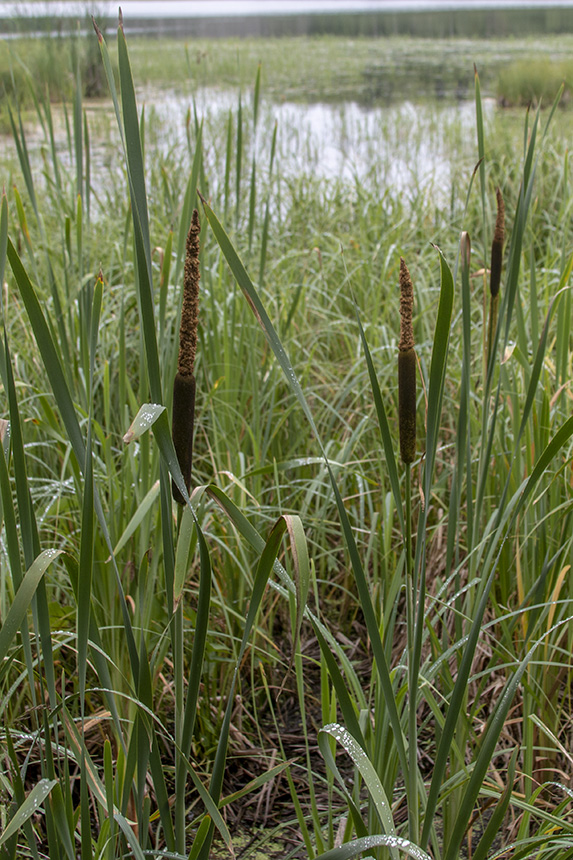
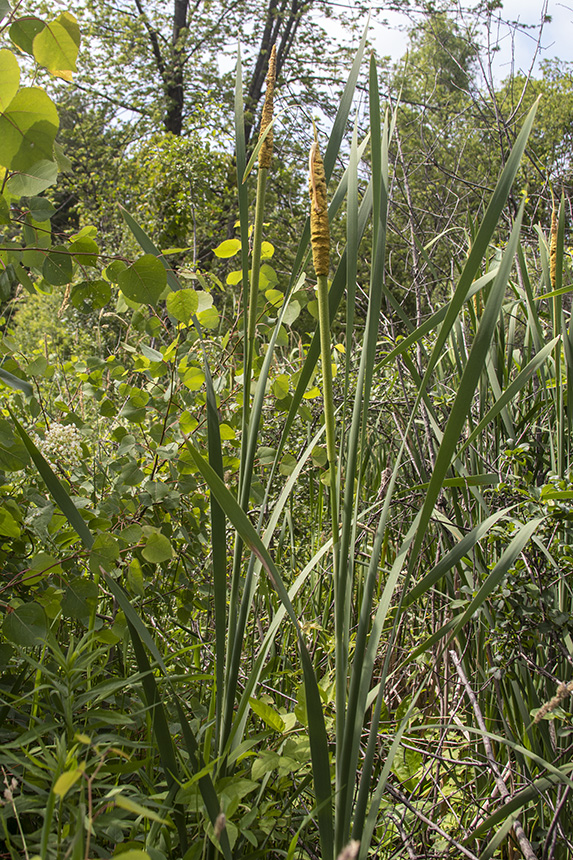
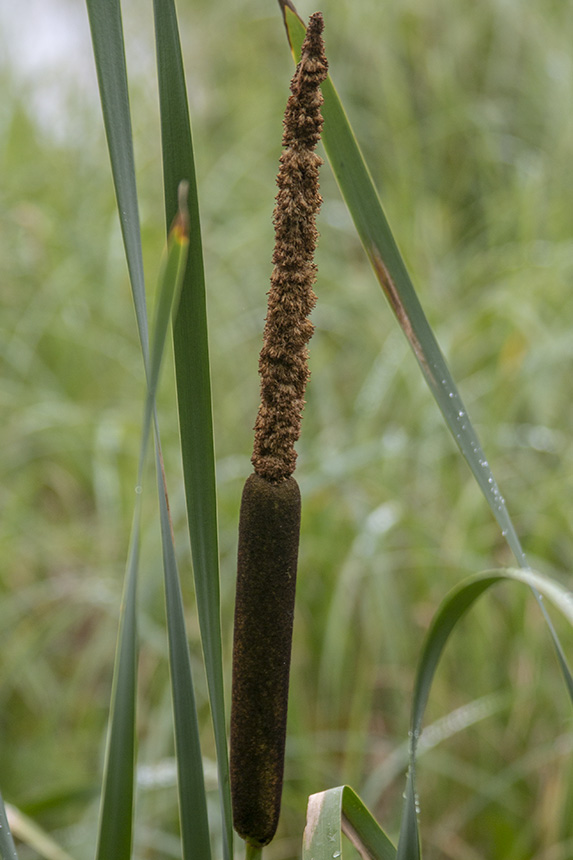
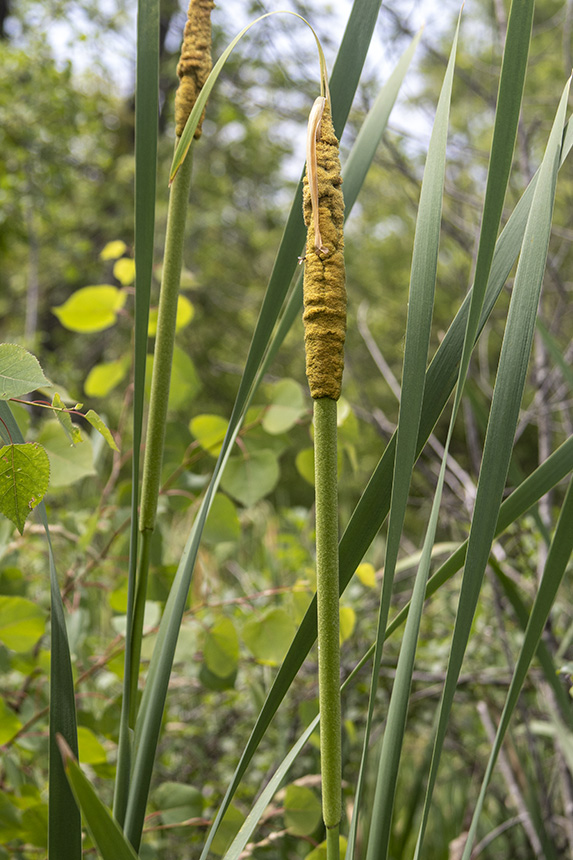
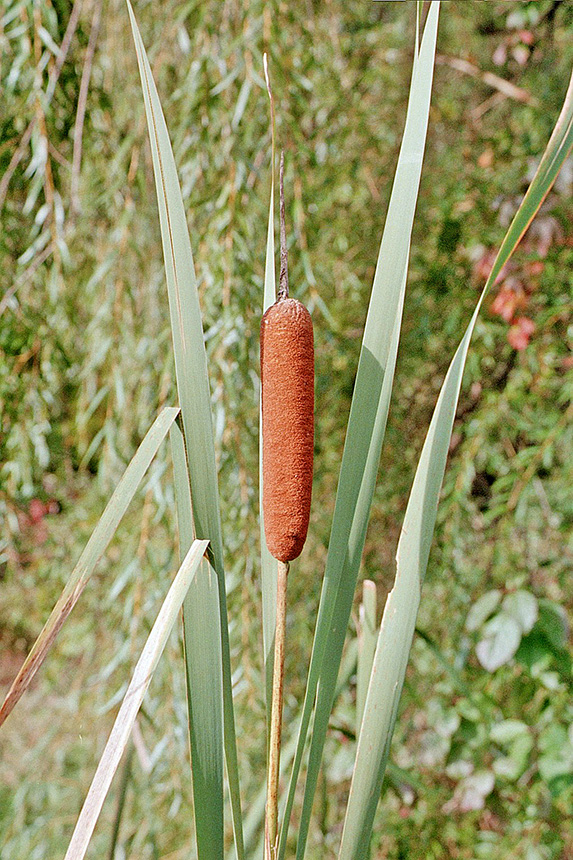
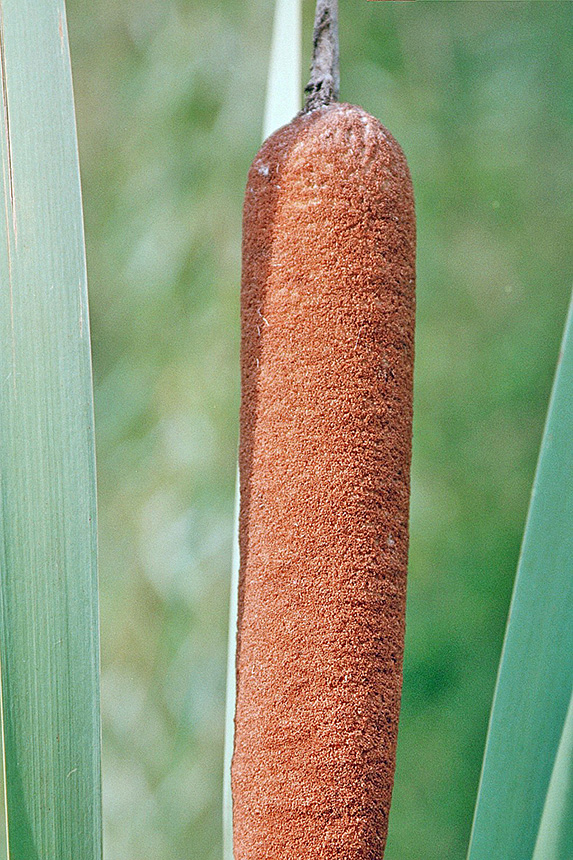
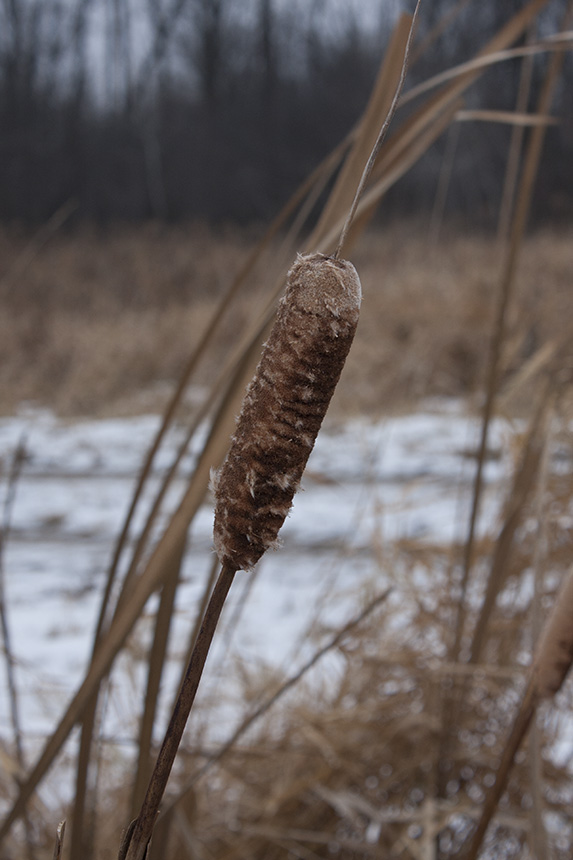
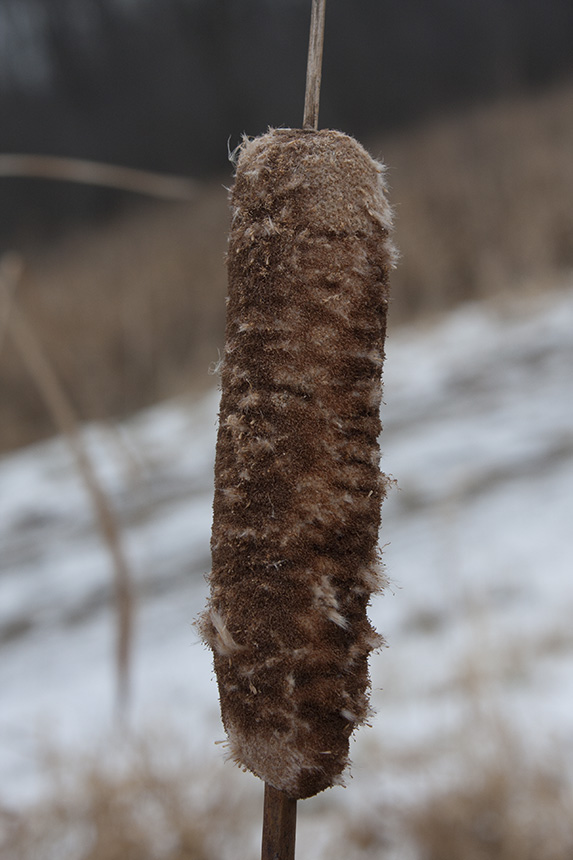
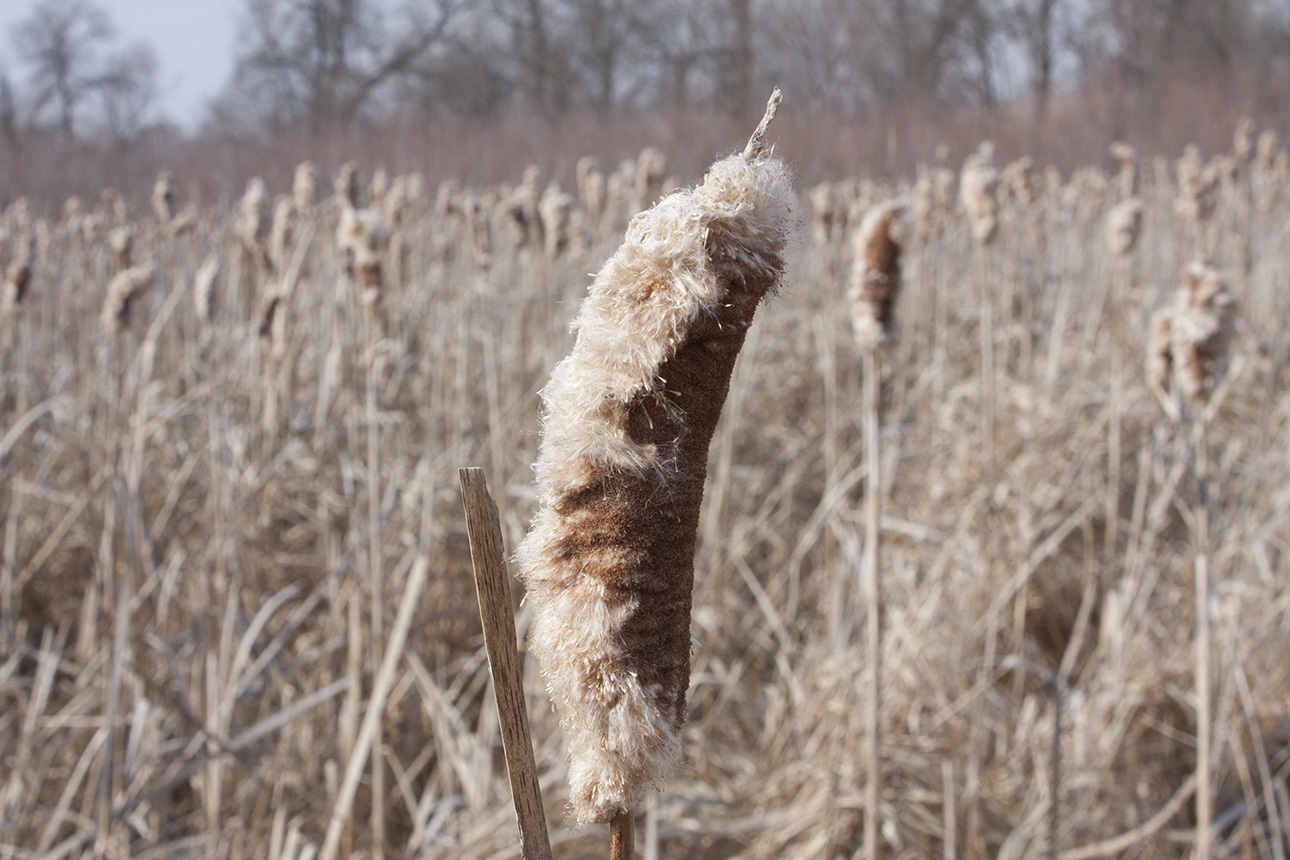
Broad-leaved cattail is a 3″ to 9″ tall, erect, perennial forb that rises on a single stem or cluster of stems from a thick, mostly horizontal, unbranched rhizome. It grows in muddy soil, often with its roots underwater. The stems are erect, stiff, unbranched, light green, hairless, and round in cross section. They are ⅜″ to ¾″ thick in the middle, ⅛″ to ¼″ thick near the inflorescence. The leaves are mostly basal, alternate, bluish-green to grayish-green, linear, and flat on the back. They are ⅜″ to 1⅛″ wide, though usually no more than ⅞″ wide, usually slightly longer than the flowering spike. They sheath the stem at the base and taper to a sharp point at the tip. They have parallel veins but do not have a prominent midrib. When fresh they are usually covered with a whitish, waxy bloom (glaucous). The inflorescence is a dense spike of minute staminate (male) and pistillate (female) flowers at the end of the stem. The staminate-flowered portion of the spike is above and usually contiguous with, not separated by a length of naked stem from, the pistillate-flowered portion. When in flower it is ⅜″ to ¾″ thick and about as long as the pistillate portion. The male flowers are straw-colored to colorless. The pistillate-flowered portion of the spike is 2″ to 10″ long and 3 ⁄16″ to 5 ⁄16″ thick when in flower. When in fruit it is brown and 1″ to 1¼″ thick. The female flowers are light green at first, drying brown. The fruit is a thin-walled achene with hairs attached. |
||
Height |
||
3′ to 9′ |
||
Flower Color |
||
Green, drying brown |
||
Similar Species |
||
Narrow-leaved cattail (Typha angustifolia) has narrower, green leaves that are up to ½″ wide, convex on the underside, and extend well above the flowering spike. The staminate spike of the flowering stalk is separated from the pistillate spike ½″ to 4¾″. When in fruit, the pistillate spike is no more than ⅞″thick. Hybrid cattail (Typha × glauca) occurs in places where both broad-leaved cattail and narrow-leaved cattail are present. It is a hybrid with characteristics that are intermediate between the two parent species. |
||
Habitat |
||
Wet to damp. Marshes, ditches, shallows. Full sun. |
||
Ecology |
||
Flowering |
||
May to July |
||
Pests and Diseases |
||
|
||
Use |
||
|
||
Distribution |
||||
|
Sources |
|||
| 3/4/2023 | ||||
Nativity |
||||
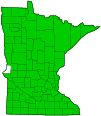
Native |
||||
Occurrence |
||||
Common and widespread |
||||
Taxonomy |
|||
| Kingdom | Plantae (Plants) | ||
| Subkingdom | Pteridobiotina | ||
| Phylum | Tracheophyta (Vascular Plants) | ||
| Class | Liliopsida (Monocots) | ||
Order |
Poales (grasses, sedges, cattails, and allies) | ||
Family |
Typhaceae (bulrushes, cattails, and allies) | ||
| Tribe | Typheae | ||
Genus |
Typha (cattails) | ||
Synonyms |
|||
|
|||
Common Names |
|||
broad-leaved cattail broadleaf cattail common cattail Cooper’s reed giant reed-mace great cattail soft flag |
|||
Glossary
Achene
A dry, one-chambered, single-seeded seed capsule, formed from a single carpel, with the seed attached to the membranous outer layer (wall) only by the seed stalk; the wall, formed entirely from the wall of the superior ovary, does not split open at maturity, but relies on decay or predation to release the contents.
Glaucous
Pale green or bluish gray due to a whitish, powdery or waxy film, as on a plum or a grape.
Rhizome
A horizontal, usually underground stem. It serves as a reproductive structure, producing roots below and shoots above at the nodes.
Sheath
The lower part of the leaf that surrounds the stem.
Visitor Photos |
|||||
Share your photo of this plant. |
|||||
| This button not working for you? Simply email us at info@MinnesotaSeasons.com. Attach one or more photos and, if you like, a caption. |
|||||
|
|||||
MinnesotaSeasons.com Photos |
|||||
Plant |
|||||
 |
 |
||||
 |
|||||
Inflorescence |
|||||
 |
 |
||||
Female Spike |
|||||
 |
 |
||||
Infructescence |
|||||
 |
 |
||||
 |
|||||

Slideshows |
||
| Typha latifolia Matt Lavin |
||
|
||
About
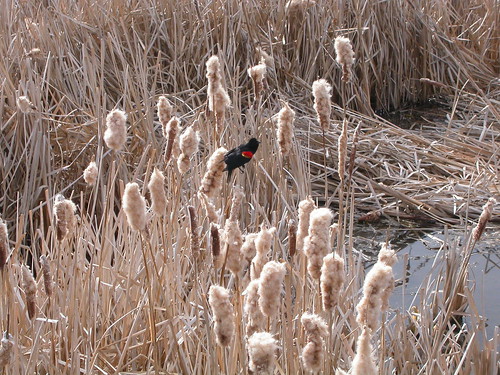
The monoecious species often forms dense stands in standing year-round water. The staminate inflorescences sits above and adjacent to the pistillate inflorescence. |
||
Visitor Videos |
|||
Share your video of this plant. |
|||
| This button not working for you? Simply email us at info@MinnesotaSeasons.com. Attach a video, a YouTube link, or a cloud storage link. |
|||
Other Videos |
|||
| Common Bulrush (Typha Latifolia) - 2012-06-11 W3stlander |
|||
About
Published on Jun 12, 2012 Typha latifolia (Bulrush, Common Bulrush, Broadleaf Cattail, Common Cattail, Great Reedmace, Cooper's reed, Cumbungi) is a perennial herbaceous plant in the genus Typha ---------- |
|||
| Cattail and Bulrush part 2 jodajean1 |
|||
About
Published on Jun 28, 2012 A comparison between narrowleaf cattail and common cattail as well as a comparison between hardsterm bulrush and great bulrush. |
|||

Visitor Sightings |
|||||
Report a sighting of this plant. |
|||||
| This button not working for you? Simply email us at info@MinnesotaSeasons.com. Be sure to include a location. |
|||||
|
|||||
MinnesotaSeasons.com Sightings |
|||||
Clifton E. French Regional Park Felton Prairie SNA, Shrike Unit Hardscrabble Woods / MG Tusler Sanctuary John Peter Hoffman Spring Brook Valley WMA Lake Alexander Woods SNA, South Unit Margherita Preserve-Audubon Prairie Mary Schmidt Crawford Woods SNA Mound Spring Prairie SNA, North Unit Northern Tallgrass Prairie NWR, Hoffman Unit Northern Tallgrass Prairie NWR, Rengstorf Unit Pembina Trail Preserve SNA, Crookston Prairie Unit Pembina Trail Preserve SNA, Pembina Trail Unit Richard M. & Mathilde Rice Elliott SNA Sand Prairie Wildlife Management and Environmental Education Area |
|||||
|
Created: Last Updated: © MinnesotaSeasons.com. All rights reserved. |