American plum - Species Profile
Conservation • Weed • Wetland • Description • Habitat • Ecology • Use • Distribution • Taxonomy
Conservation Status
IUCN Red List
not listed
NatureServe
N5? - Secure
SNR - Unranked
Minnesota
not listed
Wetland Indicator Status
Great Plains
UPL - Obligate upland
Midwest
UPL - Obligate upland
Northcentral & Northeast
UPL - Obligate upland
Description
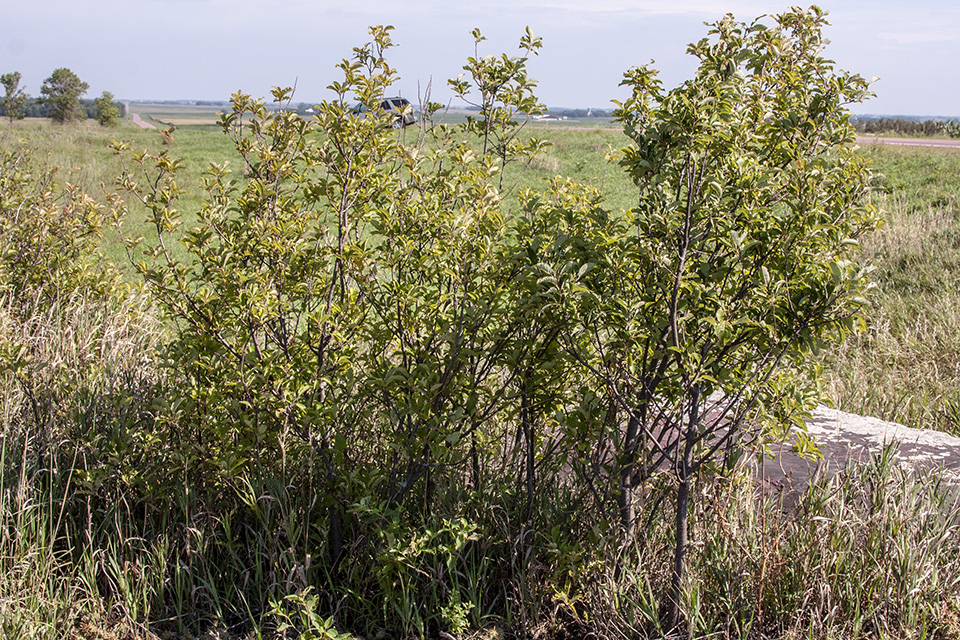
American plum is an erect, fast-growing, perennial shrub or small tree rising on a single or multiple stems from a woody root. It is relatively long-lived, sometimes reaching 50 or 60 years of age.
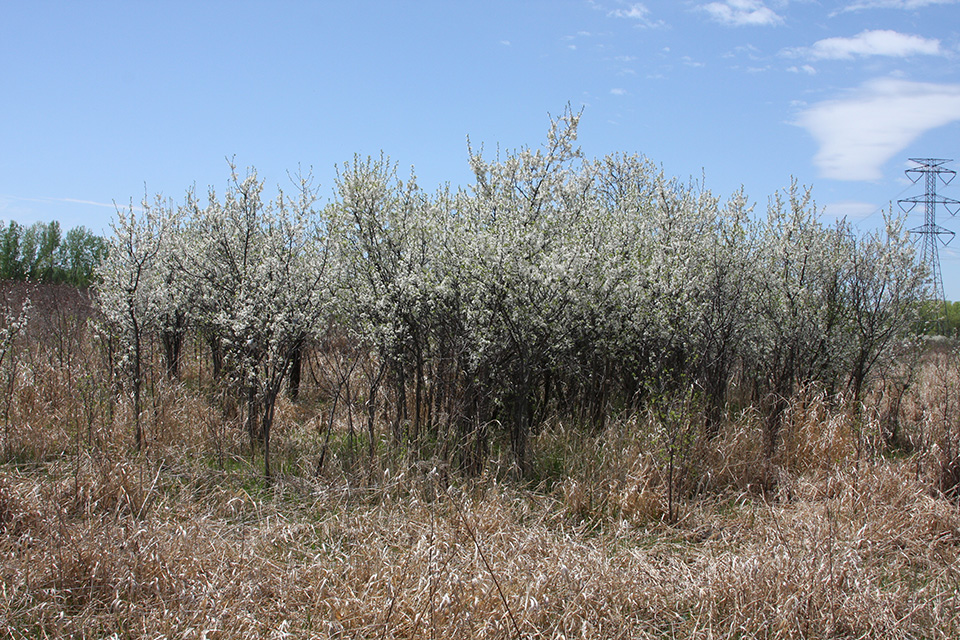
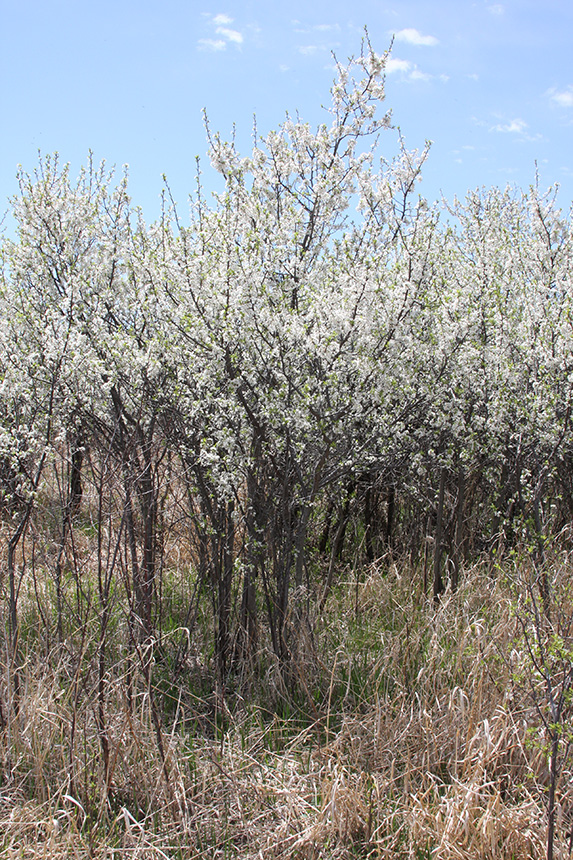
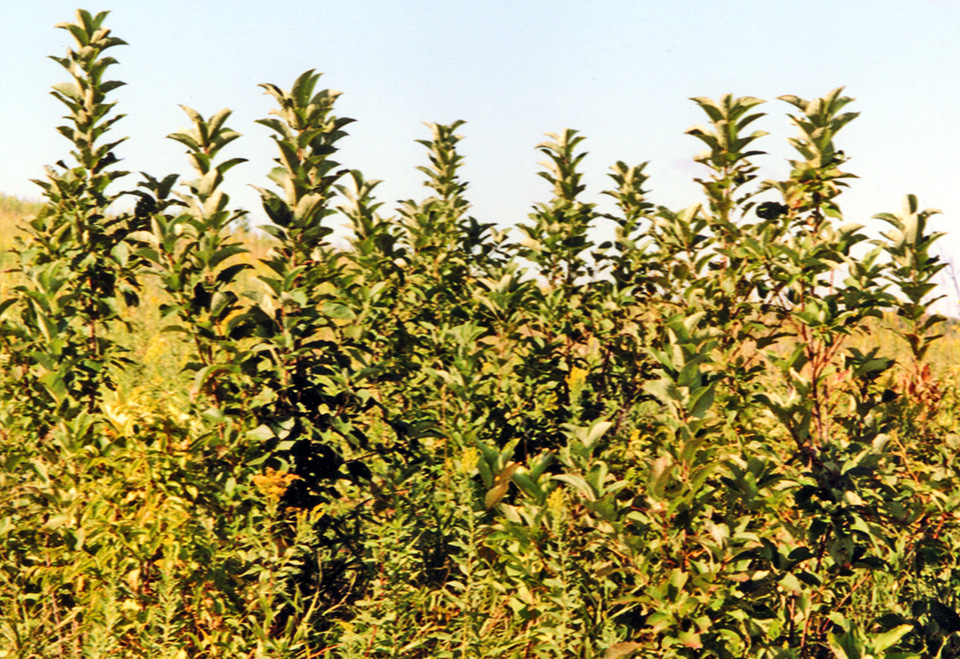
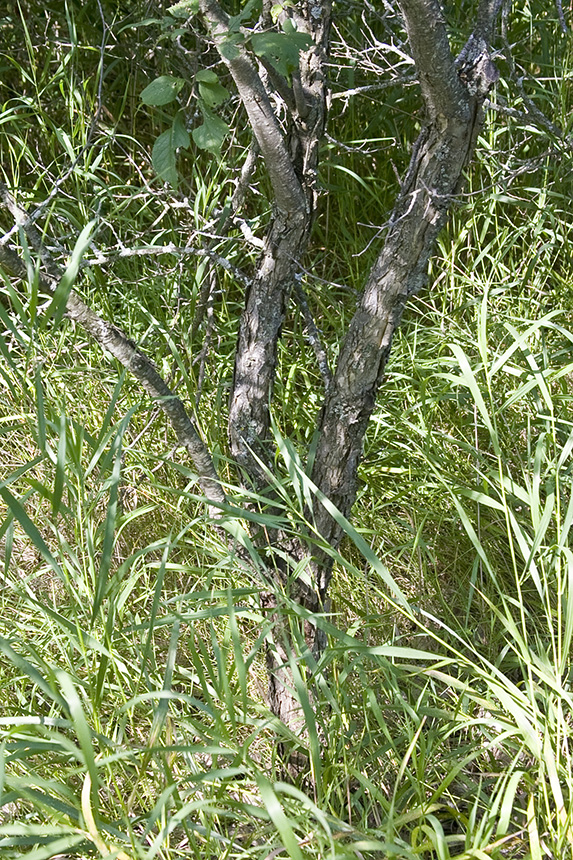
When in the form of a tree it is 15′ to 25′ tall and 4⅓″ to 10″ in diameter at breast height. It has a single short trunk and a broad, open, spreading crown. In prairies and other open areas it is rarely in the form of a tree. When in the form of a shrub it can be 3′ to 26′ tall, but is usually 10′ to 15′ tall. It rises on a single or multiple stems that branch near the ground. It can form large, dense, impenetrable thickets from root suckers.
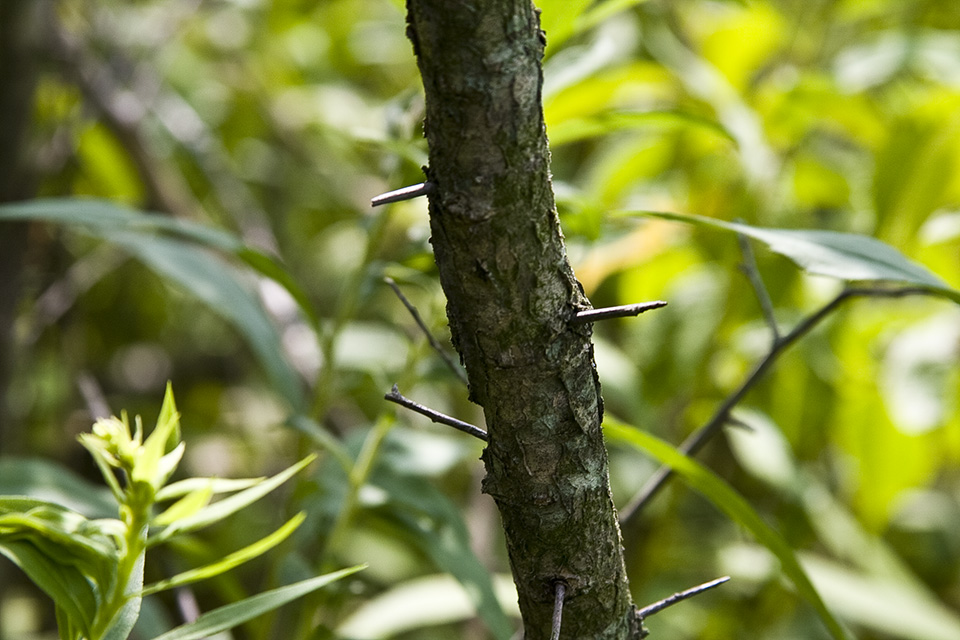
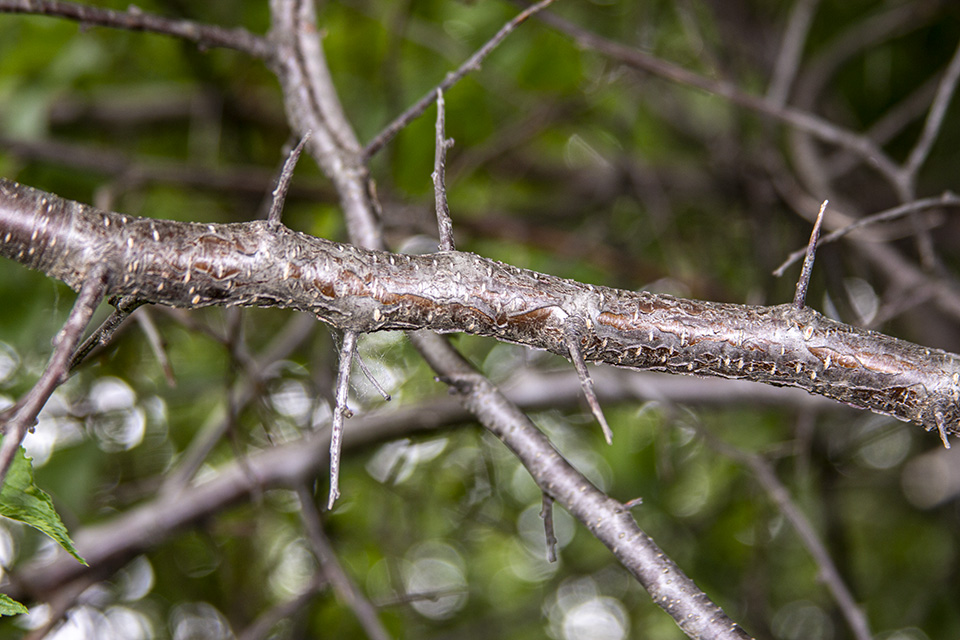
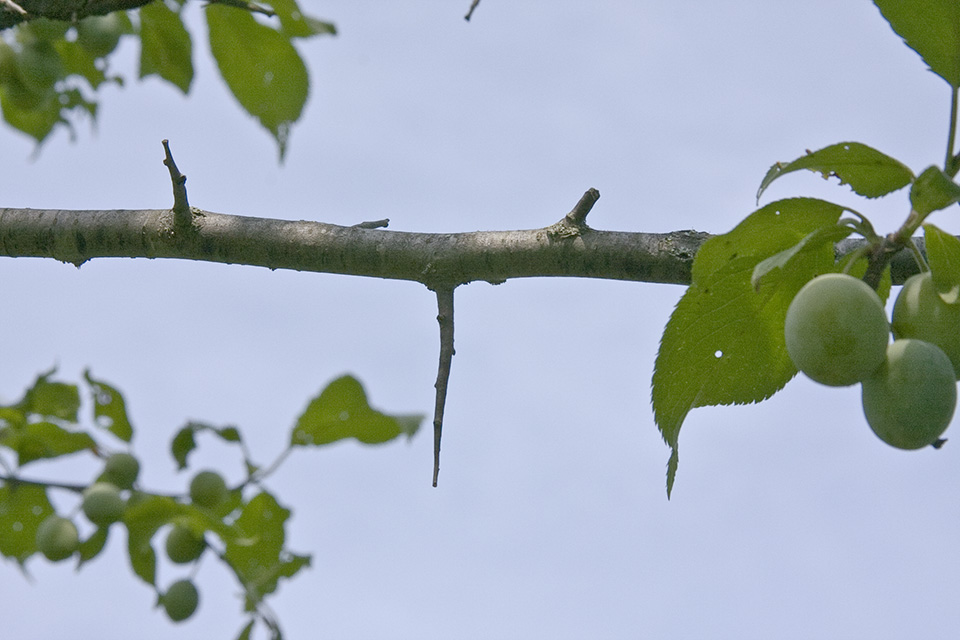
The branches are slender. The stems and branches usually have thorns. The thorns are stout; up to 2⅜″ long; have a dull surface; and have buds or leaves attached, or leaf scars where leaves have fallen off.
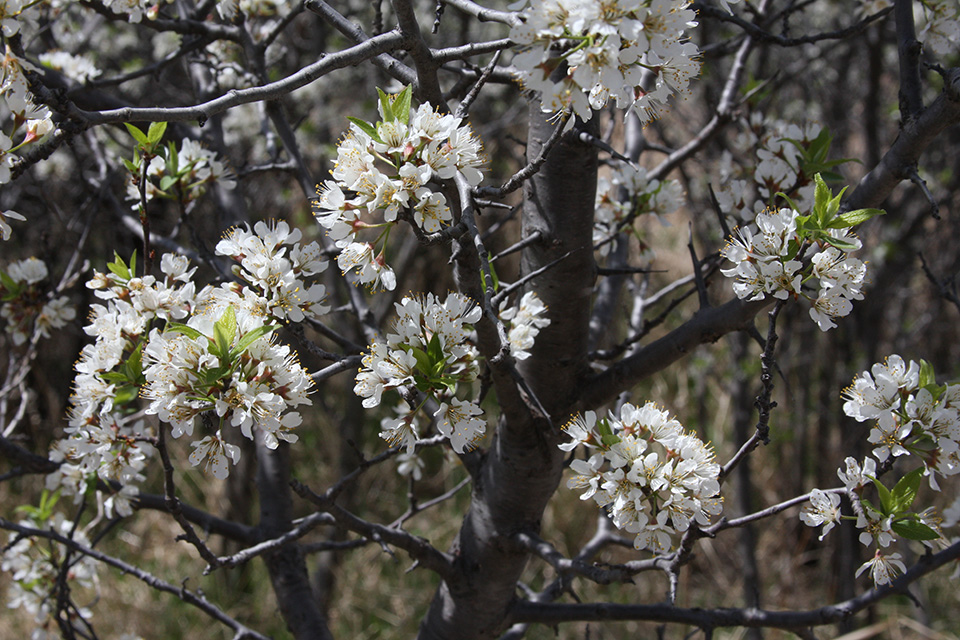
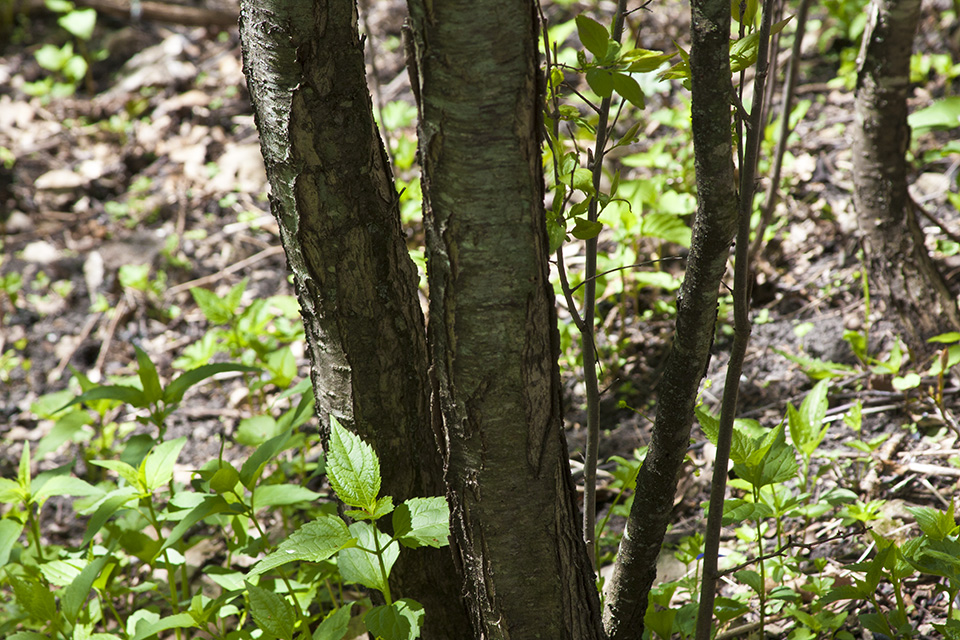
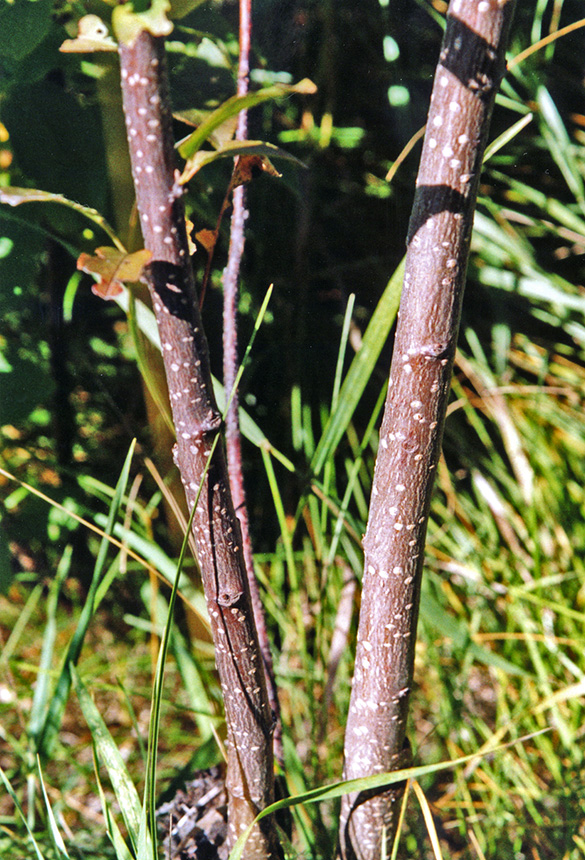
The bark on young stems is dark gray or gray-brown, tinged with red, and more or less smooth, with numerous horizontal slits (lenticels). When it ages it becomes rough and curls or peels off in thick strips.
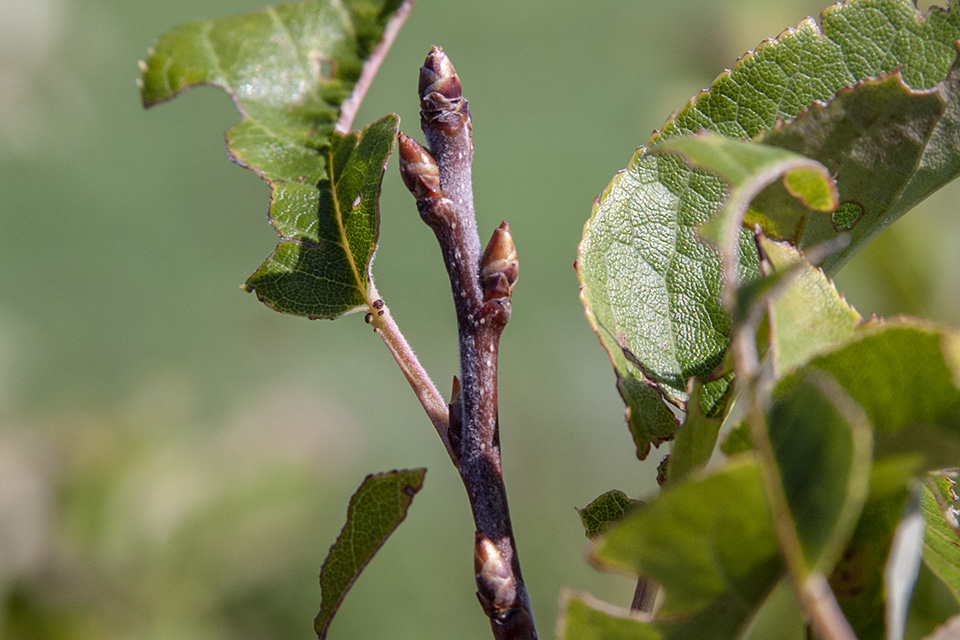
Young twigs are thin and have minute lenticels. They are green at first, later becoming grayish-brown to reddish-brown. The may be hairless but are often hairy or densely hairy. Buds are reddish-gray, ⅛″ to 5 ⁄16″ long, and sharply pointed. Leaf scars are raised and have 3 bundle scars.
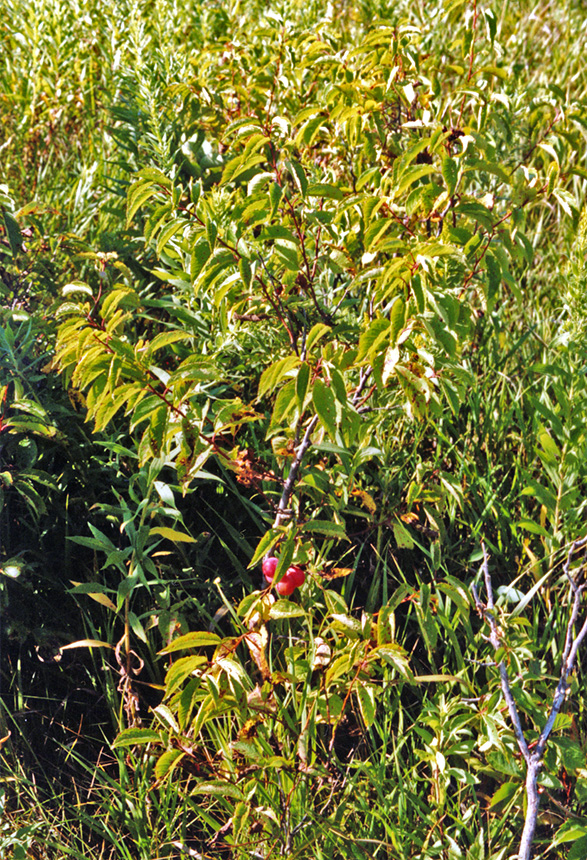
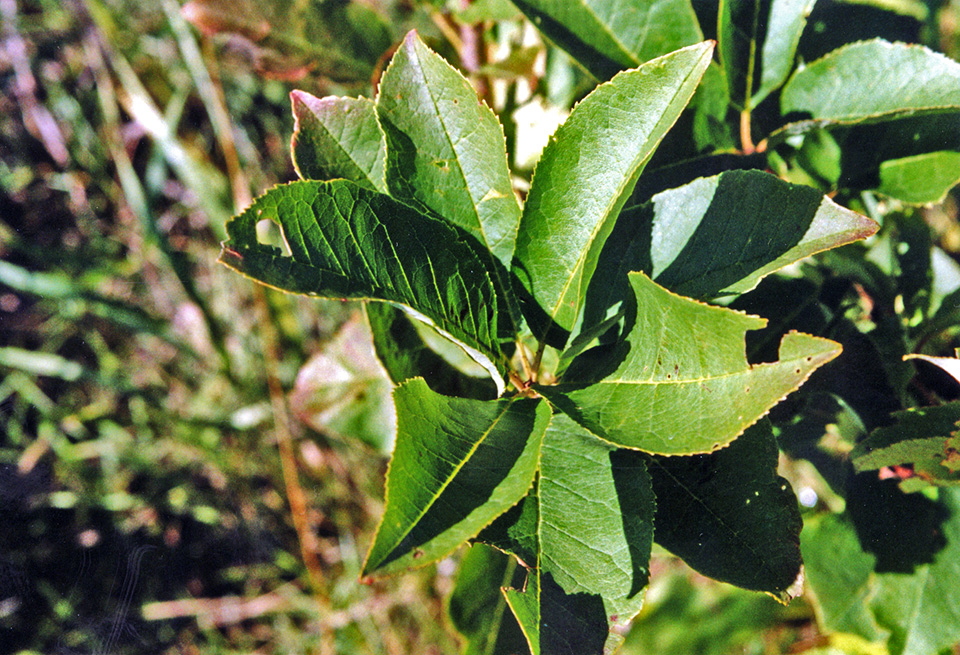
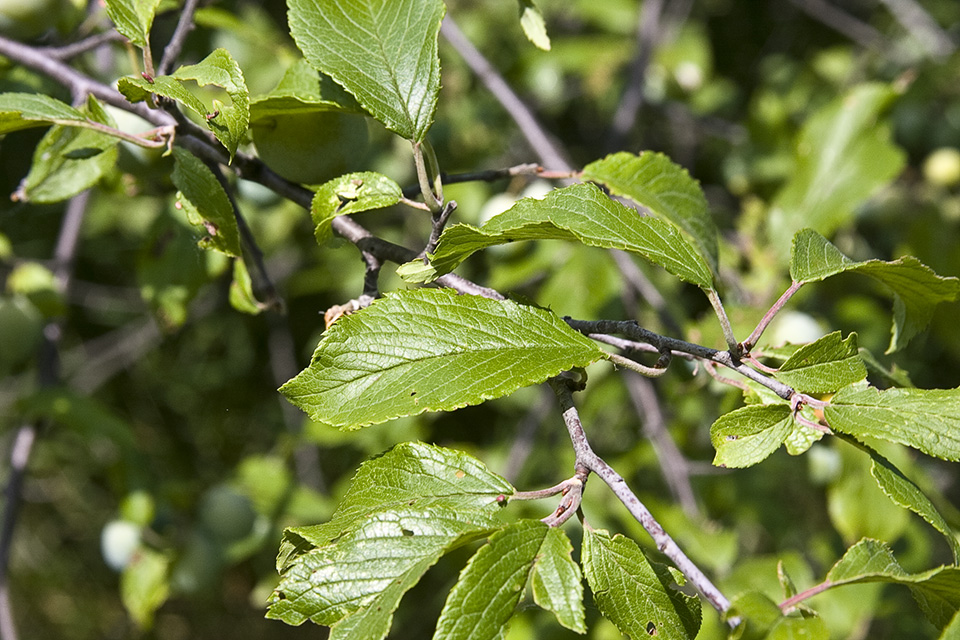
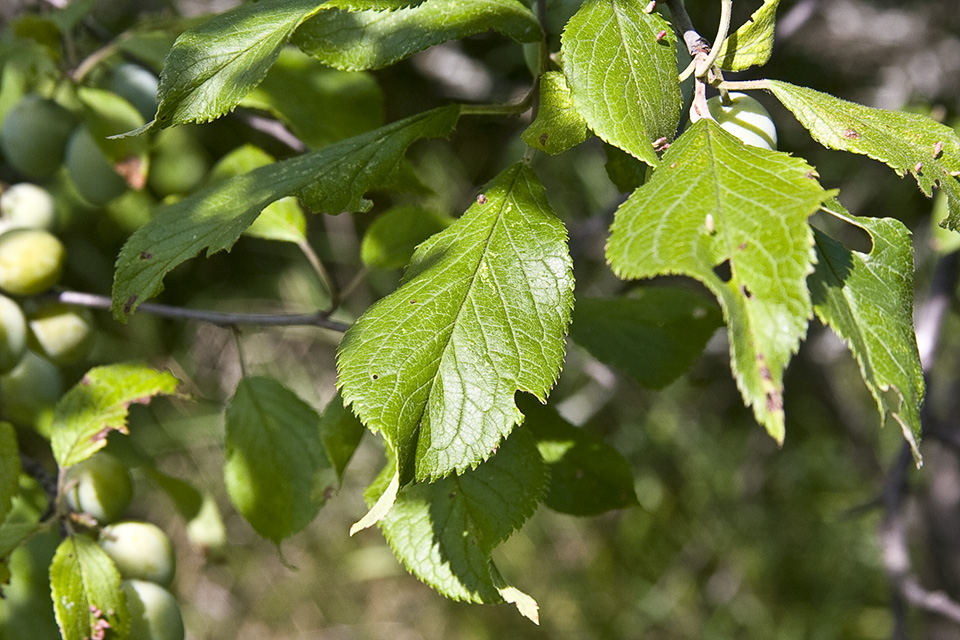
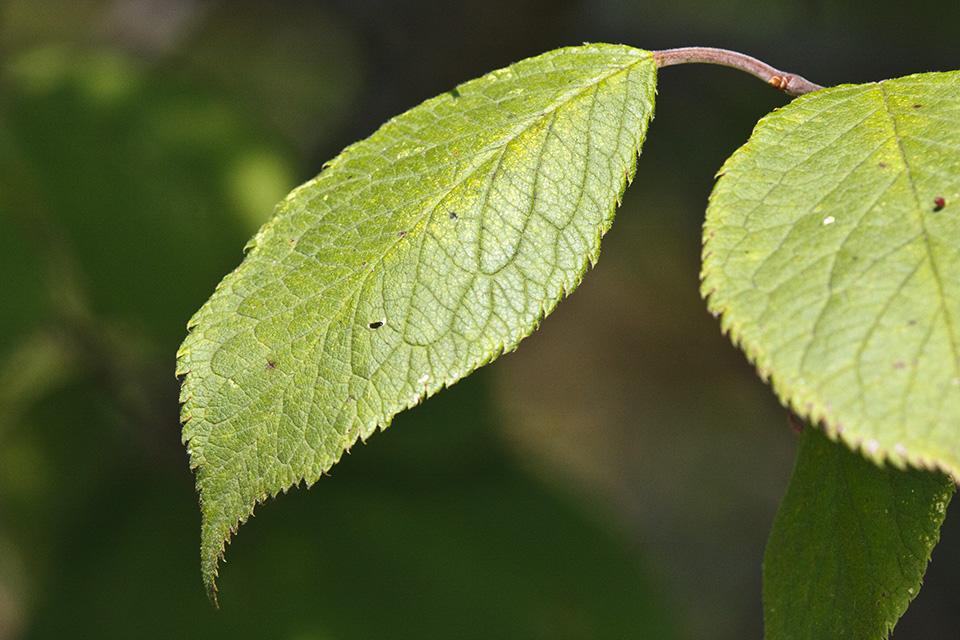
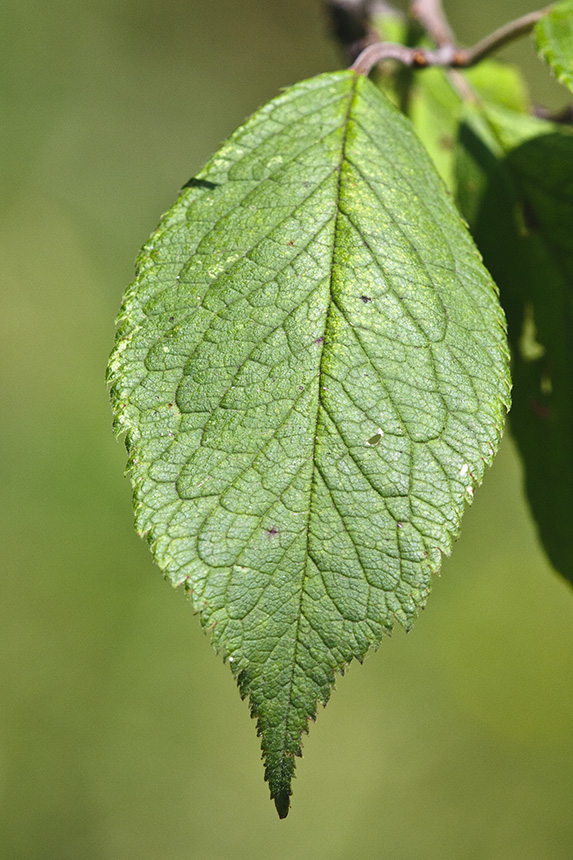
The leaves are alternate, deciduous, elliptical to egg-shaped, unlobed, 2 to 2½ times as long as wide, 2¼″ to 4″ long, and 1¼″ to 1¾″ wide. They are attached to the twig on 5 ⁄16″ to ⅝″ long leaf stalks. The leaf stalks are hairy, sometimes densely hairy, and usually do not have glands near the point where the blade attaches to the stalk. The blades are tapered or rounded at the base and taper to a point at the tip with concave sides along the tip. The upper surface is dark green and hairless. The lower surface is paler green sparsely to moderately hairy along the veins. The margins are singly or doubly toothed with short, sharp, forward-pointing teeth. The teeth do not have glands but tend to have a callous point at the tip. The leaves turn golden yellow in autumn.
The inflorescence is 2 to 4 flowers in a stalkless umbrella-shaped cluster (umbel). The umbels appear at the ends of current year twigs and at the axils of previous year branchlets.
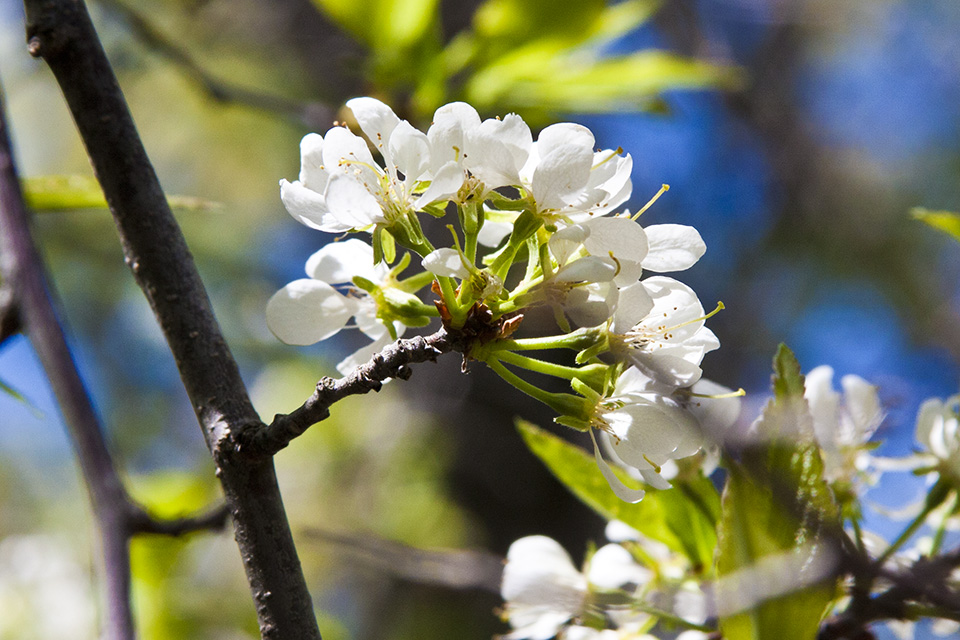
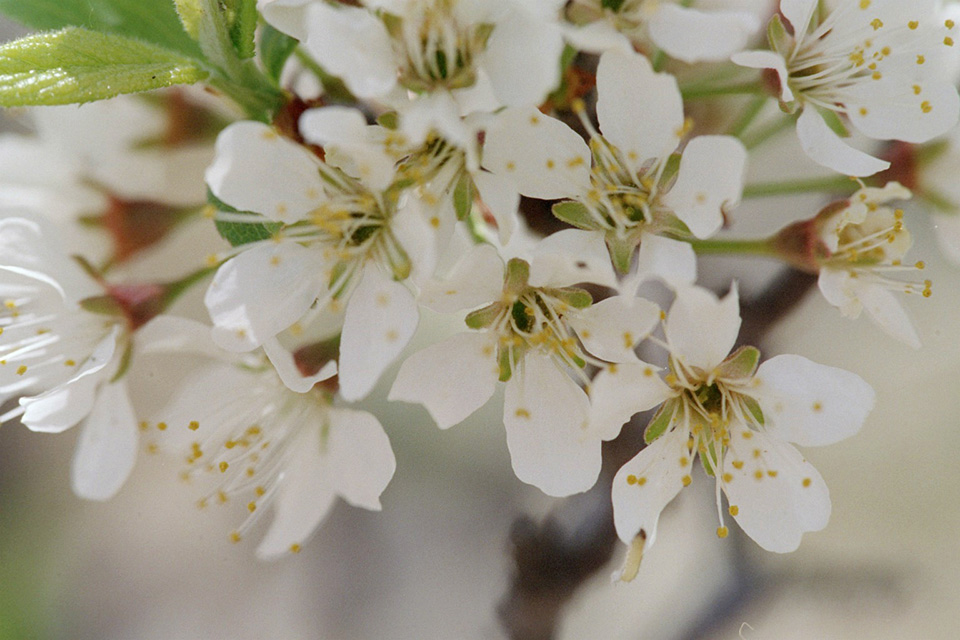
The flowers are ¾″ to 1″ across. There are 5 green, 1 ⁄16″ to ⅛″ long sepals, 5 white, ¼″ to 7 ⁄16″ long petals, and 20 to 30 stamens. The sepals are often hairy on the upper side. Many flowers do not produce fruit. The flowers have an unpleasant aroma. They appear before the leaves from April to early June.
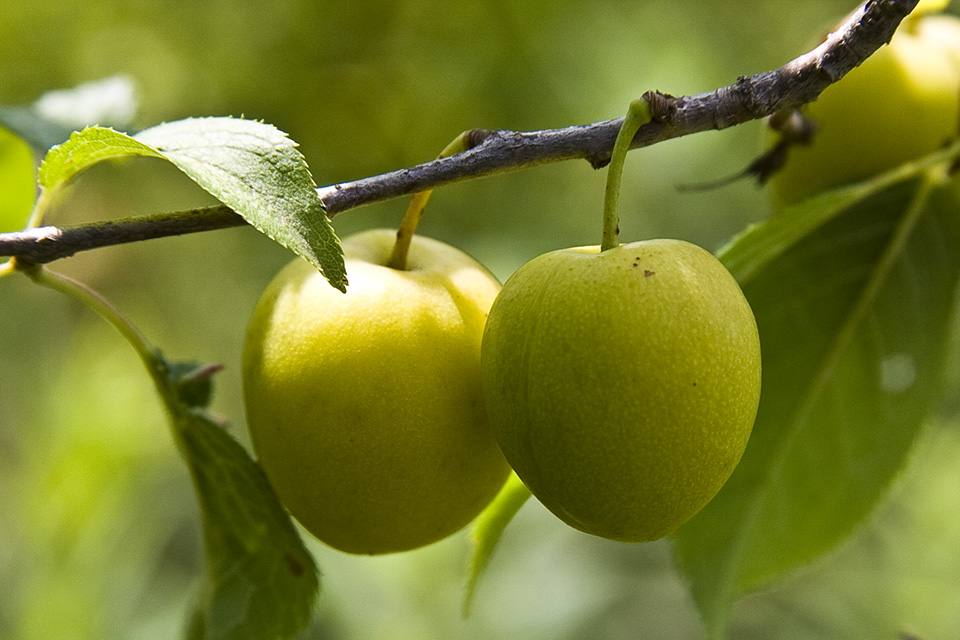
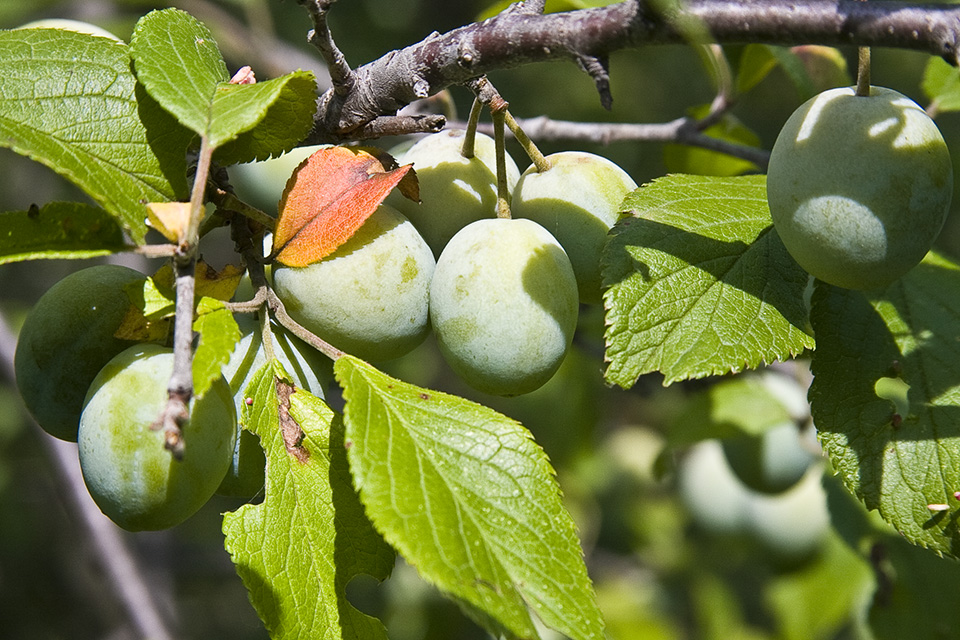
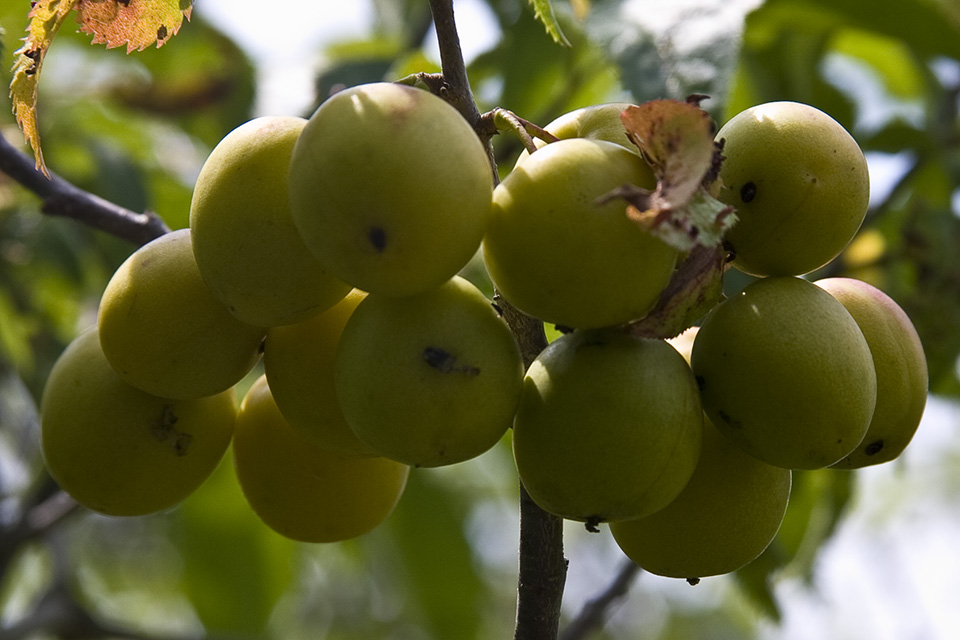
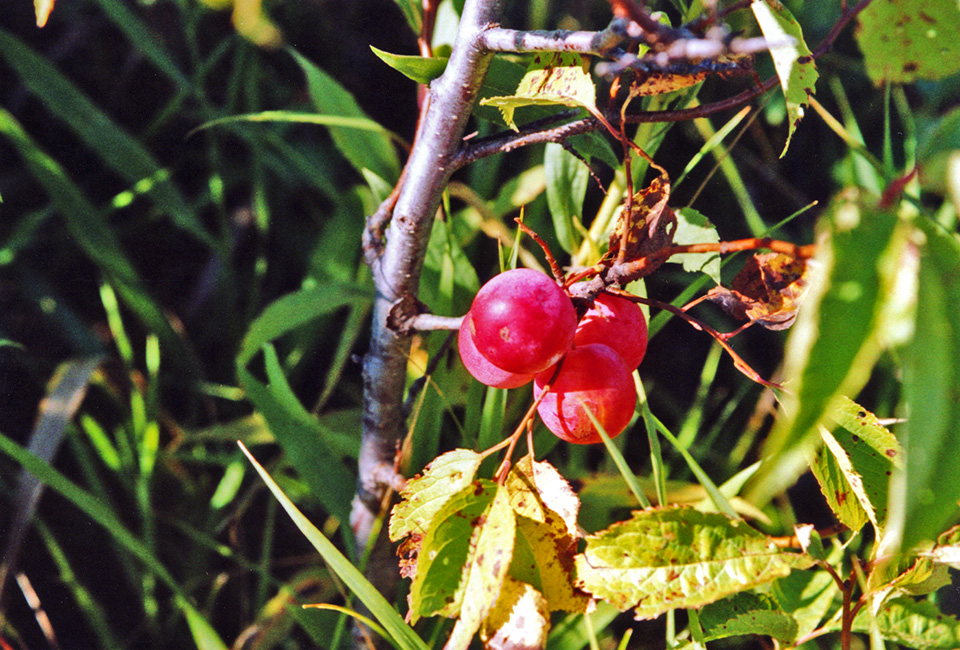
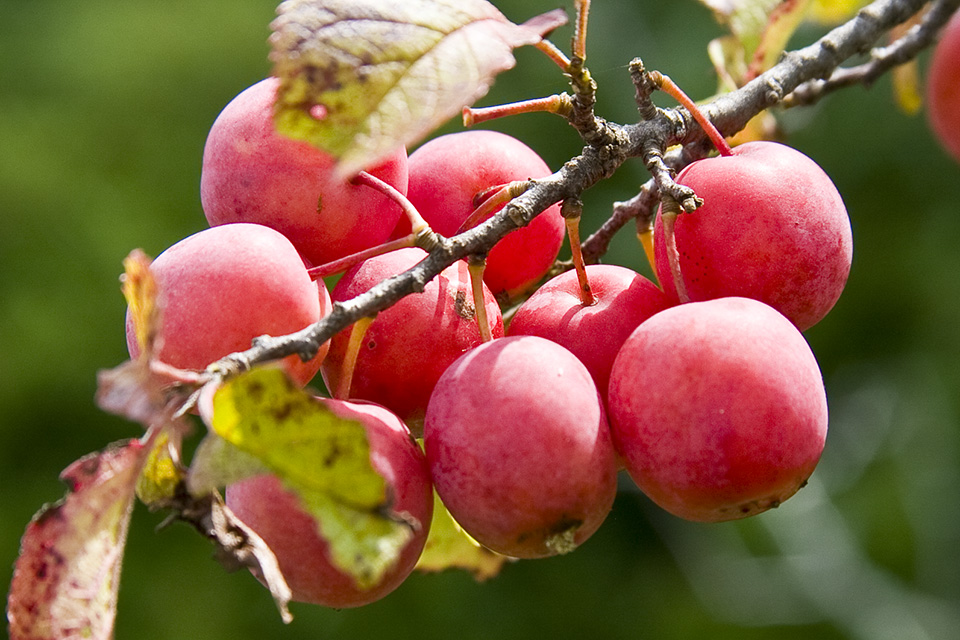
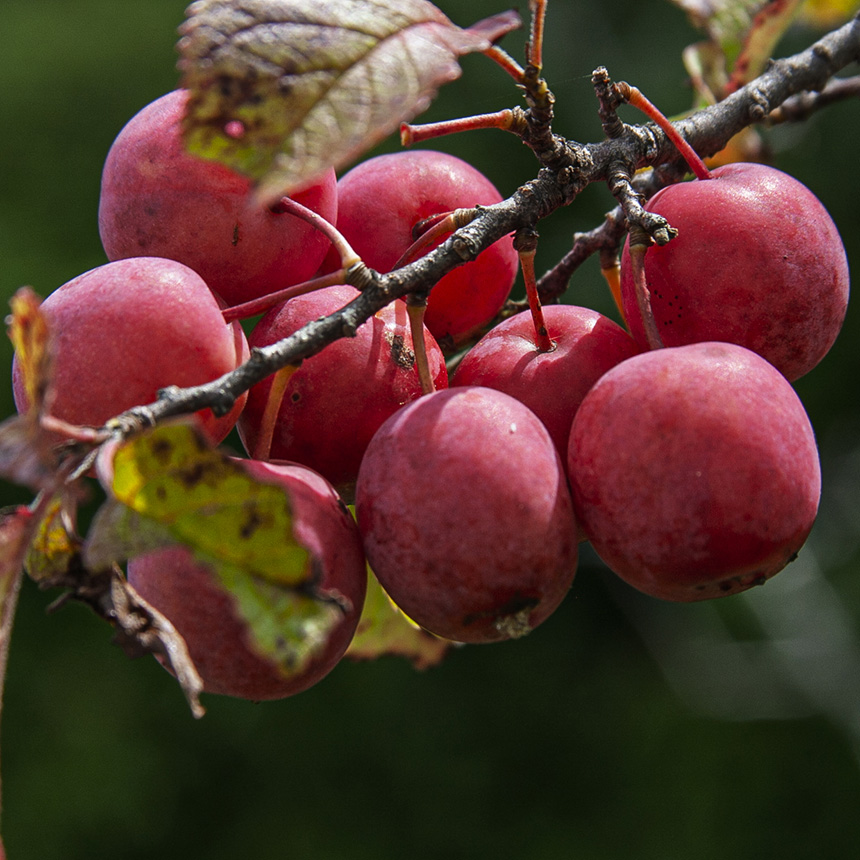
The fruits are fleshy, one-seeded, roughly spherical, ¾″ to 1¼″ in diameter drupes. They are covered with a whitish, waxy coating (glaucous). Drupes are yellow when immature, red to yellow, usually orange-red, when mature. They have a thick skin and yellow flesh. They mature early mid-August to mid-September.
Height
10′ to 15′
Flower Color
White
Similar Species
Canada plum (Prunus nigra) is less common and less widespread. The leaves are proportionately wider, 1.3 to 2 times as long as wide. There are two small red gland dots near the tip of each leaf petiole. American plum lacks these glands.
Hawthorn (Cretaegus spp.) thorns have a shiny surface.
Habitat
Dry to moist. Coulees, ravines, roadsides, utility rights-of-way, forest openings, floodplains, prairies where natural fires are suppressed. Full sun to part shade.
Ecology
Flowering
April to early June
Pests and Diseases
Plum Pocket (Taphrina communis) causes infected fruits that are enlarged, hollow, seedless, and misshapen, and have a grayish velvety coating.
Rust Fungus (Tranzschelia pruni-spinosae var. americana)
Use
Distribution
Sources
Biodiversity occurrence data published by: Minnesota Biodiversity Atlas (accessed through the Minnesota Biodiversity Atlas Portal, bellatlas.umn.edu. Accessed 2/17/2026).
Midwest Herbaria Portal. 2026. https://midwestherbaria.org/portal/index.php. Accessed 2/17/2026.
Prunus americana Marshall in GBIF Secretariat (2023). GBIF Backbone Taxonomy. Checklist dataset https://doi.org/10.15468/39omei accessed via GBIF.org. Accessed 2/17/2026.
Smith, Welby R. 2008. Trees and Shrubs of Minnesota: The Complete Guide to Species Identification. The University of Minnesota Press, Minneapolis, MN.
Nativity
Native
Occurrence
Common
Taxonomy
Kingdom
Subkingdom
Pteridobiotina
Phylum
Tracheophyta (Vascular Plants)
Class
Order
Rosales (Roses, Elms, Figs, and Allies)
Family
Rosaceae (Rose)
Subfamily
Amygdaloideae
Tribe
Amygdaleae
Genus
Prunus (Plums, Cherries, and Allies)
Subordinate Taxa
Many sources list two two varieties; Prunus americana var. lanata and Prunus americana var. mollis. According to Flora of North America, these names are misapplied, as they refer respectively to Prunus mexicana (Mexican plum) and either Prunus nigra (Canada plum) or Prunus emarginata (bitter plum), depending on the source.
Synonyms
Cerasus americana
Cerasus canadensis
Cerasus hyemalis
Padus canadensis
Prunus acinaria
Prunus acuminata
Prunus americana var. floridana
Prunus americana var. rosea
Prunus coccinea
Prunus domestica var. americana
Prunus hyemalis
Prunus mississipi
Prunus spinosa
Common Names
American plum
American wild plum
American red plum
August plum
goose plum
hog plum
Osage plum
Pottawattami plum
red plum
river plum
sand cherry
sandhill plum
sloe
thorn plum
wild plum
wild yellow plum
yellow plum