Northern Leopard Frog - Species Profile
Conservation • Description • Habitat • Ecology • Distribution • Taxonomy

Conservation Status
IUCN Red List
LC - Least Concern
NatureServe
N5 - Secure
S4 - Apparently Secure
Minnesota
not listed
Description
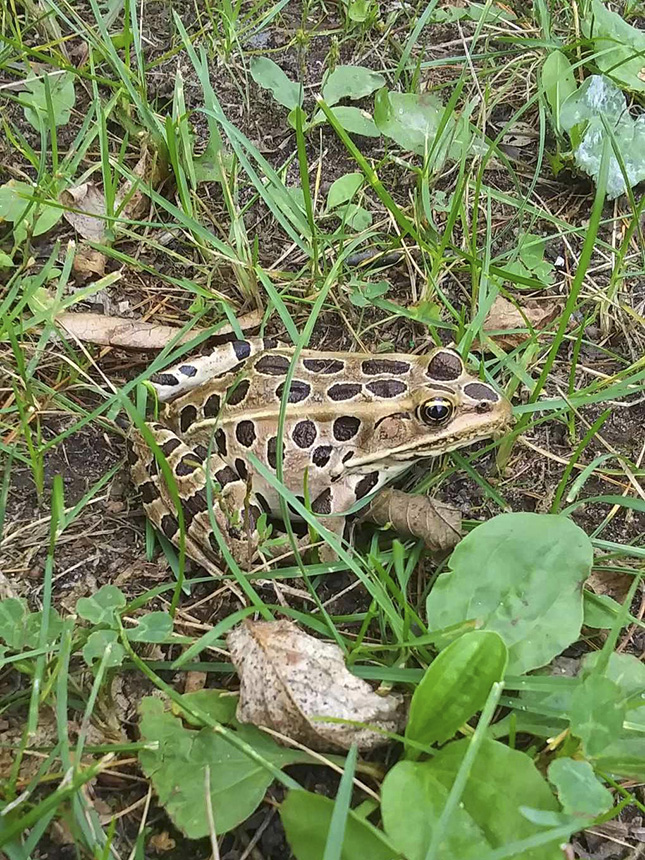
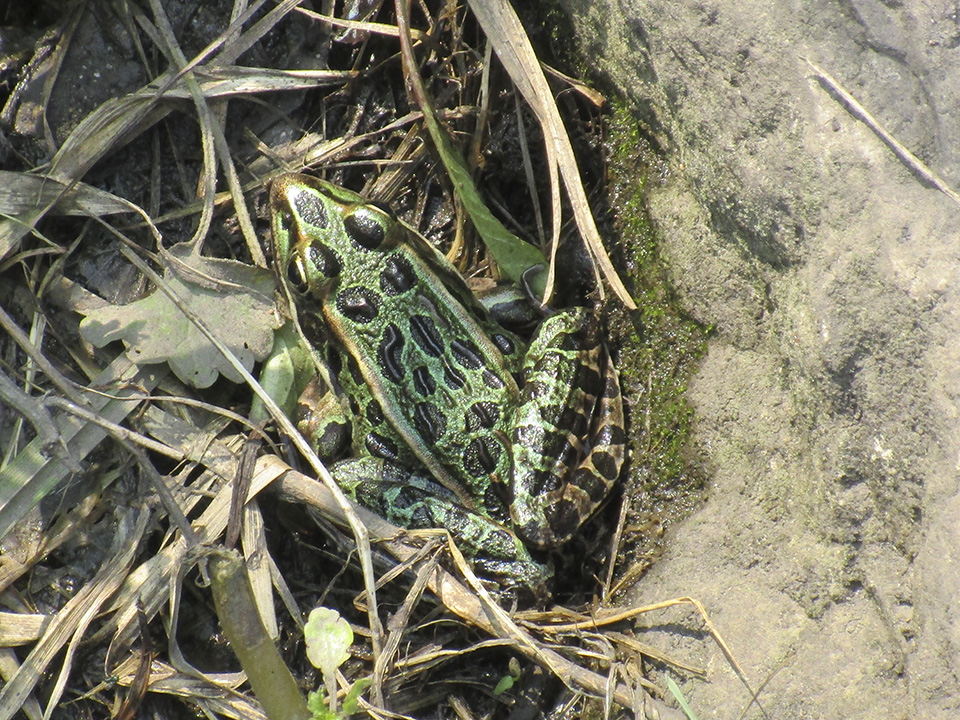
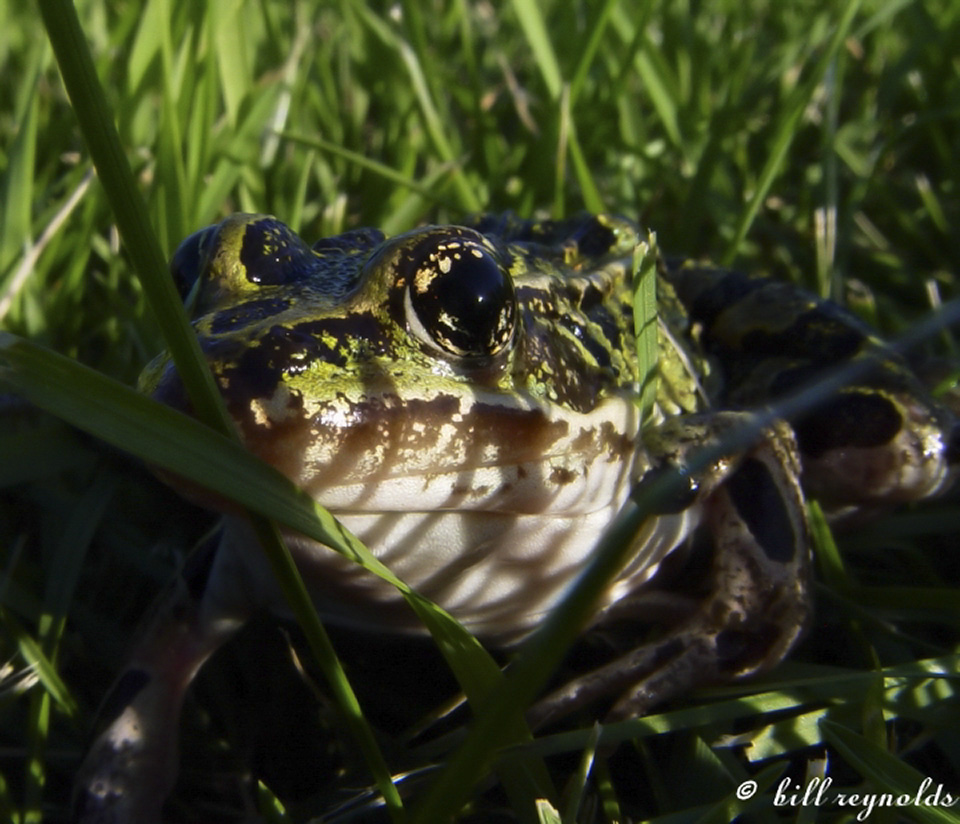
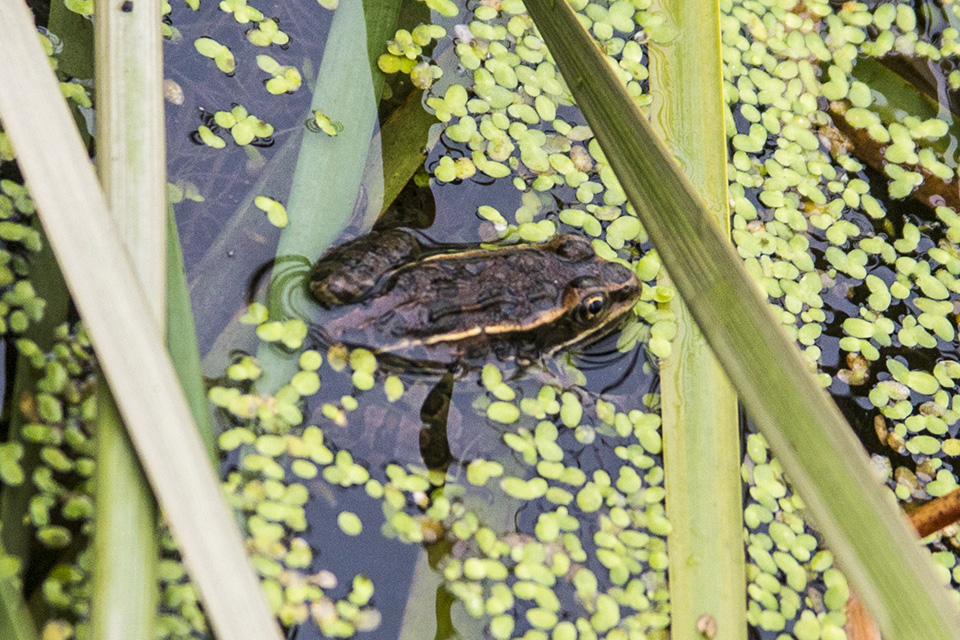
Northern leopard frog is a slim, medium-sized, widely recognized, spotted frog. It is the most common frog in Minnesota.
An outbreak of deformities in this species was discovered by school children in LeSueur, Minnesota, in 1995. The Minnesota Pollution Control Agency researched the problem from 1997 through 2000, when funding for the research was discontinued. The cause of the malformations remains unknown. According to the National Biological Information Infrastructure (NBII), research suggests that there is no single cause. The four major environmental factors contributing to the malformations are contaminants, nutritional deficiencies, parasites, and injuries from predators.
Adults are 2″ to 3½″ long at maturity. Males are smaller than females.
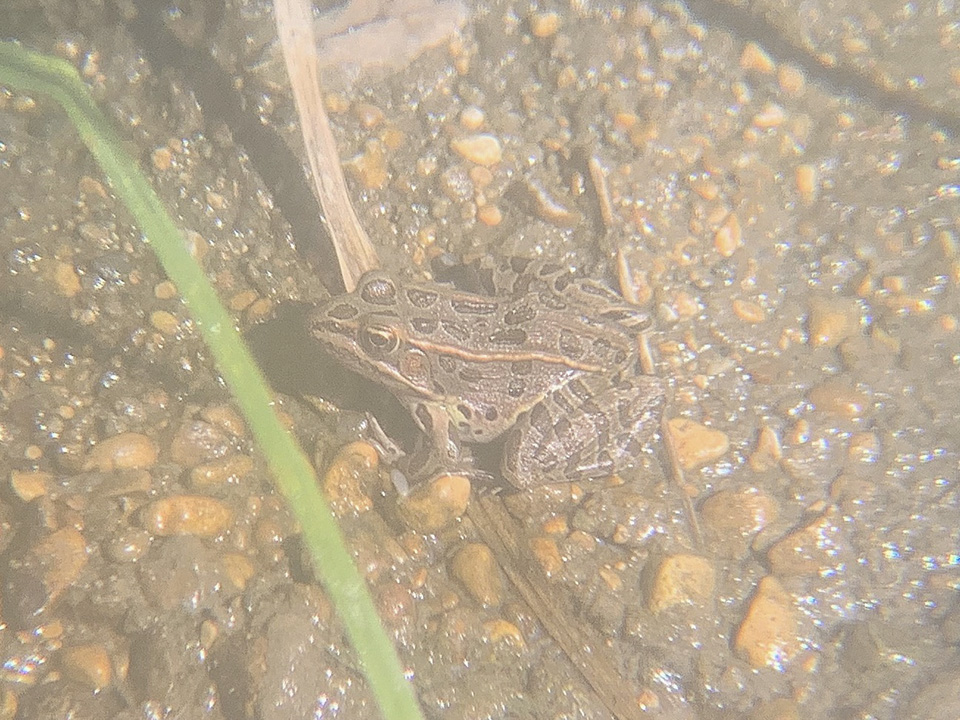
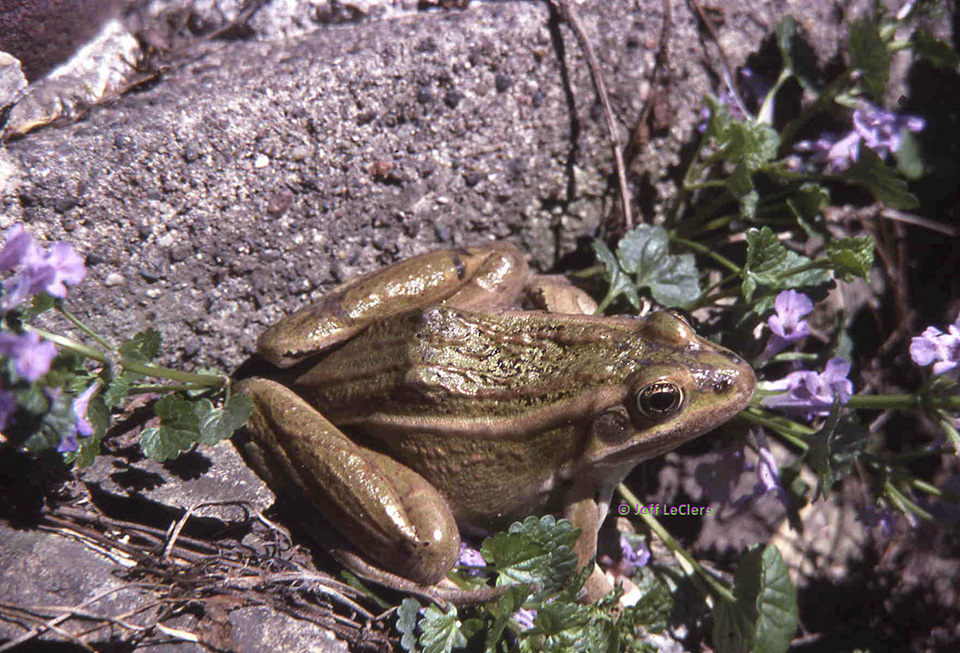
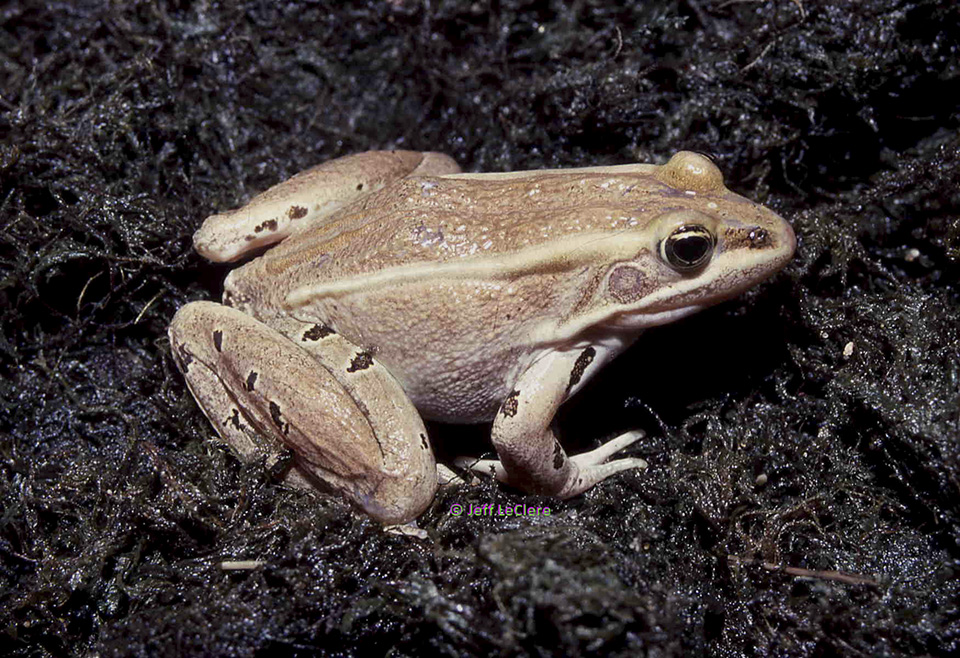
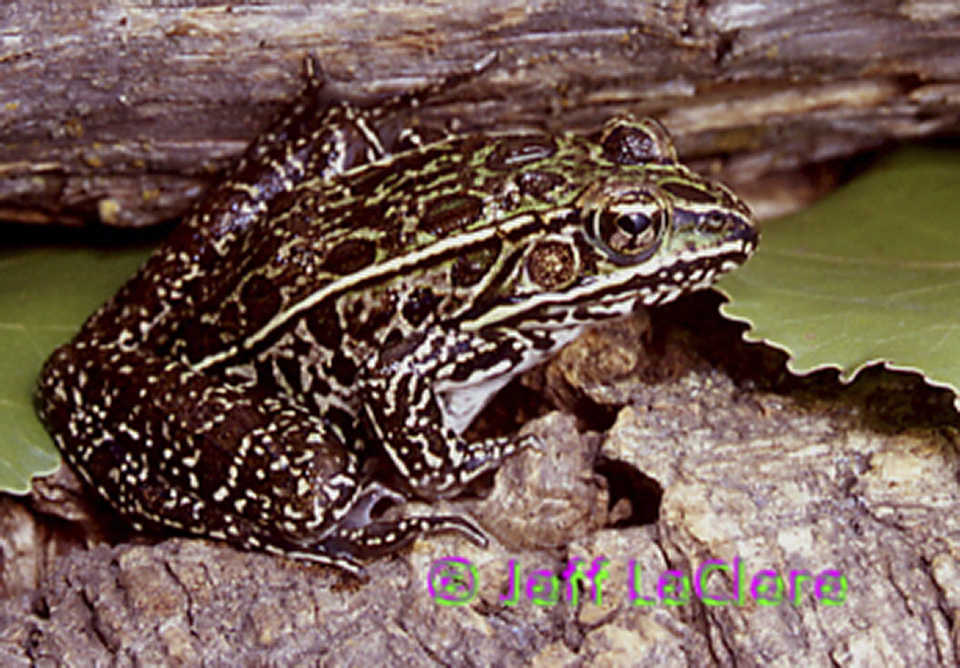
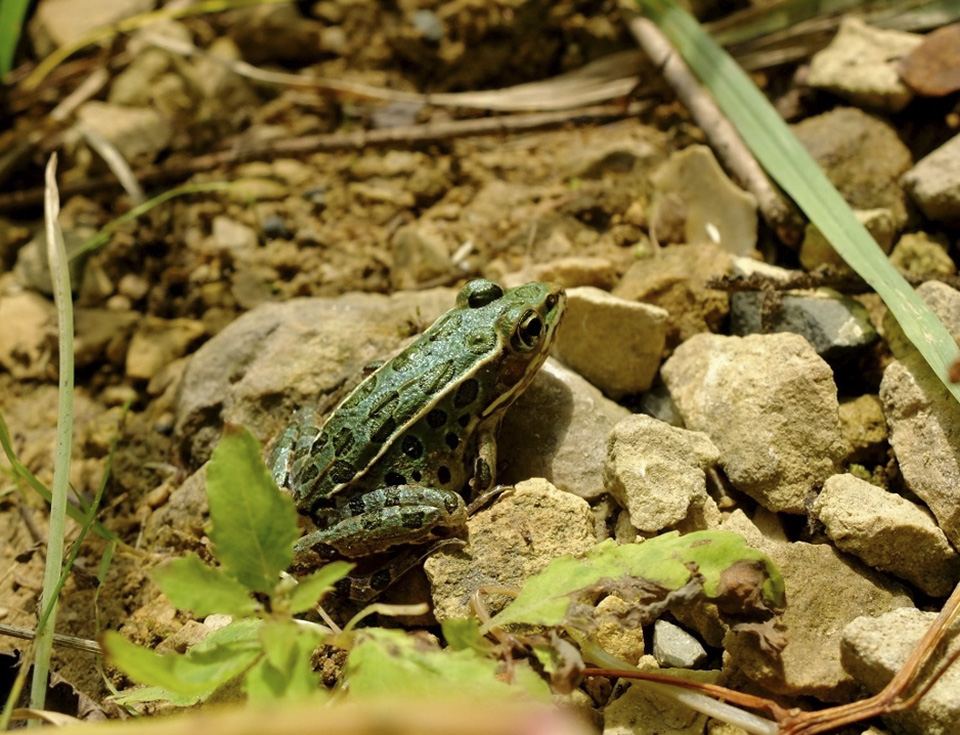
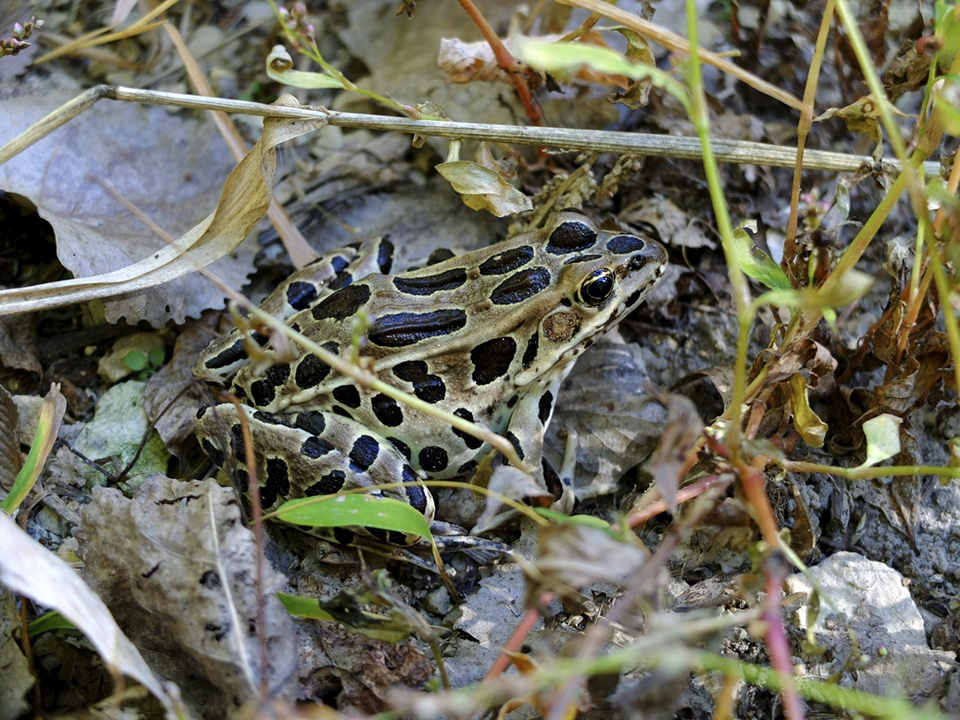
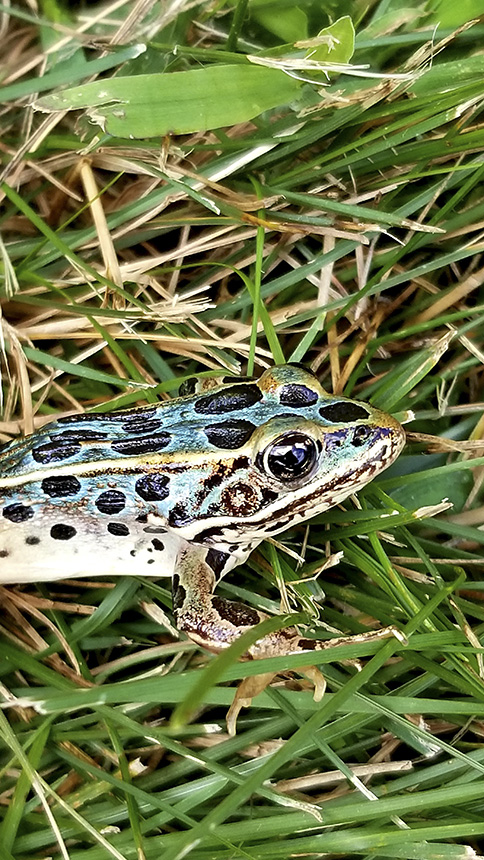
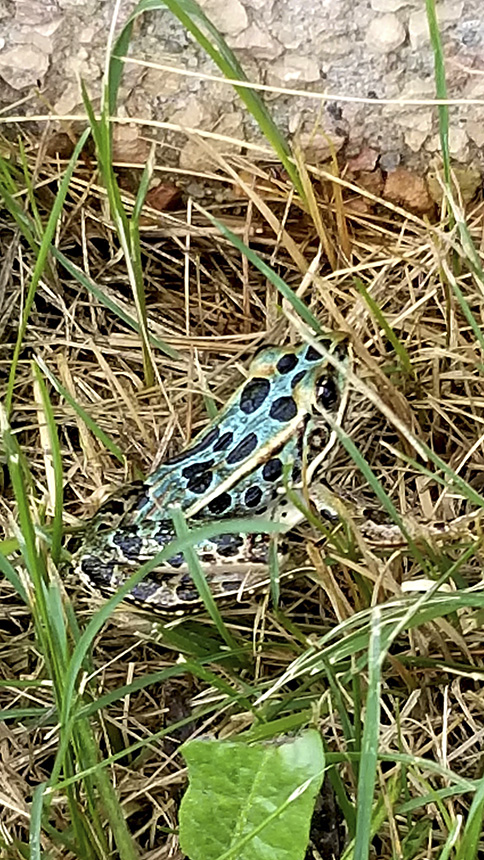
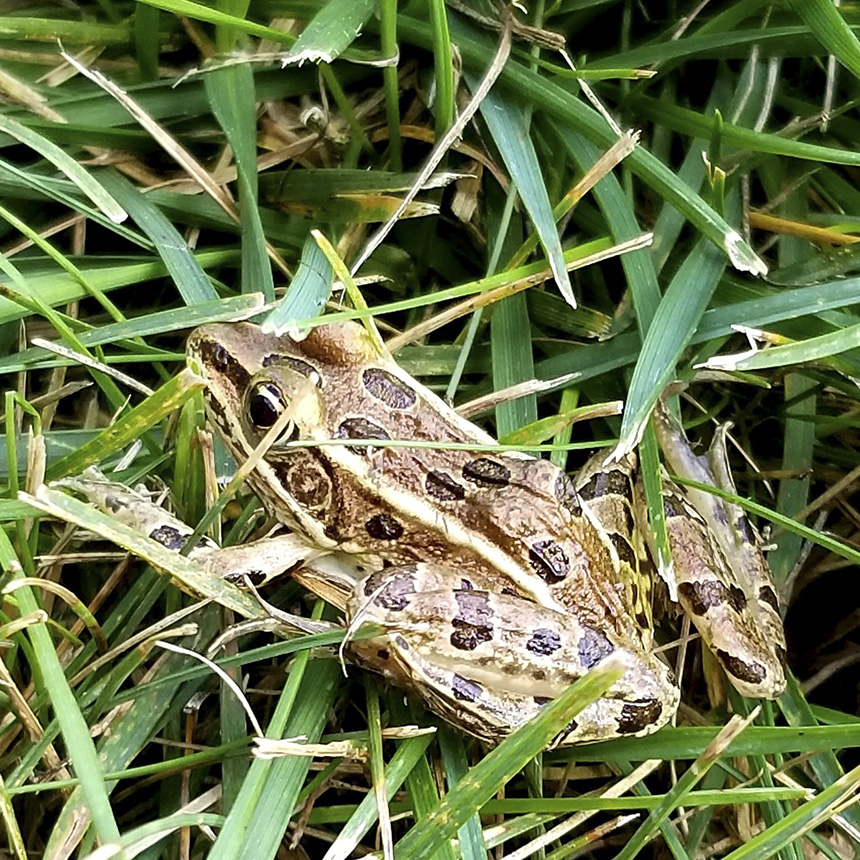
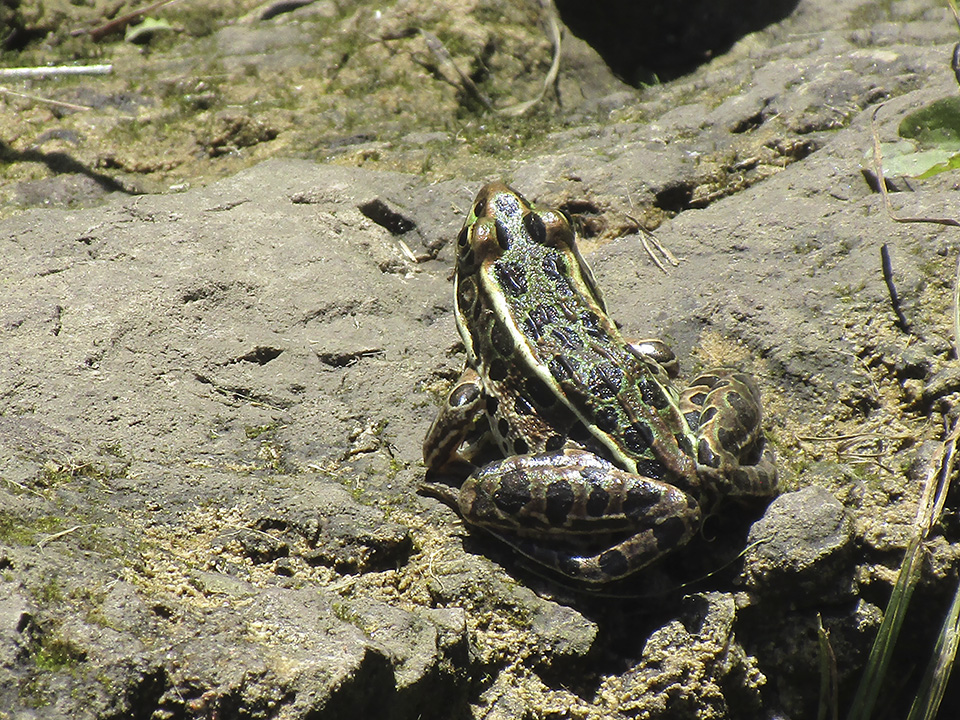
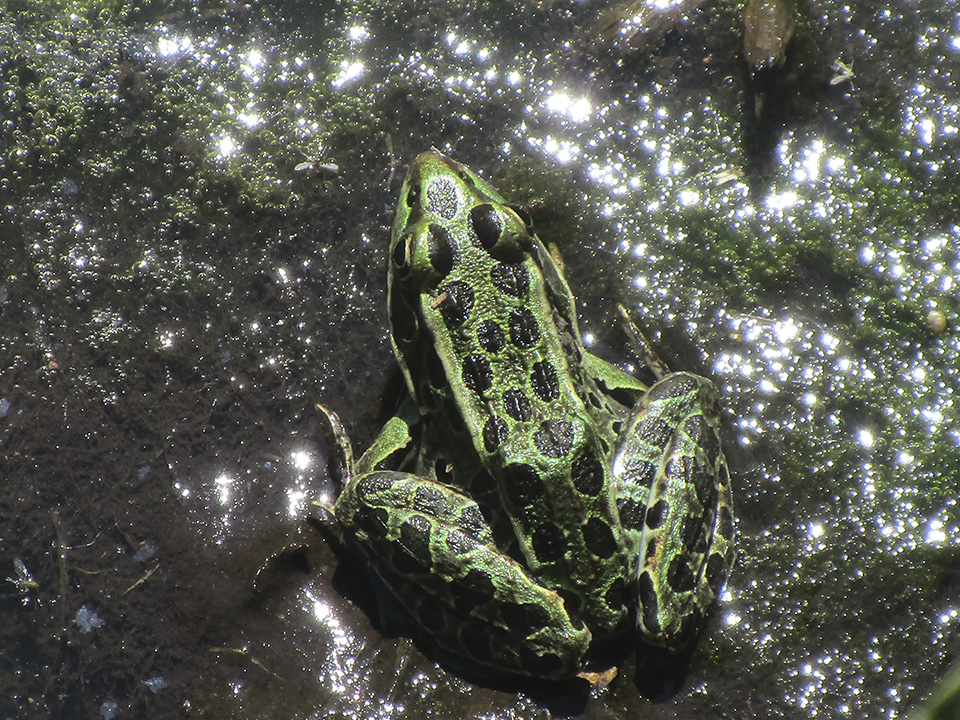
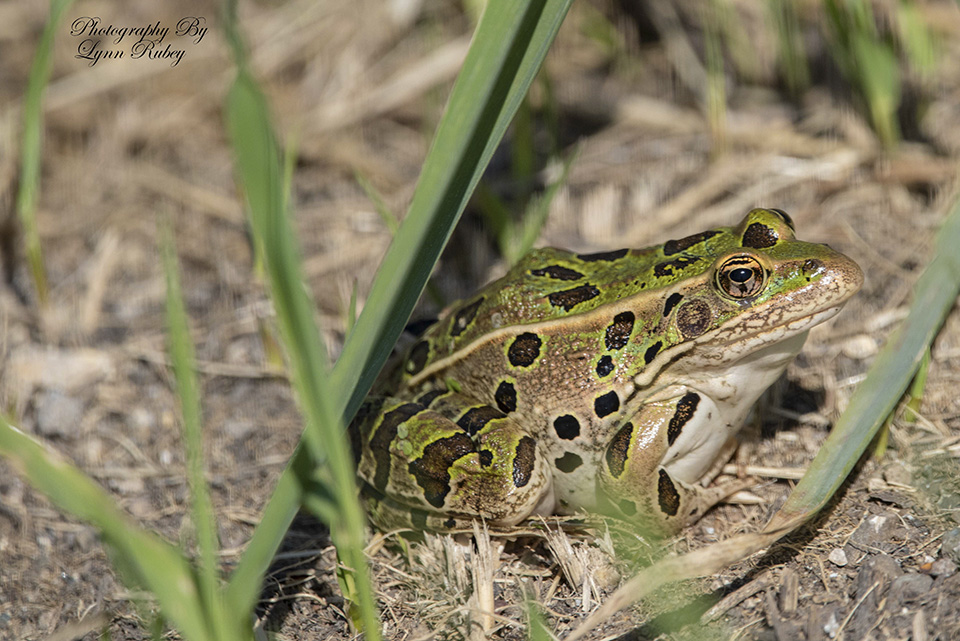
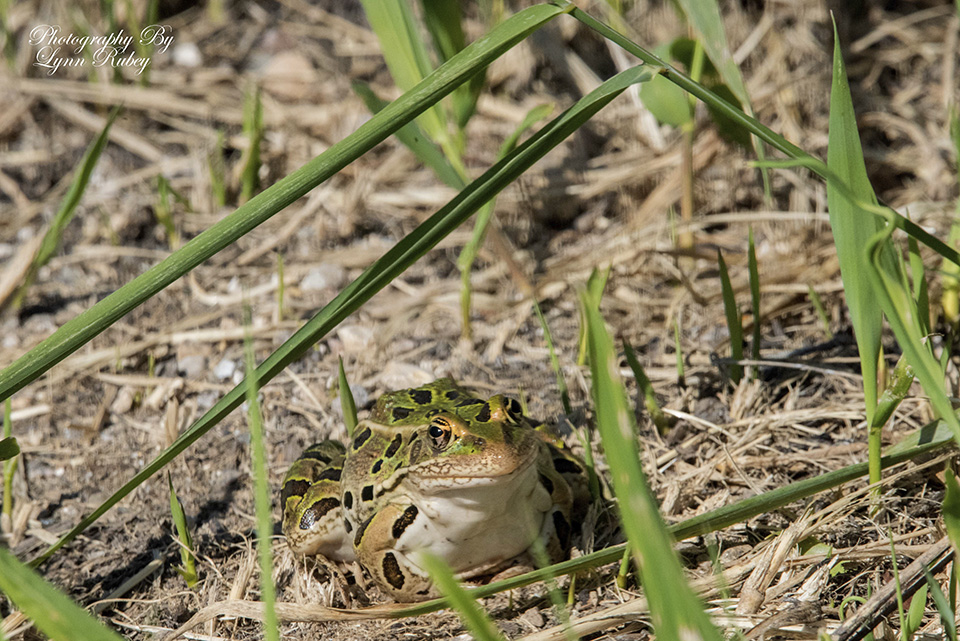
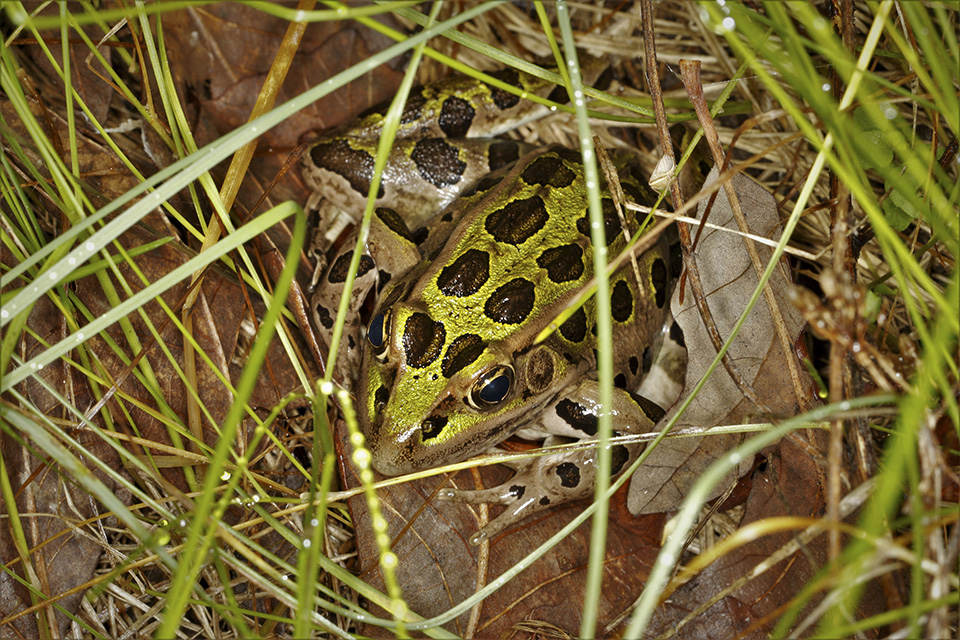
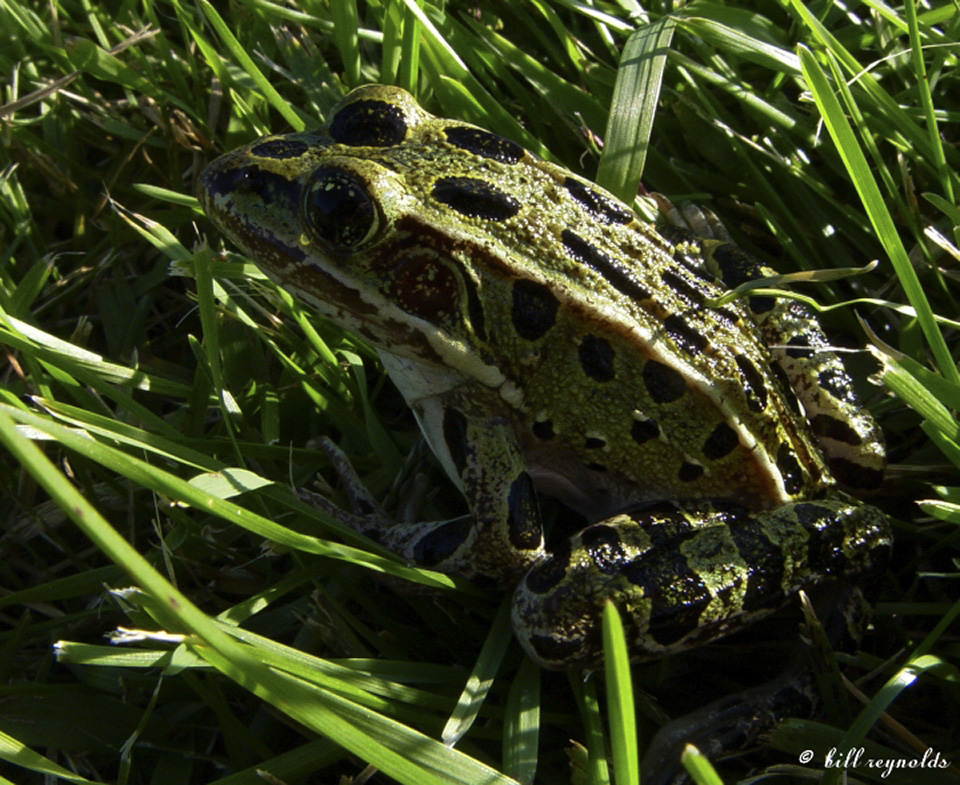
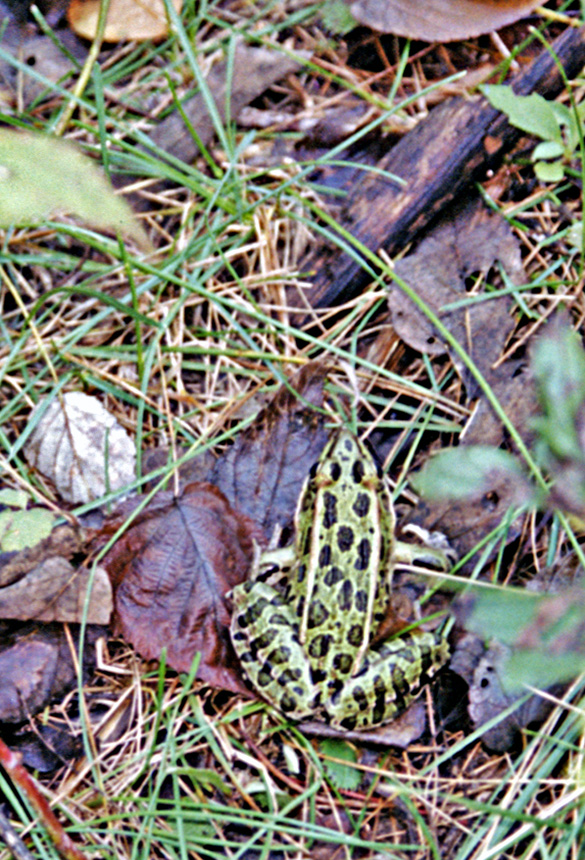
The back (dorsal surface) is smooth to moderately rough. Background color and spotting is variable. Most adults have 2 to 4 rows of black spots on a green background. Some have a greenish-brown or brown background, some have no dorsal spots, and some are brown with flecks of white, brown, or black between the spots. Juveniles may have few or no dorsal spots. The spots on all adults have a whitish or yellowish bordered. Prominent folds on each side of the back (dorsolateral) extend from the head to near the vent. The folds are light on top and dark at the base. They do not angle inward near the vent (anal opening). Males have a pair of inflatable vocal sacs on their shoulders. During breeding season these appear as areas of loose skin.
The belly is white or cream-colored.
There is a white stripe in the upper jaw. The ear covering (tympanum) is smaller than the eye.
The hind legs have dark horizontal bands. The inside of the thighs of the hind legs are pale with a greenish tint. The feet are webbed. Males have thick, dark thumb pads.
There are no recognized subspecies of Northern Leopard Frog but there are four color morphs. Most adults have 2 to 4 rows of black spots on a green background (green morph). Some adults have a greenish-brown or brown background (brown morph). The Burnsi morph is brown or green with no dorsal spots. The less common Kandiyohi morph has black mottling or additional black spotting between the spots.
Size
Total length: 2″ to 3½″
Voice
Amphibian Research and Monitoring Initiative (ARMI), Midwest Region
Frog and Toad Calls
A low pitched snore, lasting 2 to 4 seconds, and occasional clucks or croaks.
Similar Species
Pickerel Frog (Lithobates palustris) has a light tan background. The spots are squarish. The inside of the thighs of the hind legs are bright yellow. They are found only in trout streams in southeastern Minnesota.
Habitat
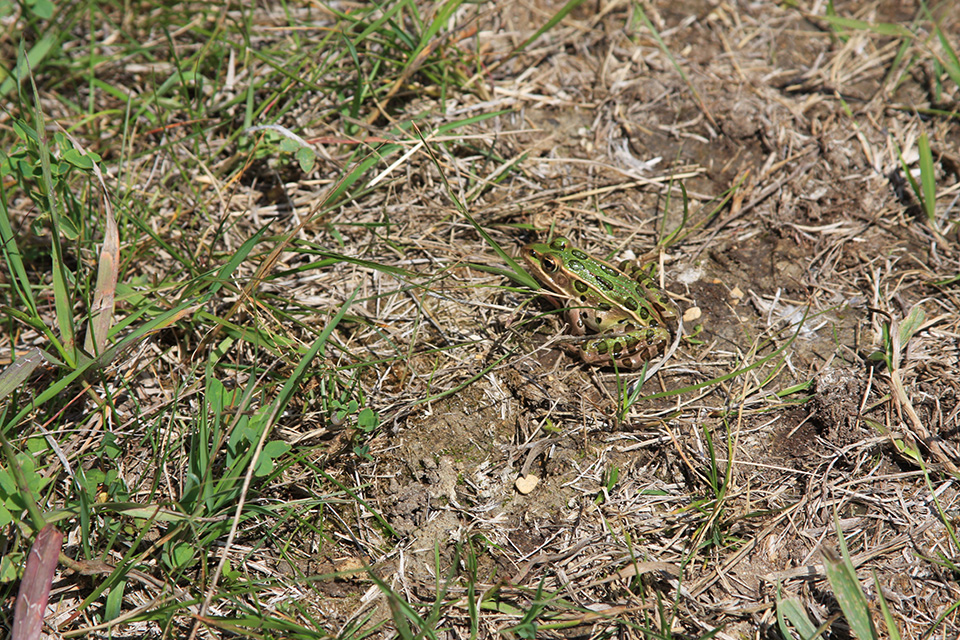
Damp woodlands and grasslands, always near lakes, ponds, rivers, slow streams, marshes, or wetlands.
Ecology
Behavior
Lifespan
5 to 7 years
Life Cycle
Adults breed in April and May. With the male still attached, the female lays a single round mass of between 300 and 6,500 black eggs, attached to vegetation just below the water surface. The eggs hatch in 1 to 2 months and tadpoles metamorphose into adults in about 50 days, depending on the weather. After metamorphosis they leave the pond to feed on dry land and to migrate. Mass migrations often occur after heavy rains.
Adults reach sexual maturity in 2 or 3 years. They hibernate usually in deep water that does not freeze completely. They live 5 to 7 years.
Tadpole Food
Algae, plant tissue, organic debris, and probably some small invertebrates
Adult Food
Insects, spiders, snails, earthworms, and other small terrestrial invertebrates.
Distribution
Sources
Biodiversity occurrence data published by: Minnesota Biodiversity Atlas (accessed through the Minnesota Biodiversity Atlas Portal, bellatlas.umn.edu. Accessed 1/7/2026).
HerpMapper. 2026. HerpMapper - A Global Herp Atlas and Data Hub. Iowa, U.S.A. Available http://www.herpmapper.org. (Accessed: 1/7/2026).
USGS National Amphibian Atlas. https://armi.usgs.gov/atlas/. Accessed 1/7/2026).
Occurrence
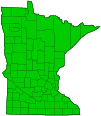
Very common
Taxonomy
Class
Amphibia (Amphibians)
Order
Anura (Frogs and Toads)
Family
Ranidae (True Frogs)
Genus
Lithobates (American Water Frogs)
Genus
In 2006, Frost et al. transferred most North American true frogs from the genus Rana to Lithobates, a controversial decision initially met with resistance. While Stuart, Pauly et al., and other systematic reviews rejected the change in 2008 and 2009, the transfer has since gained near-universal acceptance by 2024. Amphibian Research and Monitoring Initiative (ARMI), Amphibian Species of the World, Catalog of Life, GBIF, HerpMapper, iNaturalist, ITIS, NatureServe, NCBI, Society for the Study of Amphibians and Reptiles (SSAR), UniProt, and USGS ARMI National Amphibian Atlas use the name Lithobates pipiens.
In 2016, a consortium of Rana researchers from Europe, Asia, and North America showed that transferring the species to Lithobates caused problems of paraphyly in other genera. In that same year, Yuan et al. returned all North American true frogs to the genus Rana, using subgenera for all of the well-defined species groups within Rana. AmphibiaWeb uses the name Rana pipiens.
Subordinate Taxa
Synonyms
Rana brachycephala
Rana burnsi
Rana kandiyohi
Rana noblei
Rana pipiens
Rana pipiens brachycephala
Rana pipiens burnsi
Rana pipiens kandiyohi
Rana pipiens pipiens
Rana virescens brachycephala
Common Names
Northern Leopard Frog