



leadplant
(Amorpha canescens)
Conservation • Description • Habitat • Ecology • Use • Distribution • Taxonomy
Conservation Status |
|
|||||||
| IUCN Red List | not listed |
|||||||
| NatureServe | NNR - Unranked SNR - Unranked |
|||||||
| Minnesota | not listed |
|||||||
Description |
||
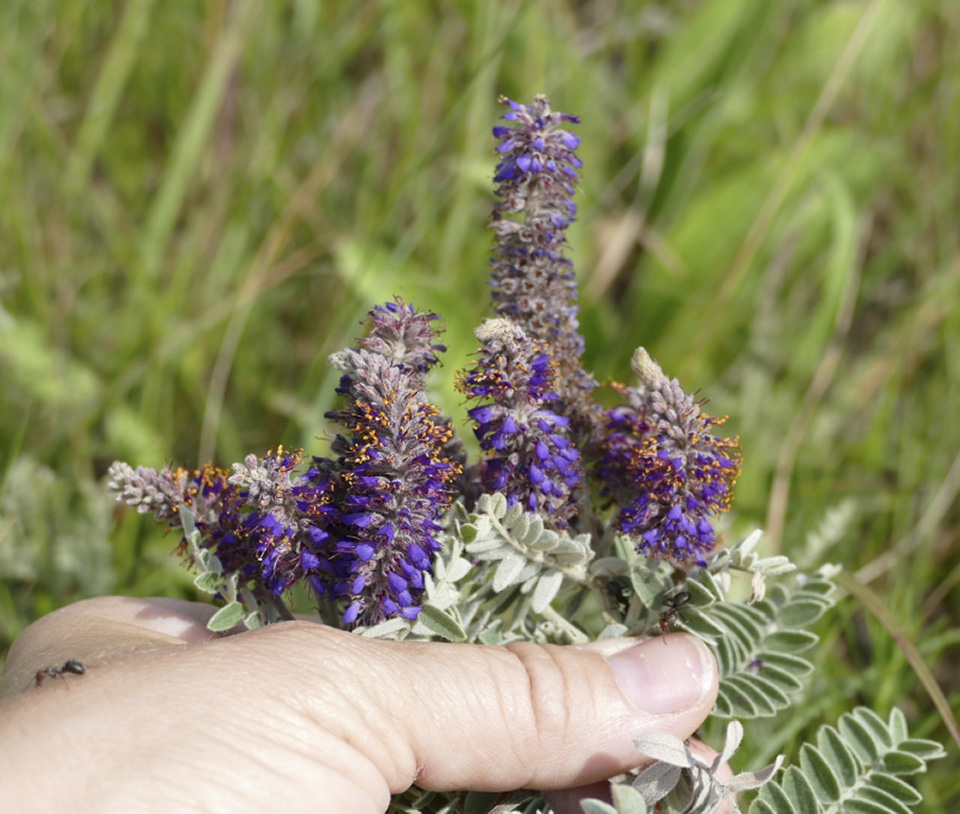
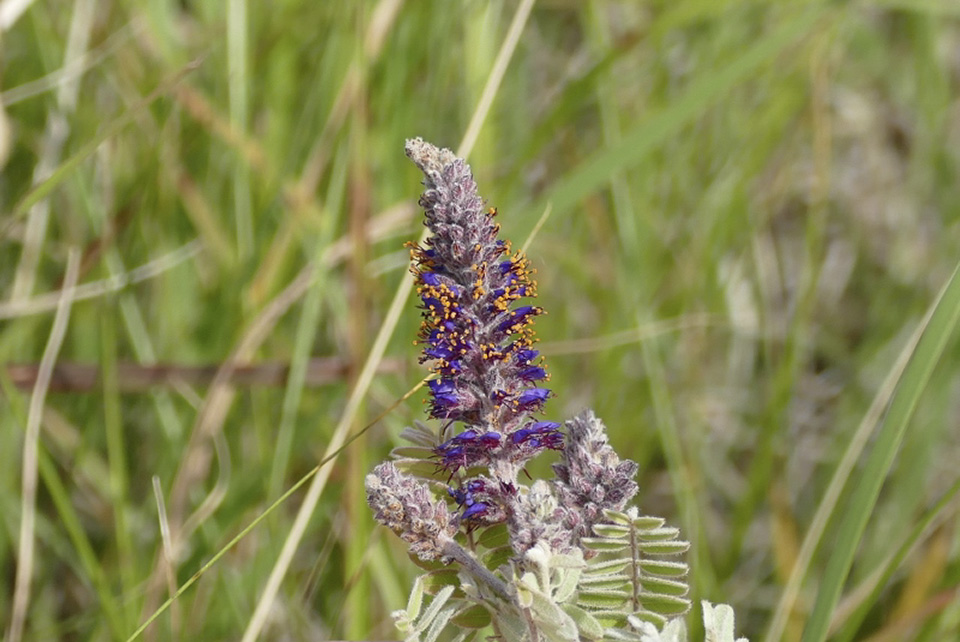
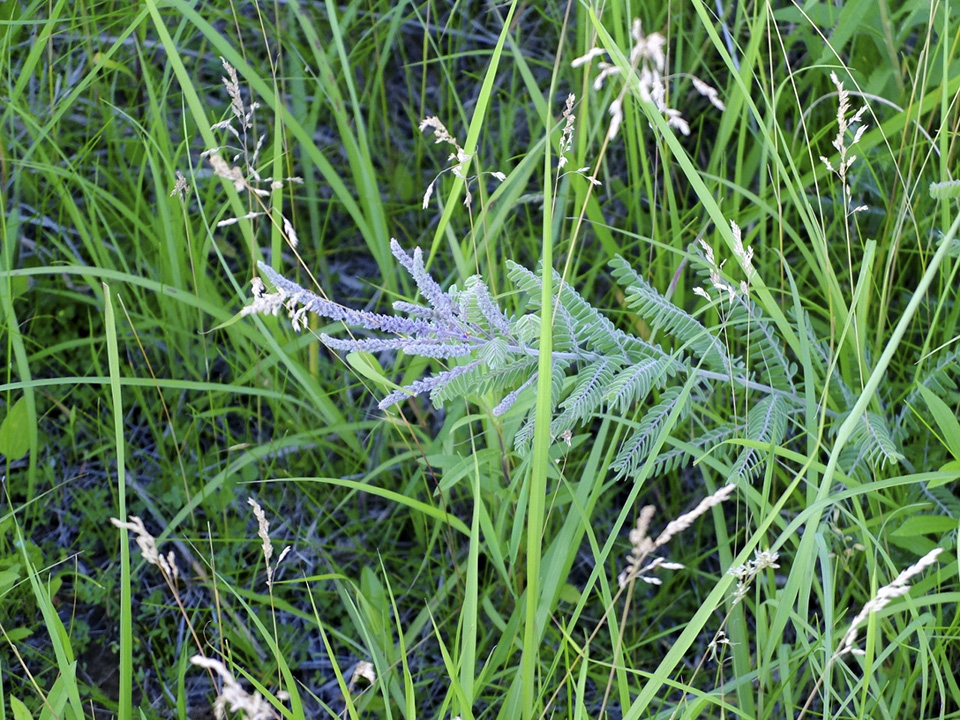
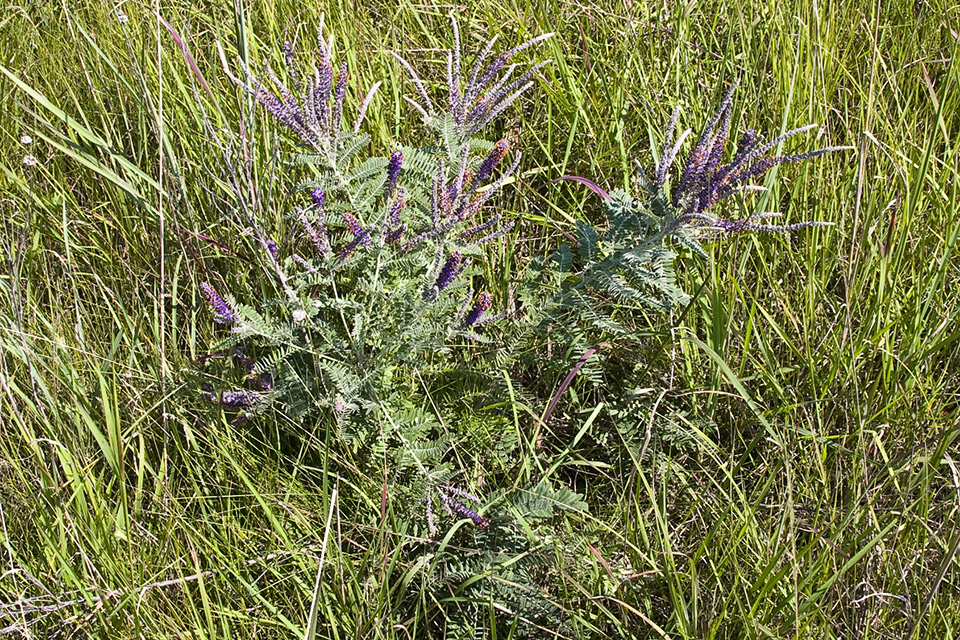
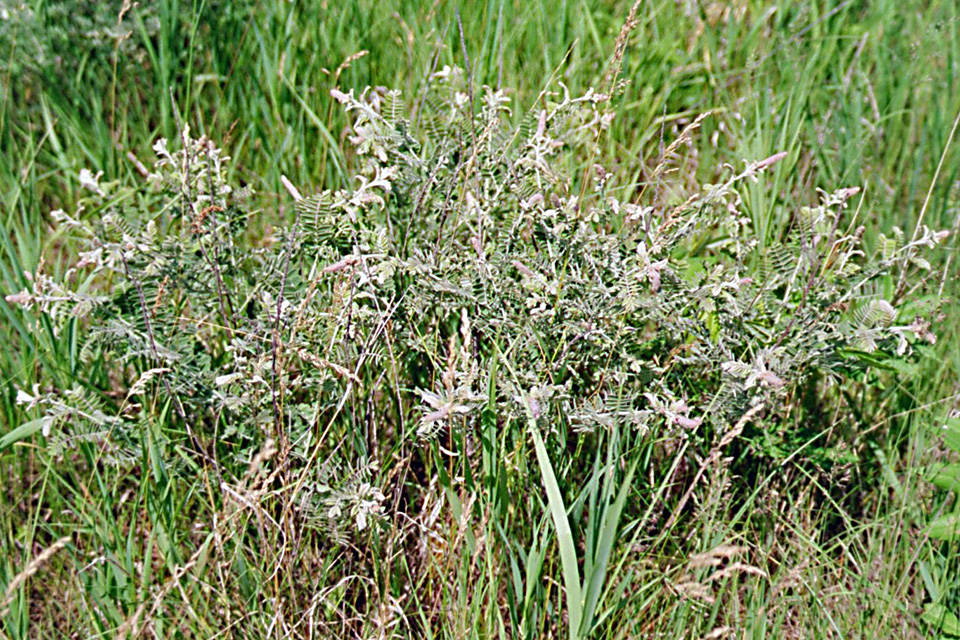
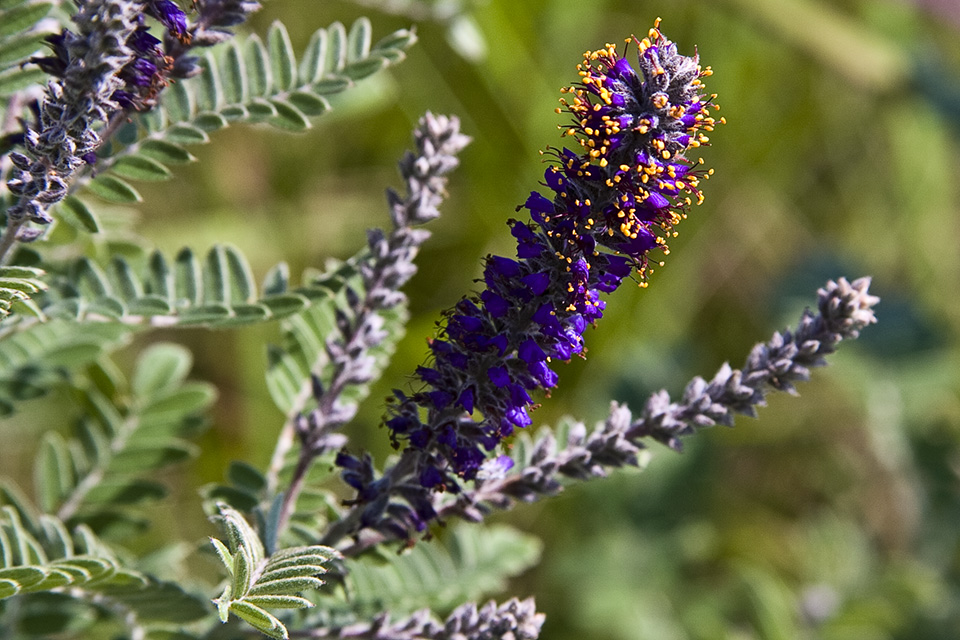
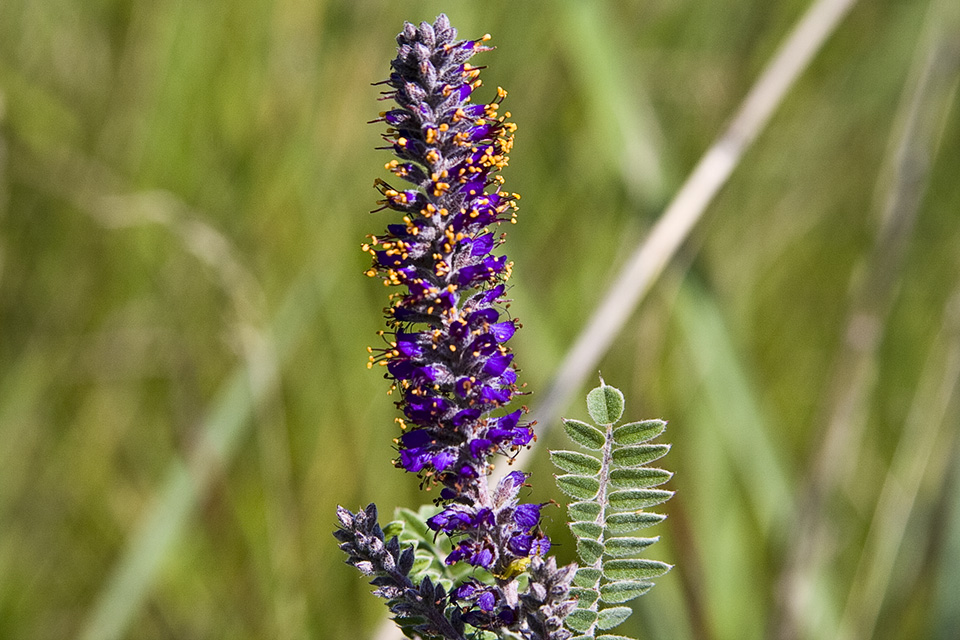
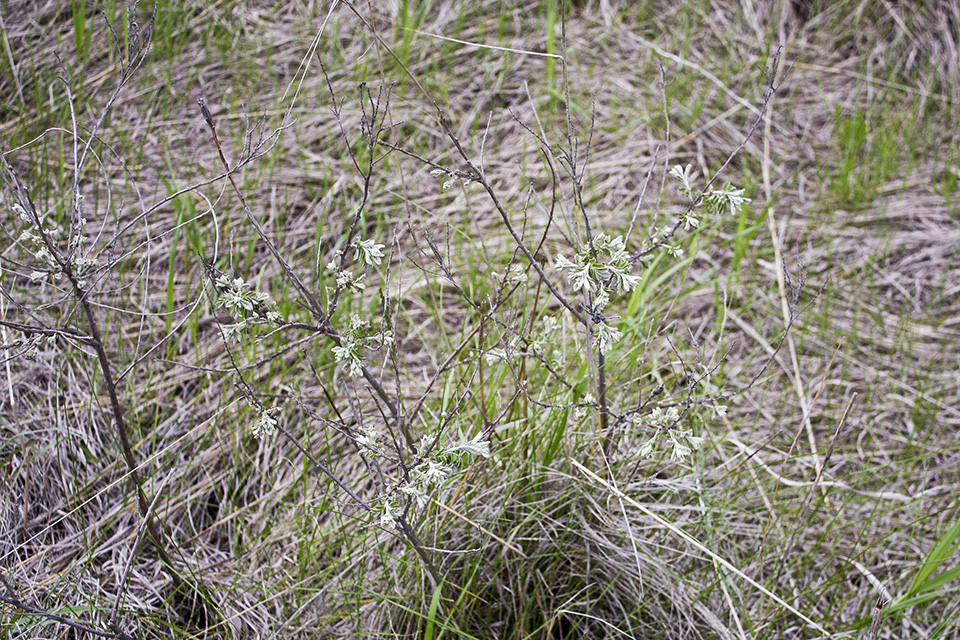
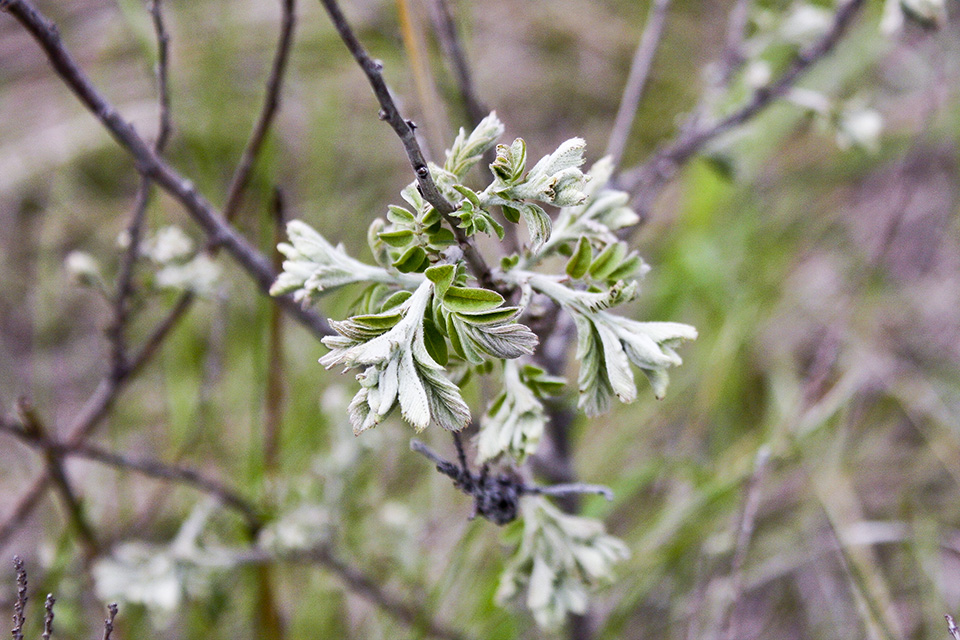
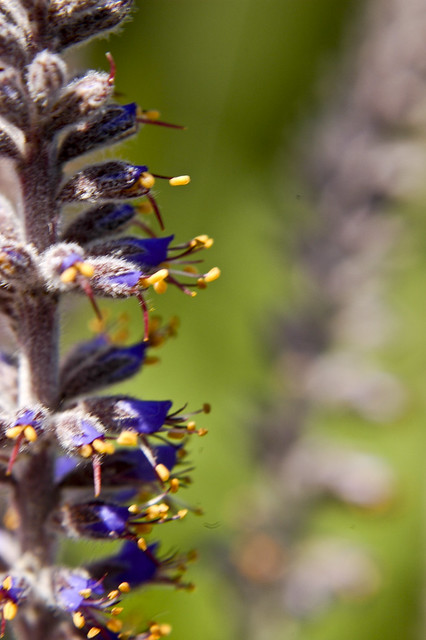
Leadplant is an erect, perennial forb that rises on multiple stems from a rhizome or a woody crown. It can be 8″ to 51″ tall, but is usually no more than 40″ in height. The striking feature of this plant is the fine white hairs on the young stems, leaves, and calyces that give the overall appearance of a plant dusted with white lead powder. The stems are ascending to erect and usually branched. Current year stems are gray or white near the top due to a dense covering of short, fine, white hairs, and light green and sparsely hairy or almost hairless near the base. Year-old stems are hairless or nearly hairless and become woody near the base. The bark on the woody portion is gray to brownish and somewhat rough. The leaves are alternate, deciduous, 1½″ to 4″ long, ½″ to 1½″ wide, and are pinnately divided into 19 to 49 leaflets. The central axis of the leaf (rachis) is white due to a dense covering of short, fine, white hairs. At the base of each leaf is a pair of leaf-like appendages (stipules). The stipules are linear, purplish, and up to ⅛″ long. They drop off as the leaf develops. The leaflets are arranged in alternate pairs near the base of the leaf, opposite pairs near the tip, with a single leaflet at the end of the rachis. They are egg-shaped to oblong or elliptical, ⅜″ to ⅝″ long, and ⅛″ to ¼″ wide. They are rounded at the base and rounded at the tip, with a short, sharp, abrupt point at the tip. They have a single, prominent midvein. The upper surface is grayish-green and is densely to moderately covered with short, fine, white hairs. The lower surface is paler grayish-green and is densely covered with short, fine, white hairs. The margins are untoothed. The terminal leaflet is smaller than the lateral leaflets, tapered at the base, and squared off at the tip. The inflorescence is a cluster of 5 to 20 spike-like, unbranched, elongated clusters (racemes) at the end of the stem and branches. Individual racemes also sometimes rise from the uppermost leaf axils. The racemes are 1½″ to 6¾″ long, and ⅜″ to ⅝″ wide, and are on leafless stalks (peduncles) up to 10″ long. The peduncles and the central axes of the racemes are densely covered with short, fine, white hairs. The flowers are about ¼″ long. There are 5 sepals united for half their length into a 1 ⁄16″ long tube (calyx) then separated into 5 lance-shaped lobes, each about 1 ⁄16″ long. The calyx is densely covered with short, fine, white hairs. The corolla is a single blue to purple petal. The petal is tubular near the base, unfolded near the tip to form a protective covering over the stamens and pistil. There are 10 stamens of varied length with purple filaments and yellow to orange anthers protruding well beyond the corolla. The fruit is a brown, densely hairy, ⅛″ to 3 ⁄16″ long pod with a single seed. The pod matures late August to early October. |
||
Height |
||
8″ to 40″ |
||
Flower Color |
||
Blue to purple |
||
Similar Species |
||
Dwarf false indigo (Amorpha nana) is usually a shorter plant. The stems, leaves, and calyces are hairless or sparsely hairy. The leaves are bright green, not grayish-green. The inflorescence is a solitary raceme at the end of the stem, and branches, not a cluster of 5 to 20 racemes. |
||
Habitat |
||
Dry to moderate moisture. Prairies, open woods. |
||
Ecology |
||
Flowering |
||
Late June to early August |
||
Pests and Diseases |
||
|
||
Use |
||
|
||
Distribution |
||||
|
Sources |
|||
| 4/10/2023 | ||||
Nativity |
||||
Native |
||||
Occurrence |
||||
Common and abundant |
||||
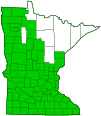
Taxonomy |
|||
| Kingdom | Plantae (Plants) | ||
| Subkingdom | Pteridobiotina | ||
| Phylum | Tracheophyta (Vascular Plants) | ||
| Class | Magnoliopsida (Dicots) | ||
Order |
Fabales (Legumes, Milkworts, and Allies) | ||
Family |
Fabaceae (Legumes) | ||
| Subfamily | Faboideae | ||
| Tribe | Amorpheae | ||
Genus |
Amorpha (false indigos) | ||
Subordinate Taxa |
|||
Synonyms |
|||
| Amorpha brachycarpa | |||
Common Names |
|||
lead plant lead-plant leadplant leadplant amorpha |
|||
Glossary
Calyx
The group of outer floral leaves (sepals) below the petals, occasionally forming a tube.
Corolla
A collective name for all of the petals of a flower.
Linear
Long, straight, and narrow, with more or less parallel sides, like a blade of grass.
Peduncle
The stalk of a single flower or flower cluster.
Pinnate
On a compound leaf, having the leaflets arranged on opposite sides of a common stalk. On a bryophyte, having branches evenly arranged on opposite sides of a stem.
Raceme
An unbranched, elongated inflorescence with stalked flowers. The flowers mature from the bottom up.
Rachis
The main axis of a compound leaf, appearing as an extension of the leaf stalk; the main axis of an inflorescence.
Rhizome
A horizontal, usually underground stem. It serves as a reproductive structure, producing roots below and shoots above at the nodes.
Stipule
A small, leaf-like, scale-like, glandular, or rarely spiny appendage found at the base of a leaf stalk, usually occurring in pairs and usually dropping soon.
Visitor Photos |
|||||
Share your photo of this plant. |
|||||
| This button not working for you? Simply email us at info@MinnesotaSeasons.com. Attach one or more photos and, if you like, a caption. |
|||||
Laura Baxley |
|||||
Amorpha canescens |
|||||
 |
 |
||||
Kirk Nelson |
|||||
Pilot Knob |
|||||
 |
|||||
MinnesotaSeasons.com Photos |
|||||
Plant |
|||||
 |
 |
||||
Inflorescence |
|||||
 |
 |
||||
 |
 |
||||
Leaves |
|||||
 |
 |
||||
Early Spring |
|||||
 |
 |
||||

Slideshows |
||
| Amorpha canescens LEADPLANT Frank Mayfield |
||
|
||
| Lead Plant hughes411 |
||
About
Uploaded on Jul 19, 2008 Lead Plant |
||

Visitor Videos |
|||
Share your video of this plant. |
|||
| This button not working for you? Simply email us at info@MinnesotaSeasons.com. Attach a video, a YouTube link, or a cloud storage link. |
|||
Other Videos |
|||
| Weed of the Week #722-Leadplant (Air Date 2/5/12) AgPhD's channel |
|||
About
Uploaded on Feb 8, 2012 It's our Weed of the Week, Leadplant. |
|||
| Wild Foods: Leadplant Bravo Survival |
|||
About
Published on Jun 24, 2014 Second installment in the Wild Foods series. We discuss the Leadplant as a use in making a delicious tea. |
|||

|
Created: Last Updated: © MinnesotaSeasons.com. All rights reserved. |