


Plains Pocket Gopher - Species Profile
Conservation • Description • Habitat • Ecology • Distribution • Taxonomy
Conservation Status
IUCN Red List
LC - Least Concern
NatureServe
N5 - Secure
SNR - Unranked
Minnesota
not listed
Description
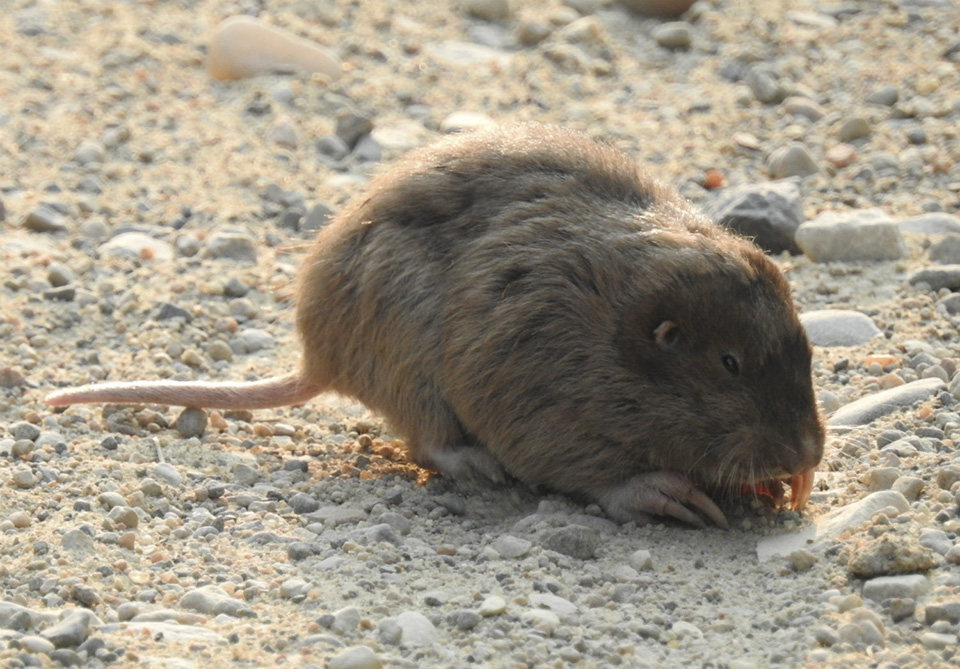
Plains Pocket Gopher is a medium-sized rodent well adapted for digging.
The body of an adult is compact and 9½″ to 12″ in length, including the tail. It appears heaviest toward the head, tapering gradually to the tail. Males are slightly larger than females.
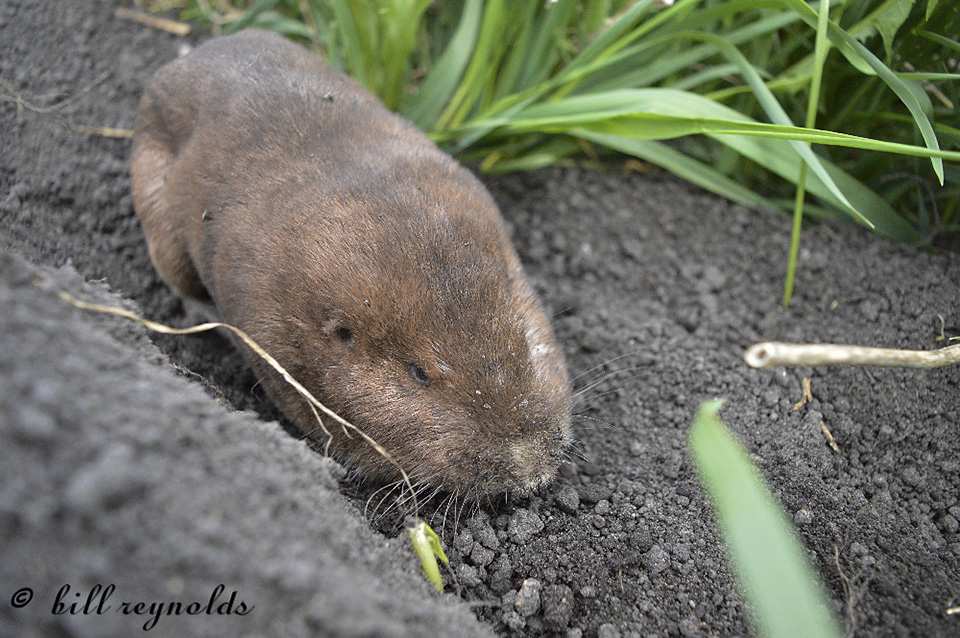
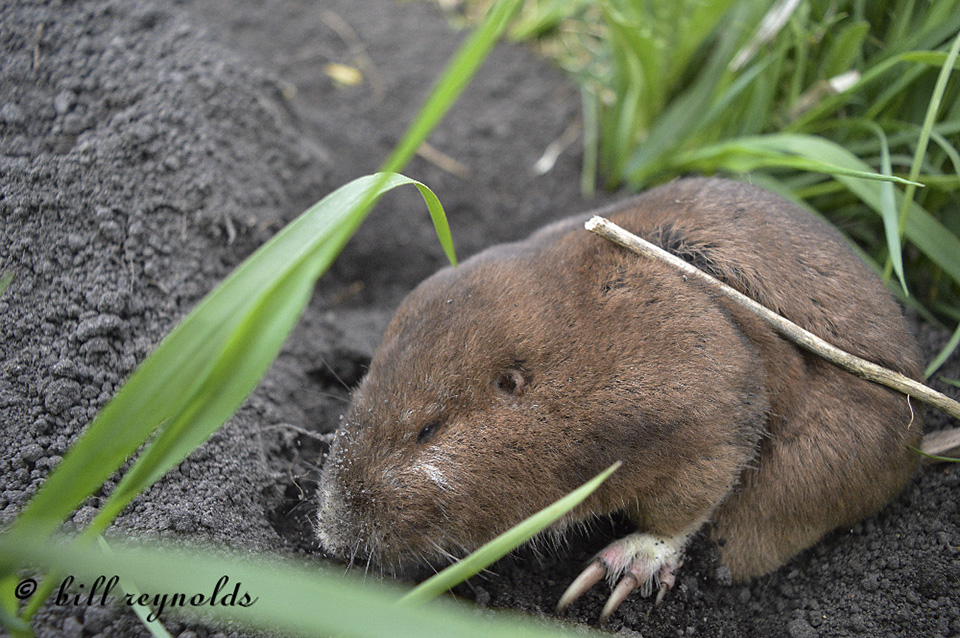
The head is broad and flat with a short shout. The bony ridge forming the lower border of the eye socket is widely flared. The eyes are small. The ears are short and hairless. The cheeks are external, fur-lined pouches or “pockets”, which gives this species its common name. They extend backward to the shoulders and are used for carrying food. The two upper incisors are large, protruding, and orange. There are two longitudinal grooves on the front of each upper incisor. The incisors are used for digging. The lips close behind the upper and lower incisors to keep dirt out of the mouth while digging.
The fur covering most of the body is is brown to black, shiny, and short. The hairs move easily in either direction, permitting forward and backward movement in the tunnel. The fur on the top of the feet is whitish. The fur on the underside is dull and usually paler.
The forelimbs are short and strong and have long, heavy claws. The tail is 2″ to 4½″ long, brown, and tapered. It has little hair and is used as a sensory organ. The tip of the tail is white.
Size
Total length: 9½″ to 12″
Tail: 2″ to 4½″
Sign
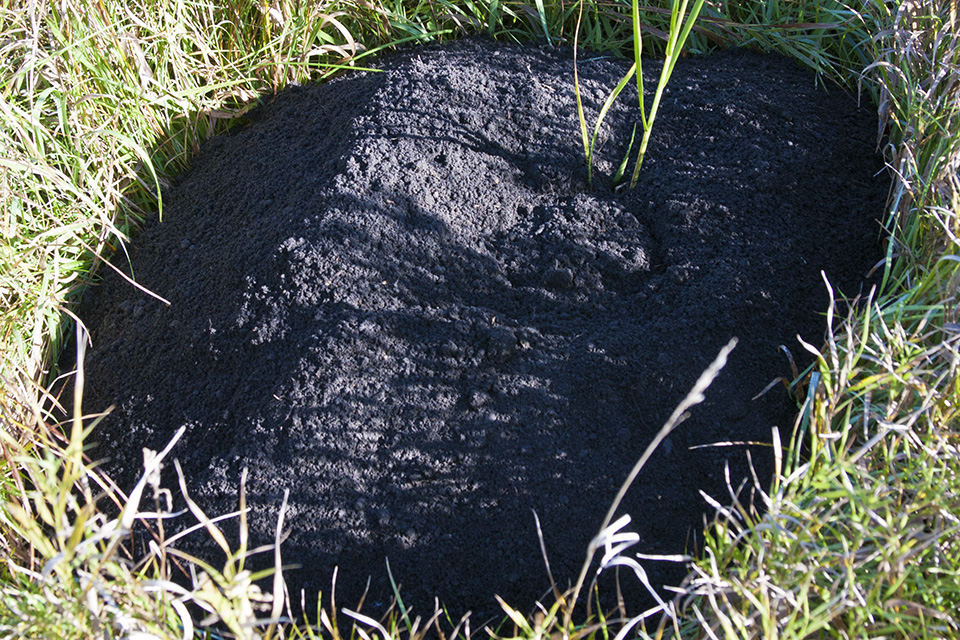
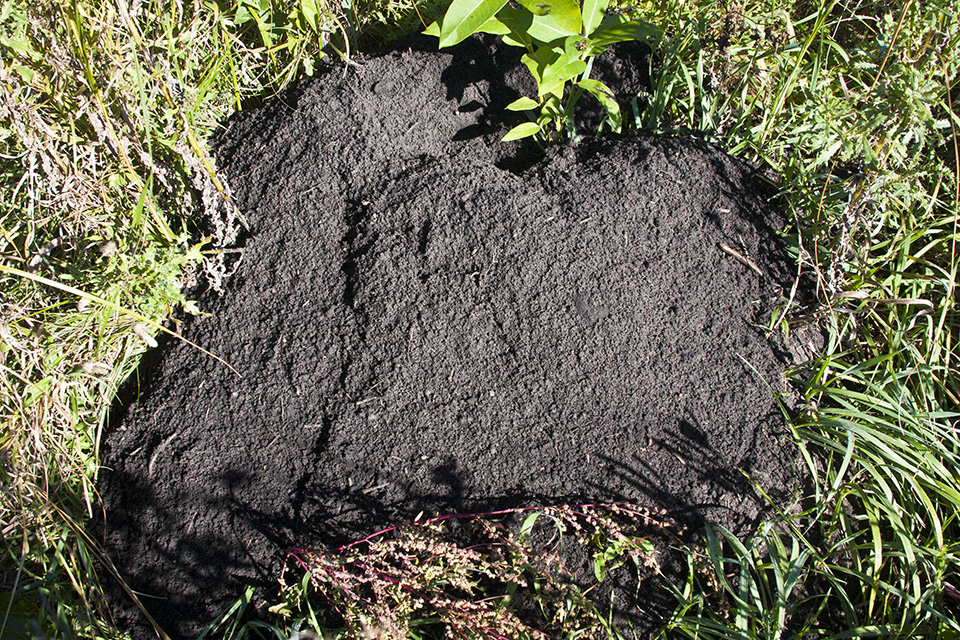
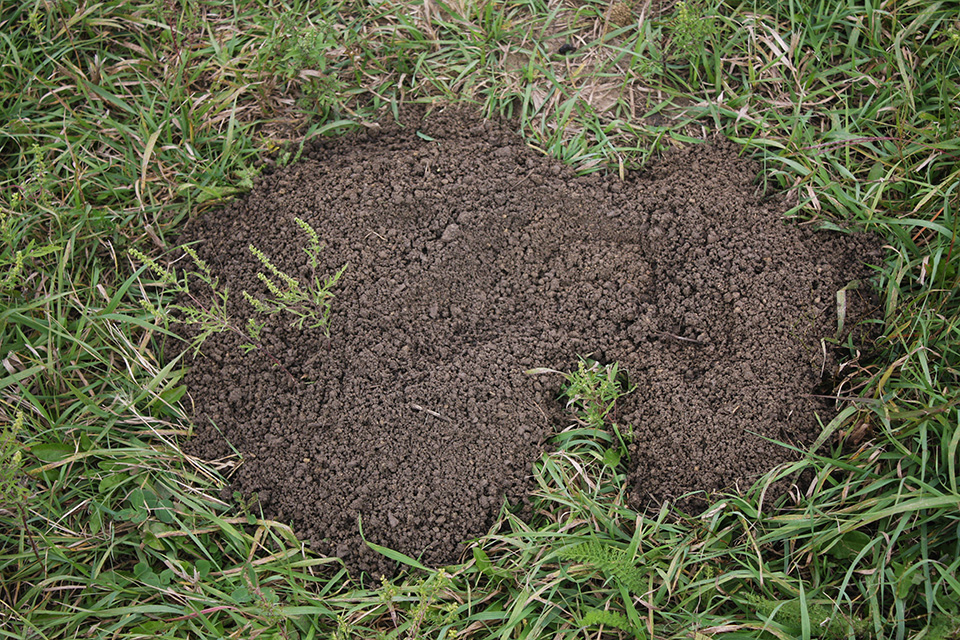
The mound is crescent-, bean-, or kidney-shaped. The texture is fine and there are no large clods of dirt. The hole is off-center and is sealed by a visible dirt plug. The dirt plug is at an angle. Separate feed hole are also made. They are identified by the lack of a dirt mound and a circular band of clipped vegetation within one body length of the hole.
Similar Species
Eastern Mole (Scalopus aquaticus) mound is cone-shaped, not kidney shaped. The texture of the dirt in the mound is coarser, with clods of dirt. There is no visible dirt plug. There are usually visible traces of shallow tunnels near the mound.
Northern Pocket Gopher (Thomomys talpoides) is smaller, 6½″ to 10½″ in total length. The forelimbs are smaller. The front claws are lighter. The fur is not shiny. There is only one indistinct groove near the inner border of each upper incisor. In Minnesota it has been found only in Kittson and Marshall Counties.
Woodchuck (Marmota monax) borrow is has a mound of dirt next to an exposed, 5¼″ to 6¼″ wide hole.
Habitat
Formerly tallgrass and midgrass prairie regions and associated open woodlands
Ecology
Behavior
This is a solitary rodent that lives in loose colonies. It is active both day and night. It creates an extensive underground tunnel system. Most tunnels are dug in the spring and fall. The main tunnel and birthing tunnel are below the frost line. Lateral tunnels are shallower. Most digging takes place at night and in twilight. Most tunneling is done in search of food. The animal rarely leaves its tunnel except to eject dirt, breed, or forage. It is territorial but has a small territory. It does not hibernate.
Lifespan
Less than 5 years
Life Cycle
Adults breed in early spring. Gestation is about four to seven weeks. A litter of one to three offspring is born between March and May. The young are evicted from the burrow by late summer. Lifespan is usually less than five years.
Diet
Fleshy, underground roots, tubers, and bulbs; succulent stems of young plants, often pulled into the burrow from below by the roots; and small fruits.
Distribution |
||
|
Sources Biodiversity occurrence data published by: Minnesota Biodiversity Atlas (accessed through the Minnesota Biodiversity Atlas Portal, bellatlas.umn.edu, 12/18/2025). Hazard, Evan B. 1982. The Mammals of Minnesota. University of Minnesota Press, Minneapolis, Minnesota. 280 pp. The counties in light green lack modern records but have historic county or township specimens or records. |
|
| 12/18/2025 | ||
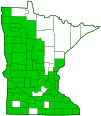
Mississippi Valley Pocket Gopher (G. b. bursarius) is found in all but the northeastern counties. The range of Plains Pocket Gopher (G. b. majusculus) extends into Minnesota only in the southern half of the southern border counties. |
||
Occurrence |
||
Common. Agricultural and lawn pest. |
||
Taxonomy
Class
Subclass
Theria
Infraclass
Placentalia (Placental Mammals)
Magnorder
Boreoeutheria
Superorder
Euarchontoglires (Primates, Rodents, and Allies)
Order
Rodentia (Rodents)
Suborder
Supramyomorpha
Infraorder
Castorimorphi
Superfamily
Geomyoidea
Family
Geomyidae (Pocket Gophers)
Subfamily
Geomyinae
Tribe
Geomyini (Eastern Pocket Gophers)
Genus
Geomys (Eastern Pocket Gophers)
Subgenus
Geomys
Subordinate Taxa
Illinois Pocket Gopher (Geomys bursarius illinoensis)
Mississippi Valley Pocket Gopher (Geomys bursarius bursarius) 
Missouri Pocket Gopher (Geomys bursarius missouriensis)
Ozark Pocket Gopher (Geomys bursarius ozarkensis)
Plains Pocket Gopher (Geomys bursarius industrius)
Plains Pocket Gopher (Geomys bursarius major)
Plains Pocket Gopher (Geomys bursarius majusculus)
Wisconsin Pocket Gopher (Geomys bursarius wisconsinensis)
Synonyms
Geomys parvidens
Mus bursarius
Pseudostoma bursarius
Common Names
Mississippi Valley Pocket Gopher
Plains Pocket Gopher