



white sweet clover
(Melilotus albus)
Conservation • Weed • Wetland • Description • Habitat • Ecology • Use • Distribution • Taxonomy
Conservation Status |
|
|||||||
| IUCN Red List | not listed |
|||||||
| NatureServe | NNA - Not applicable SNA - Not applicable |
|||||||
| Minnesota | not listed |
|||||||
Weed Status |
||||||||
White sweet clover is listed as an invasive terrestrial plant by the Minnesota Department of Natural Resources. However, it is not currently regulated in Minnesota. |
||||||||
Wetland Indicator Status |
||||||||
| Great Plains | FACU - Facultative upland |
|||||||
| Midwest | FACU - Facultative upland |
|||||||
| Northcentral & Northeast | FACU - Facultative upland |
|||||||
Description |
||
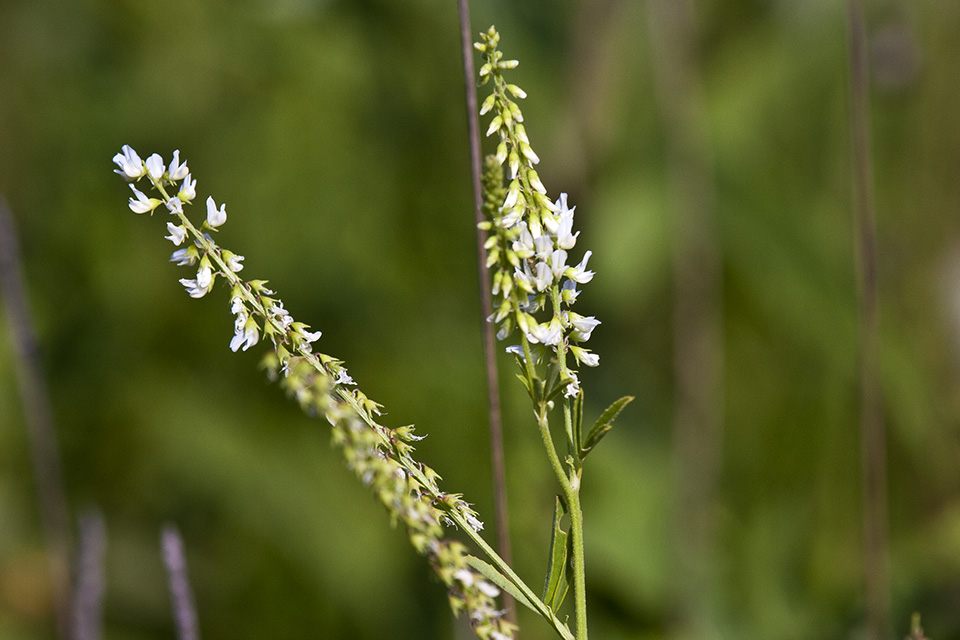
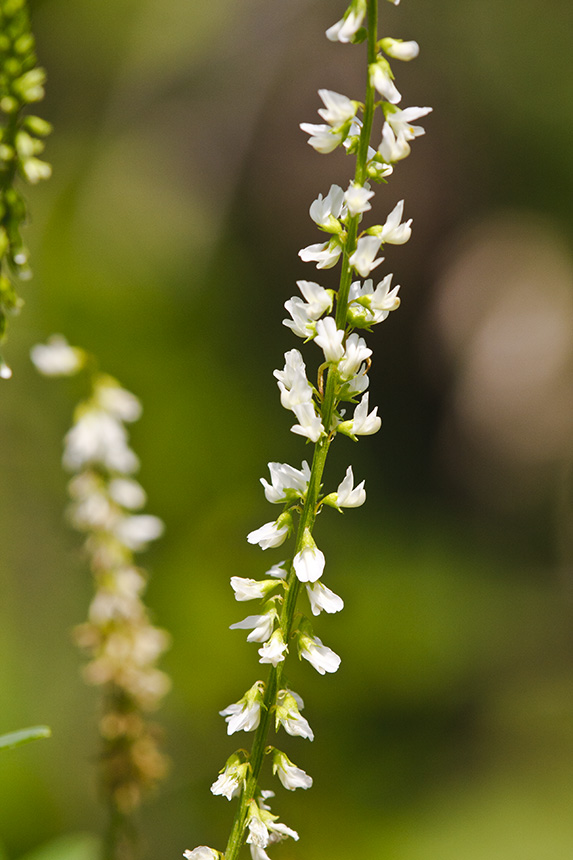
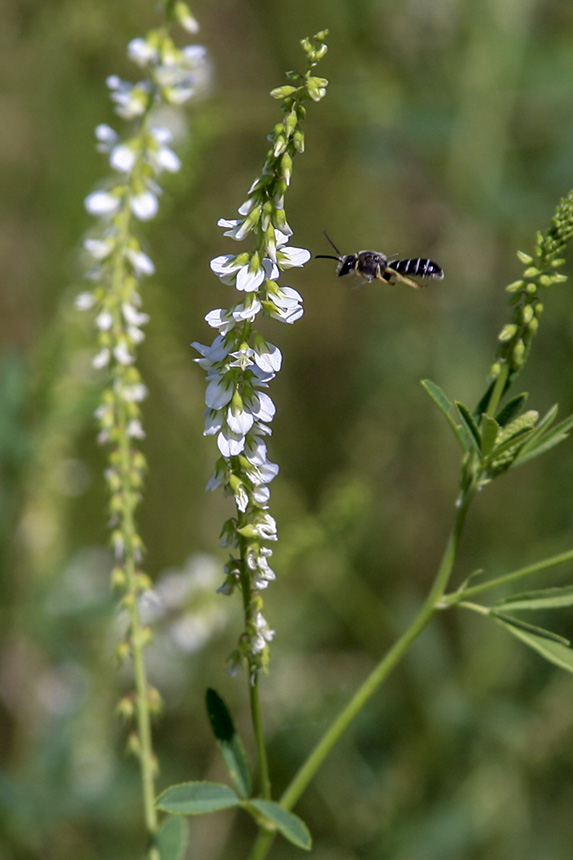
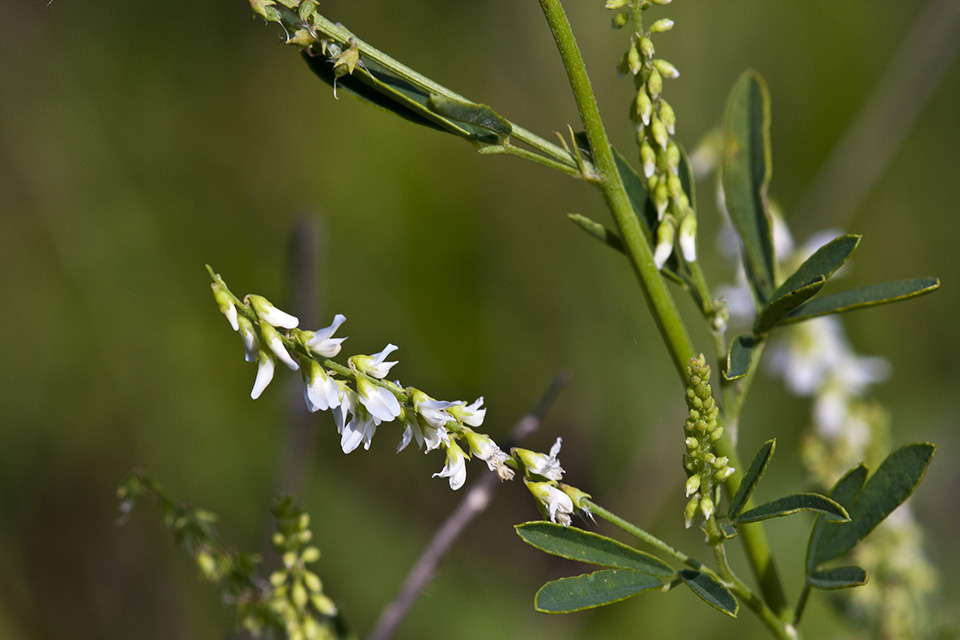
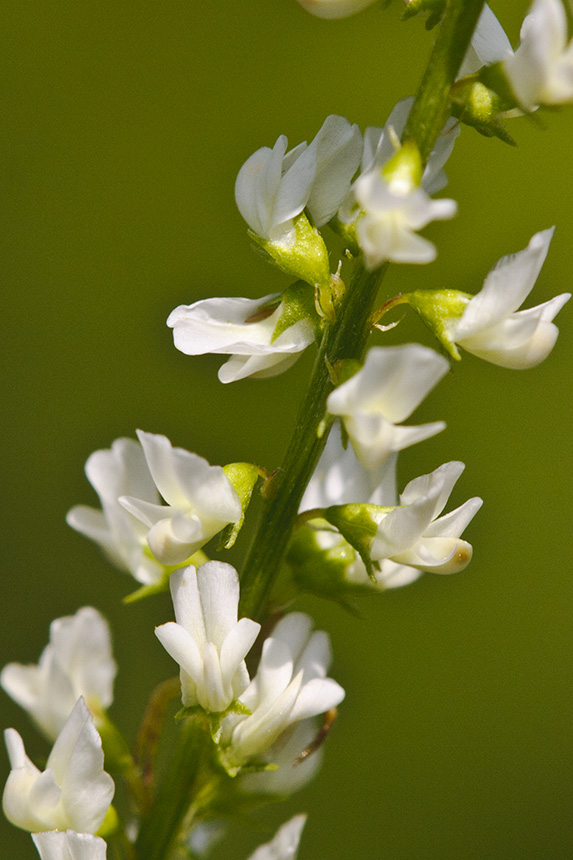
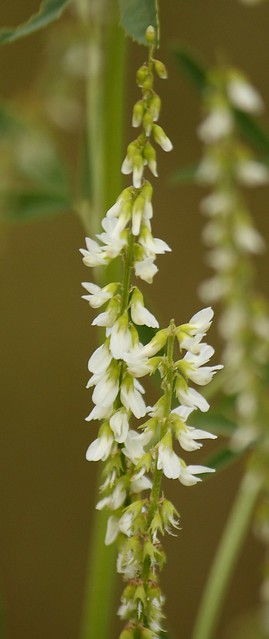
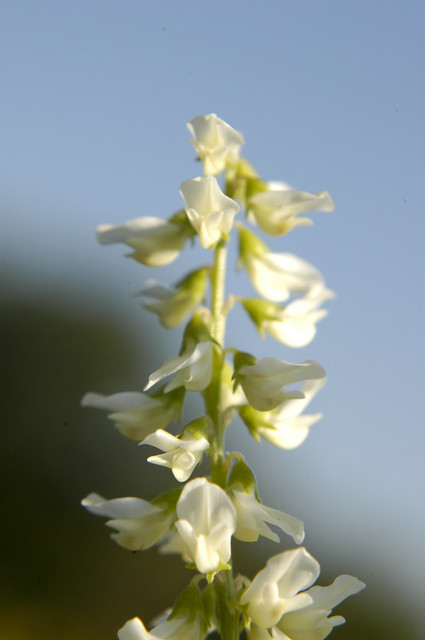
White sweet clover is a 1′ to 8′ tall, erect, freely branching, biennial forb with a strong taproot. The stems are light green and hairless. The taller plants tend to be bushy, the shorter plants lanky. In the first year they are small and do not flower. In the second year they are taller, bushy, and produce many flower clusters. The compound leaves are alternate, hairless and divided into three leaflets.The leaflets are oblanceolate or obovate, ½″ to 1″ long and up to ¼″ wide. They are grayish-green, finely toothed along the middle and upper margins, the teeth pointed outward rather than forward. The middle leaflet is on a distinct stalk. The inflorescence is many tall, spike-like clusters of stalked flowers. The clusters are on elongated stems produced in the axils of the middle and upper leaves. The flowering stems are 2″ to 6″ long. Dozens of small flowers are crowded along the top two thirds of the stem. The flowers are ⅛″ to ⅓″ long and are attached to the stem with a minute stalk. They droop down but ascend at the tip. |
||
Height |
||
1′ to 8′ |
||
Flower Color |
||
White |
||
Similar Species |
||
Yellow sweet clover (Melilotus officinalis) has yellow flowers. It is usually a little shorter than white sweet clover. The foliage is plain green, not grayish-green. It blooms 2 to 3 weeks earlier than white sweet clover. |
||
Habitat |
||
Disturbed sites, roadsides. |
||
Ecology |
||
Flowering |
||
May to September |
||
Pests and Diseases |
||
|
||
Use |
||
|
||
Distribution |
||||
|
Sources |
|||
| 7/12/2023 | ||||
Nativity |
||||
Native to Asia, Europe, and the Indian subcontinent. Introduced and naturalized in North America. |
||||
Occurrence |
||||
Common |
||||

Taxonomy |
|||
| Kingdom | Plantae (Plants) | ||
| Subkingdom | Pteridobiotina | ||
| Phylum | Tracheophyta (Vascular Plants) | ||
| Class | Magnoliopsida (Dicots) | ||
Order |
Fabales (Legumes, Milkworts, and Allies) | ||
Family |
Fabaceae (Legumes) | ||
| Subfamily | Faboideae | ||
| Tribe | Trifolieae |
||
| Genus | Melilotus (melilots and sweetclovers) | ||
Some sources, including BONAP and USDA PLANTS, consider white sweet clover (Melilotus alba) and yellow sweet clover (Melilotus officinalis) the same species with differently colored flowers. It that is the case, then white sweet clover should be treated as Melilotus officinalis ssp. alba. BONAP lists Melilotus officinalis but not Melilotus alba. It does not list subspecies or varieties of any plants. USDA PLANTS curiously lists just sweetclover (Melilotus officinalis), with no subspecies, and with Melilotus alba as a synonym. Most sources treat white and yellow sweet clovers as separate species. |
|||
Subordinate Taxa |
|||
|
|||
Synonyms |
|||
Melilotus alba Melilotus leucanthus Melilotus officinalis ssp. alba |
|||
Common Names |
|||
bokhara-clover honey clover white melilot white sweet clover white sweet-clover |
|||
Glossary
Compound leaf
A leaf that is divided into leaflets, each leaflet having the general appearance of a leaf, with all leaflets attached to a single leaf stem.
Oblanceolate
Reverse lanceolate; much longer than wide, thickest toward the tip, and gradually tapering toward the base.
Obovate
Reverse egg-shaped, with the attachment at the narrower end.
Visitor Photos |
|||||
Share your photo of this plant. |
|||||
| This button not working for you? Simply email us at info@MinnesotaSeasons.com. Attach one or more photos and, if you like, a caption. |
|||||
|
|||||
MinnesotaSeasons.com Photos |
|||||
Inflorescence |
|||||
 |
 |
||||
 |
 |
||||
 |
|||||
Flowers |
|||||
 |
|||||

Slideshows |
||
| Sweet White Clover Andree Reno Sanborn |
||
|
||
About
pea family Melilotus alba Farmers will plant this in rotation in their fields to replenish the nitrogen in the soil. |
||
| Melilotus alba WHITE SWEET CLOVER Frank Mayfield |
||
|
||
Visitor Videos |
|||
Share your video of this plant. |
|||
| This button not working for you? Simply email us at info@MinnesotaSeasons.com. Attach a video, a YouTube link, or a cloud storage link. |
|||
Other Videos |
|||
| White Sweet Clover hiddengrousefarm |
|||
About
Published on Aug 19, 2012 White sweet clover ID and control |
|||
| White Sweet-Clover (Melilotus albus, Melilotus alba) ~ Introduced Species Wandering Sole TV |
|||
About
Published on Jul 22, 2013 White Sweet-Clover (Melilotus albus, Melilotus alba) is native to Europe and was introduced to the North American Continent as a forage crop. It is a member of the pea (Fabaceae) family. Quoting Wikipedia: "It was introduced to North America in the 17th century for cattle forage purposes and is now widespread throughout Canada and the United States, where it has become invasive and can outcompete native plant species." A gangly plant, it can grow up to heights of 2m. White Sweet-Clover also goes by the names of Bokhara clover, honey clover, tree clover, sweet clover, white-flowered sweet clover, and white melilot. |
|||
| Bokhara Clover (Melilotus Albus) / White Honey Flower - 2012-06-26 W3stlander |
|||
About
Published on Jun 27, 2012 Melilotus albus (Bokhara clover, honey clover, tree clover, sweet clover, white-flowered sweet clover, white sweet clover, white melilot) ------------------ |
|||


|
Created: Last Updated: © MinnesotaSeasons.com. All rights reserved. |